Bear Call Credit Spread Calculator
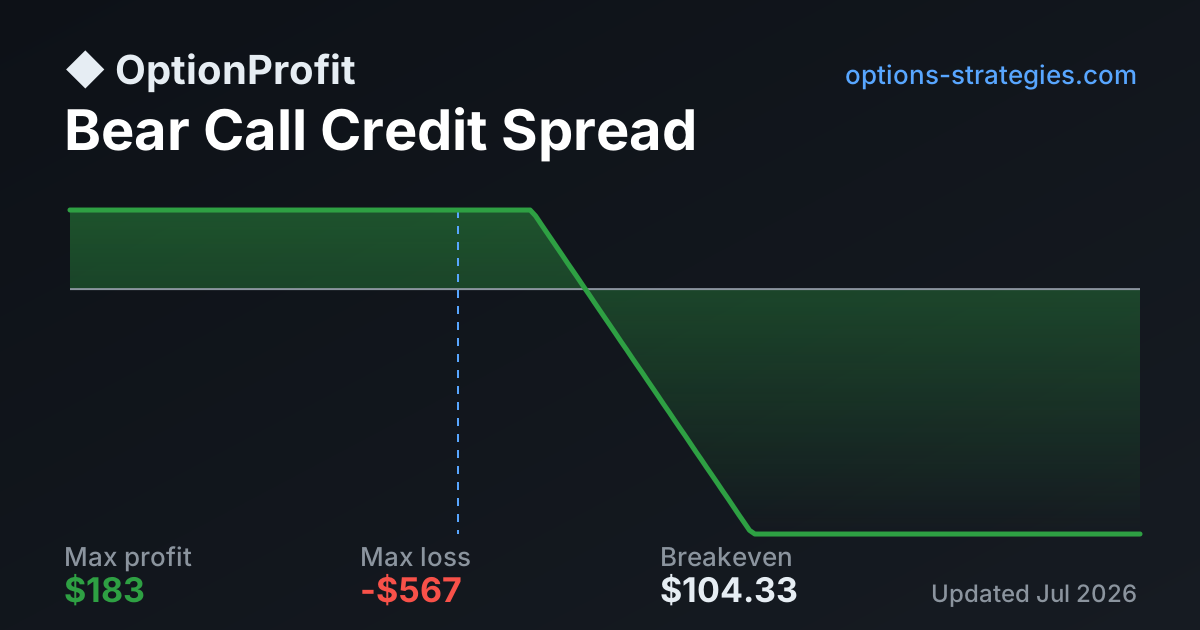
A bear call credit spread sells a call and buys a higher-strike call, collecting a credit. It profits if the stock stays below the short strike.
Interactive calculator
Edit the price, strikes and premiums to see the payoff update live.
Want probability of profit and live Greeks on real prices? Open the Bear Call Credit Spread calculator →
⧉ Embed this free calculator on your site →
Key characteristics
- Max profit = net credit. Max loss = strike width − credit.
- Breakeven = short call strike + credit.
- A defined-risk way to bet a stock won’t rise.
When to use a bear call credit spread
Use it when you are neutral-to-bearish and want to be paid for the stock staying below a level. You sell a call and buy a higher-strike call for protection, collecting a net credit you keep if the stock does not rally through your short strike.
It is most attractive in high implied volatility, with the short strike placed above resistance so the odds favour the option expiring worthless.
Risks and management
Maximum profit is the credit; maximum loss is the strike width minus the credit, reached if the stock rises above the long strike. As with all credit spreads, risk exceeds reward, so you need the high-probability outcome to keep coming through.
Defend a tested spread by rolling it up and out for more credit, and consider taking profit at around half the maximum credit instead of holding to expiration.
On the Greeks, the Bear Call Credit Spread is vega-negative — a fall in implied volatility (such as an earnings IV crush) works in your favour, and theta-positive, so time decay adds to the position each day it is held.
Managing the trade and common mistakes
Most experienced traders close a bear call credit spread early once it has captured roughly 50–75 % of the maximum credit. Theta works in your favor as expiration approaches, but the remaining reward rarely justifies the risk of a sudden reversal, so locking in a gain at that threshold is a disciplined exit. If the underlying rallies sharply against you, the usual adjustment is to roll the spread up and out — buying back the current short call, selling a new one at a higher strike in a later expiration, and collecting additional credit to improve the break-even. Rolling makes sense only when you still hold a bearish view; if the thesis has changed, closing the spread for a defined loss is almost always the better choice.
The most common beginner mistake is selling the spread with the short call too close to the current price, chasing a fatter premium without accounting for how little room that leaves if the stock bounces. A short call with a delta around 0.20–0.30 keeps a reasonable buffer. Equally damaging is ignoring implied volatility: opening a bear call spread when IV is already low means you collect little premium while still carrying the full loss risk. Beginners also tend to let losing spreads ride too long, hoping for a reversal that never comes, instead of cutting at a pre-defined loss limit such as 1.5–2× the credit received.
Assignment risk is real but often misunderstood. The short call leg is what carries assignment risk — if the underlying closes above that strike near expiration, early assignment is possible, though it is rare outside dividend-related situations. The long call leg then acts as your hedge, letting you deliver shares at the long strike if needed. Liquidity matters: always check the bid-ask spread on both legs before entering, and favour strikes with tight markets. Avoid holding the spread into the final hours of expiration day if the underlying is sitting right at or just below your short strike — pin risk can leave you with an unexpected short-stock position over the weekend.
Calculate it live
Use the free OptionProfit Bear Call Credit Spread calculator to load a live option chain, build the trade, and instantly see the payoff chart, breakevens, probability of profit, Greeks and a Monte Carlo simulation of outcomes.
- Get paid if the stock stays below the short strike.
- Max profit = credit; max loss = strike width − credit.
- Breakeven = short call strike + credit.
- Favoured in high IV; manage at ~50% profit.
MSFT, TSLA, INTC, UBER, SHOP, DIS, HD, LCID, MSTR, ARM, CVS, DAL, CELH, ZM
Frequently asked questions
What is my maximum loss?
The strike width minus the credit received; the long call defines and caps the risk.
How is this different from a bull put credit spread?
Both collect a credit and want the stock to stay on one side of a strike — the bear call profits if the stock stays down, the bull put if it stays up.
Can I combine the two?
Yes — selling a bull put and a bear call together on the same stock creates an iron condor, profiting if the stock stays within a range.
Long CallLong PutCovered CallCash Secured PutNaked PutBull Call SpreadBear Put SpreadBull Put Credit SpreadIron CondorLong Call ButterflyLong StraddleLong StrangleCollarCall Calendar SpreadNaked CallCall Diagonal SpreadPut Calendar SpreadJade LizardBroken Wing ButterflyCall Ratio SpreadPut Ratio SpreadCall Ratio BackspreadPut Ratio BackspreadSynthetic Long StockStrapStripTwin PeaksKiteProtective PutShort StraddleShort StrangleSynthetic Short StockReverse Iron CondorReverse Iron ButterflyLong Call CondorDouble DiagonalZEBRA (Zero Extrinsic Back Ratio)Box SpreadRisk ReversalCovered StrangleLong GutsChristmas Tree ButterflyDiagonal Put SpreadConversionReversalCovered PutBig LizardReverse Jade LizardStock RepairRatio Call WriteJelly RollDouble CalendarBull Call LadderBear Call LadderBull Put LadderBear Put LadderSeagull SpreadRatio Put WriteLong Put ButterflyLong Put CondorPut Broken Wing ButterflyPut Christmas Tree Butterfly
Educational use only. Quotes are delayed ~15 minutes and nothing here is financial advice. Options trading involves substantial risk of loss. Privacy Policy · Terms & Conditions.