Call Diagonal Spread Calculator
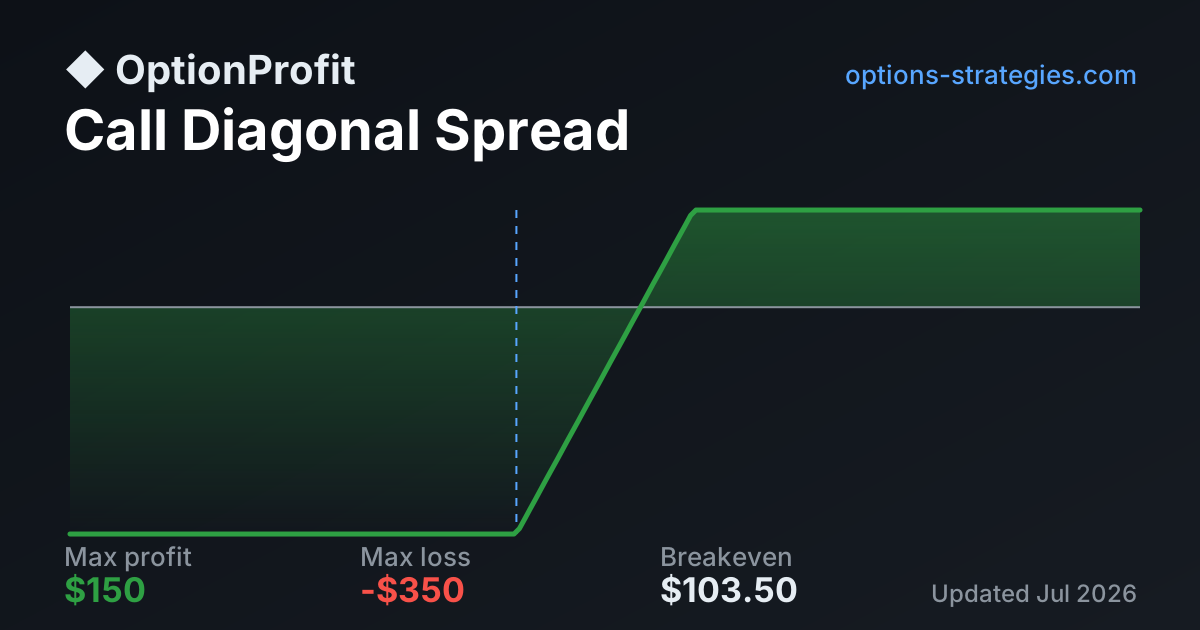
A call diagonal buys a longer-dated call and sells a shorter-dated, higher-strike call against it. It is the structure behind the poor man’s covered call: leveraged, income-generating and multi-expiration.
Interactive calculator
Edit the price, strikes and premiums to see the payoff update live.
Want probability of profit and live Greeks on real prices? Open the Call Diagonal Spread calculator →
⧉ Embed this free calculator on your site →
Key characteristics
- Buy a longer-dated (often in-the-money) call; sell a shorter-dated, higher-strike call.
- Max loss = net debit paid; income comes from rolling the short call each cycle.
- A capital-efficient stand-in for a covered call (the "poor man’s covered call").
- Multi-expiration — handled automatically here.
How a call diagonal works
You buy a long-dated call as a cheaper substitute for 100 shares, then sell a shorter-dated call at a higher strike to collect premium — like a covered call, but on a call instead of stock. The two different strikes and expirations are what make it "diagonal".
Each cycle you let the short call expire (or roll it), keeping the premium and lowering the cost of the long call, while the long call gives you upside exposure for a fraction of the capital of owning shares.
Risks and management
Keep the short strike above your long strike so the spread can never invert into a guaranteed loss. The main risks are a sharp drop (the long call loses value) and a fall in implied volatility, which hurts the long-dated leg most.
If the stock rallies through the short strike, roll the short call up and out for more time rather than letting your long call get capped too early.
On the Greeks, the Call Diagonal Spread is close to vega-neutral, so implied-volatility shifts have little net effect, and theta-negative, so time decay erodes it and the move needs to come reasonably soon.
Managing the trade and common mistakes
Profit-taking on a call diagonal spread typically happens when the position has captured roughly 50–70% of its maximum theoretical value, well before the short call expires. Because the strategy depends on the short leg decaying faster than the long leg, the sweet spot is when the underlying sits near or just below the short strike at the short expiration — that is when the spread commands its highest value. Most experienced traders close the entire position at that point rather than letting the short leg expire and being left with a naked long call that must now appreciate further just to break even.
Rolling the short call is the most common adjustment. If the underlying rallies strongly toward or through the short strike, you can buy back the expiring short call and sell a new one at the same or a higher strike in the next monthly cycle, ideally collecting a net credit. This re-establishes the theta-harvesting core of the trade. On the other side, if the stock drops sharply, the short call loses value quickly — good for P&L today — but the long call also bleeds delta and vega, so holding too long in a falling market turns a quick win into a slow loss. Cut when the spread's value has fallen to around 25% of the original debit.
The most common beginner mistake is mismatching the expirations carelessly. Selling a short call that expires too close to the long call collapses the calendar effect and leaves almost no room for the volatility differential to work. Liquidity is the other trap: diagonal spreads in low-volume names have wide bid-ask spreads on both legs, and filling both simultaneously at a fair price is difficult — always use limit orders and price the spread as a single unit on platforms that support it. Finally, be aware that if the short call goes deep in the money it carries real early-assignment risk, particularly around ex-dividend dates. Early assignment on the short leg while you still hold the long call converts your capped-risk diagonal into a naked long call exposure for however long settlement takes.
Calculate it live
Use the free OptionProfit Call Diagonal Spread calculator to load a live option chain, build the trade, and instantly see the payoff chart, breakevens, probability of profit, Greeks and a Monte Carlo simulation of outcomes.
- A long-dated call financed by selling shorter-dated calls.
- The capital-efficient version of a covered call (PMCC).
- Keep the short strike above the long strike; max loss = net debit.
- Roll the short call up and out if the stock rallies through it.
META, GOOGL, AVGO, CRM, PLTR, WFC, GS, MA, KO, WMT, SBUX, XOM, BABA, MARA
Frequently asked questions
Is a call diagonal the same as a poor man’s covered call?
Effectively yes — a PMCC is a call diagonal where the long leg is a deep-in-the-money LEAPS used as a stock substitute.
What is the maximum I can lose?
The net debit you pay to open the diagonal — the long call defines and caps your risk.
Why two different expirations?
The short-dated call decays faster than the long-dated one, so you harvest that faster decay each cycle while keeping longer-term upside.
Long CallLong PutCovered CallCash Secured PutNaked PutBull Call SpreadBear Put SpreadBull Put Credit SpreadBear Call Credit SpreadIron CondorLong Call ButterflyLong StraddleLong StrangleCollarCall Calendar SpreadNaked CallPut Calendar SpreadJade LizardBroken Wing ButterflyCall Ratio SpreadPut Ratio SpreadCall Ratio BackspreadPut Ratio BackspreadSynthetic Long StockStrapStripTwin PeaksKiteProtective PutShort StraddleShort StrangleSynthetic Short StockReverse Iron CondorReverse Iron ButterflyLong Call CondorDouble DiagonalZEBRA (Zero Extrinsic Back Ratio)Box SpreadRisk ReversalCovered StrangleLong GutsChristmas Tree ButterflyDiagonal Put SpreadConversionReversalCovered PutBig LizardReverse Jade LizardStock RepairRatio Call WriteJelly RollDouble CalendarBull Call LadderBear Call LadderBull Put LadderBear Put LadderSeagull SpreadRatio Put WriteLong Put ButterflyLong Put CondorPut Broken Wing ButterflyPut Christmas Tree Butterfly
Educational use only. Quotes are delayed ~15 minutes and nothing here is financial advice. Options trading involves substantial risk of loss. Privacy Policy · Terms & Conditions.