Protective Put Calculator
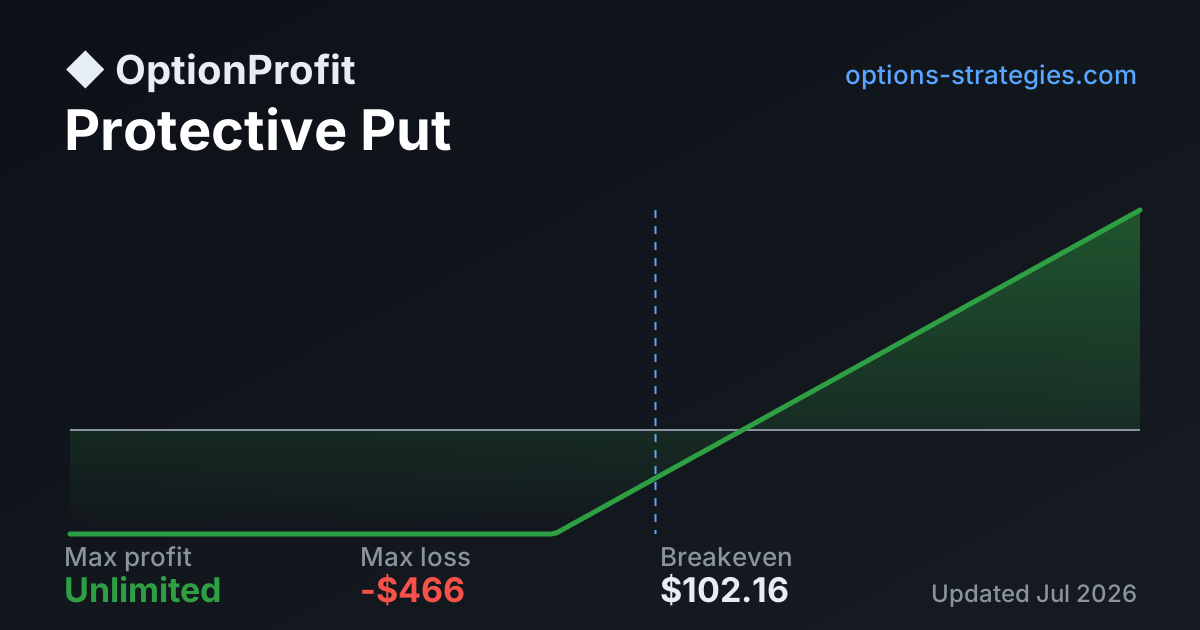
A protective put (also called a married put) is owning the stock and buying a put against it as insurance. The put sets a floor under your losses below its strike, while your upside stays unlimited. The cost is the premium — a small, known price for downside protection.
Interactive calculator
Edit the price, strikes and premiums to see the payoff update live.
Want probability of profit and live Greeks on real prices? Open the Protective Put calculator →
⧉ Embed this free calculator on your site →
Key characteristics
- Long stock + long put: the put is a price floor, the stock keeps the upside.
- Max loss is limited to (stock price − put strike) + the premium paid.
- Breakeven = stock purchase price + the put premium.
- Best when you are bullish but want to cap the downside through a risky event.
When to use a protective put
Use a protective put when you want to stay long a stock you believe in but cannot afford a large drawdown — for example heading into earnings, a product launch, or simply a nervous market. It is portfolio insurance: you keep every cent of upside and cap the downside at a strike you choose.
A higher strike costs more but protects sooner; a lower strike is cheaper but lets the stock fall further before the floor kicks in. Match the strike to how much loss you are willing to absorb.
The cost and the trade-off
Like any insurance, the premium is a drag if nothing bad happens — the stock has to rise by at least the premium before you break even. Over many calm periods those premiums add up, which is why some traders only buy puts around known risk events rather than continuously.
A protective put is the opposite trade to a covered call: the covered call sells the upside for income, while the protective put pays to insure the downside.
On the Greeks, the Protective Put is vega-positive — rising implied volatility helps it, while an IV crush works against you, and theta-negative, so time decay erodes it and the move needs to come reasonably soon.
Managing the trade and common mistakes
Once a protective put is in place, the main management decision is what to do as the underlying moves. If the stock rallies strongly and the put loses most of its value, many experienced traders simply let the put expire worthless and lock in the gain on the shares — the insurance premium was the cost of peace of mind. If the stock drifts lower but hasn't broken key support, traders often roll the put forward in time, selling the expiring put and buying a later-dated one at or near the same strike to extend protection without starting from scratch. Rolling does cost additional premium, so the question to ask is whether the original thesis still holds.
The most common beginner mistake is buying a protective put that is too far out of the money simply because it is cheaper. A deep out-of-the-money put leaves a large unprotected gap between the current stock price and the strike, which defeats the purpose of the hedge. A related error is letting the put expire with days left to expiration rather than closing it: time value collapses quickly in the final week, and selling the put back — even for a small credit — recovers value that would otherwise evaporate. Traders also frequently underestimate theta decay; a put bought with too much time premium bleeds value steadily even when the stock is flat, raising the effective cost of protection.
Assignment risk does not apply to the long put leg — as the holder you exercise at your discretion, never against your will. However, if the stock falls sharply and you decide to exercise the put, be aware that settlement is typically next-day (T+1 in most markets), so you may carry overnight exposure on the shares. Liquidity matters most at the moment you need the hedge most: in a fast-moving market, wide bid-ask spreads on the put can significantly erode the protection you paid for. Sticking to actively traded strikes — near the money and in the nearest standard expiration cycles — keeps spreads tight and exit costs predictable.
Calculate it live
Use the free OptionProfit Protective Put calculator to load a live option chain, build the trade, and instantly see the payoff chart, breakevens, probability of profit, Greeks and a Monte Carlo simulation of outcomes.
- Owning stock + a long put = a floor under losses with unlimited upside.
- Max loss = (entry − put strike) + premium; breakeven = entry + premium.
- It is downside insurance — the premium is the cost of that protection.
- The mirror image of a covered call (which sells upside instead of insuring downside).
AMZN, META, GOOGL, AVGO, CRM, PLTR, PYPL, WFC, GS, V, MA, GM, T, KO
Frequently asked questions
What is the difference between a protective put and a married put?
They are the same strategy. "Married put" usually means you buy the stock and the put at the same time; "protective put" often means you add the put to stock you already own. The payoff is identical.
How much does a protective put cost?
Only the put premium. That premium is your maximum extra cost and the amount by which it raises your breakeven — the price of insuring the downside.
Which strike should I choose?
A higher strike protects sooner but costs more; a lower strike is cheaper but absorbs more loss before it helps. Pick the strike at the maximum loss you are willing to take.
Long CallLong PutCovered CallCash Secured PutNaked PutBull Call SpreadBear Put SpreadBull Put Credit SpreadBear Call Credit SpreadIron CondorLong Call ButterflyLong StraddleLong StrangleCollarCall Calendar SpreadNaked CallCall Diagonal SpreadPut Calendar SpreadJade LizardBroken Wing ButterflyCall Ratio SpreadPut Ratio SpreadCall Ratio BackspreadPut Ratio BackspreadSynthetic Long StockStrapStripTwin PeaksKiteShort StraddleShort StrangleSynthetic Short StockReverse Iron CondorReverse Iron ButterflyLong Call CondorDouble DiagonalZEBRA (Zero Extrinsic Back Ratio)Box SpreadRisk ReversalCovered StrangleLong GutsChristmas Tree ButterflyDiagonal Put SpreadConversionReversalCovered PutBig LizardReverse Jade LizardStock RepairRatio Call WriteJelly RollDouble CalendarBull Call LadderBear Call LadderBull Put LadderBear Put LadderSeagull SpreadRatio Put WriteLong Put ButterflyLong Put CondorPut Broken Wing ButterflyPut Christmas Tree Butterfly
Educational use only. Quotes are delayed ~15 minutes and nothing here is financial advice. Options trading involves substantial risk of loss. Privacy Policy · Terms & Conditions.