Kite Calculator
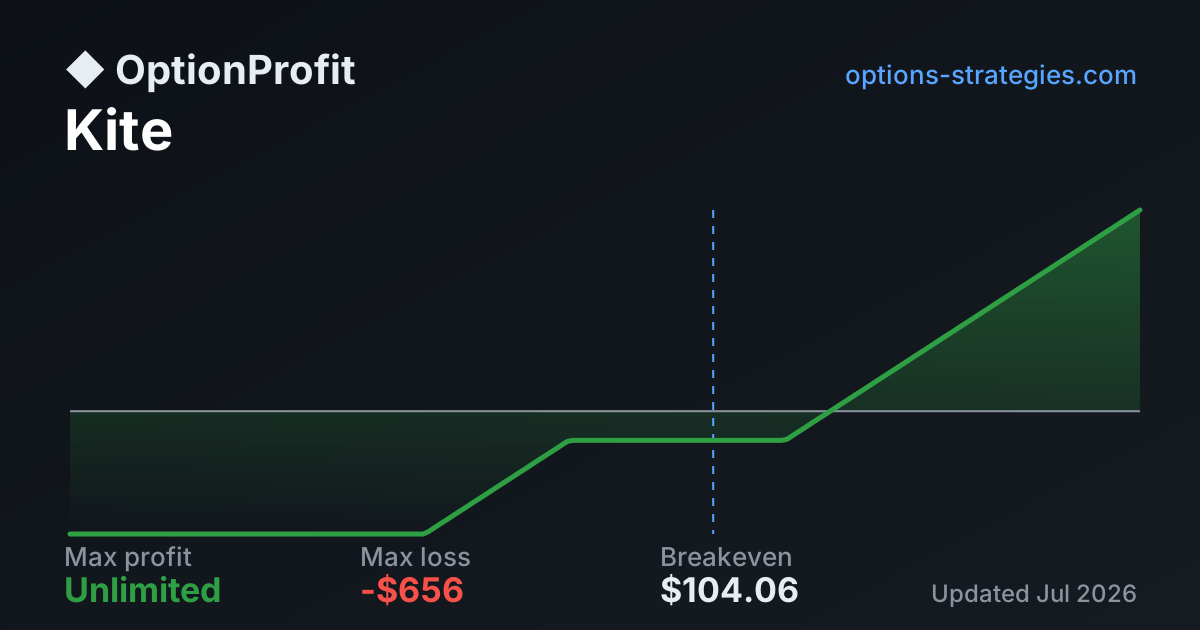
Kite is an original, experimental bullish structure: a long call — the upside kite — financed by a bull put credit spread below it, the tail. The put spread pays for the call, so you often open it for a net credit while keeping unlimited upside and a defined, capped downside.
Interactive calculator
Edit the price, strikes and premiums to see the payoff update live.
Want probability of profit and live Greeks on real prices? Open the Kite calculator →
⧉ Embed this free calculator on your site →
Key characteristics
- Three legs: a long call above the price, plus a short put and a long further-out put below it (a bull put spread).
- The put-spread credit pays for the call, so the trade is cheap or even a net credit.
- Unlimited upside from the long call; defined, capped risk from the put spread.
- A leveraged bullish bet that still pays you to wait if the stock stays flat.
When to use a Kite
Kite is an experimental, non-textbook structure. Use it when you are bullish and want cheap upside leverage, but you also want your downside capped rather than open-ended like a naked short put.
It suits names you are happy to be bullish on into a catalyst: the put spread funds the call, so a rally pays off strongly while a mild drop only costs the defined put-spread risk.
How the payoff works
Above the call strike the long call runs with unlimited upside. If the stock stays between the strikes, the options expire and you keep any net credit.
Below the short put the loss grows, but only down to the long put, where it is capped. The maximum loss is the put-spread width minus the net credit (or plus the net debit if you paid one).
On the Greeks, the Kite is vega-positive — rising implied volatility helps it, while an IV crush works against you, and theta-negative, so time decay erodes it and the move needs to come reasonably soon.
Managing the trade and common mistakes
Once the Kite is on, the position has a narrow profit window: the stock needs to land near the short call strike at expiration, not blow through it. Experienced traders set a target early — typically closing the position for 50–60 % of maximum profit rather than holding into expiration, where small moves can erase gains quickly. If the underlying surges past the upper short strike well before expiry, rolling the short call higher or closing the entire spread locks in whatever profit exists before the tent collapses.
The most common beginner mistake is treating the Kite like a simple long call spread and ignoring the extra short call above. That upper short call is what funds much of the structure but also caps and then reverses the payoff above its strike. Traders who forget this hold too long when the stock keeps rallying, watching a winning trade turn into a loser. Set a hard upside exit trigger — not just a stop-loss — at the level where the net delta flips negative.
Liquidity deserves extra attention with the Kite because it involves three strikes, which means three bid-ask spreads working against you on entry and exit. Avoid names with wide markets or low open interest on the outer strikes. Near expiration, the short call closest to the money carries real assignment risk if it goes in-the-money; closing or rolling a day or two early removes that uncertainty without giving up much edge.
Calculate it live
Use the free OptionProfit Kite calculator to load a live option chain, build the trade, and instantly see the payoff chart, breakevens, probability of profit, Greeks and a Monte Carlo simulation of outcomes.
- Kite = a long call financed by a bull put credit spread below it.
- Unlimited upside, defined and capped downside.
- Often opened for a net credit, so flat-to-up is profitable.
- An experimental, leveraged take on a bullish risk reversal.
META, GOOGL, AVGO, CRM, PLTR, WFC, GS, MA, KO, WMT, SBUX, XOM, BABA, MARA
Frequently asked questions
Is Kite a real options strategy?
It is an original, experimental structure we built for exploration, but it is made of standard legs — a long call and a bull put spread — so it is a valid defined-risk bullish trade. It is a cousin of the risk reversal.
What is the risk of a Kite?
The downside is capped by the long put: your maximum loss is the put-spread width minus any net credit collected. Unlike a naked short put, the loss cannot run away.
Why open a Kite for a credit?
A net credit means a flat or rising stock is already profitable, and the long call gives you free upside leverage on top — the put spread is effectively paying for your call.
Long CallLong PutCovered CallCash Secured PutNaked PutBull Call SpreadBear Put SpreadBull Put Credit SpreadBear Call Credit SpreadIron CondorLong Call ButterflyLong StraddleLong StrangleCollarCall Calendar SpreadNaked CallCall Diagonal SpreadPut Calendar SpreadJade LizardBroken Wing ButterflyCall Ratio SpreadPut Ratio SpreadCall Ratio BackspreadPut Ratio BackspreadSynthetic Long StockStrapStripTwin PeaksProtective PutShort StraddleShort StrangleSynthetic Short StockReverse Iron CondorReverse Iron ButterflyLong Call CondorDouble DiagonalZEBRA (Zero Extrinsic Back Ratio)Box SpreadRisk ReversalCovered StrangleLong GutsChristmas Tree ButterflyDiagonal Put SpreadConversionReversalCovered PutBig LizardReverse Jade LizardStock RepairRatio Call WriteJelly RollDouble CalendarBull Call LadderBear Call LadderBull Put LadderBear Put LadderSeagull SpreadRatio Put WriteLong Put ButterflyLong Put CondorPut Broken Wing ButterflyPut Christmas Tree Butterfly
Educational use only. Quotes are delayed ~15 minutes and nothing here is financial advice. Options trading involves substantial risk of loss. Privacy Policy · Terms & Conditions.