Synthetic Short Stock Calculator
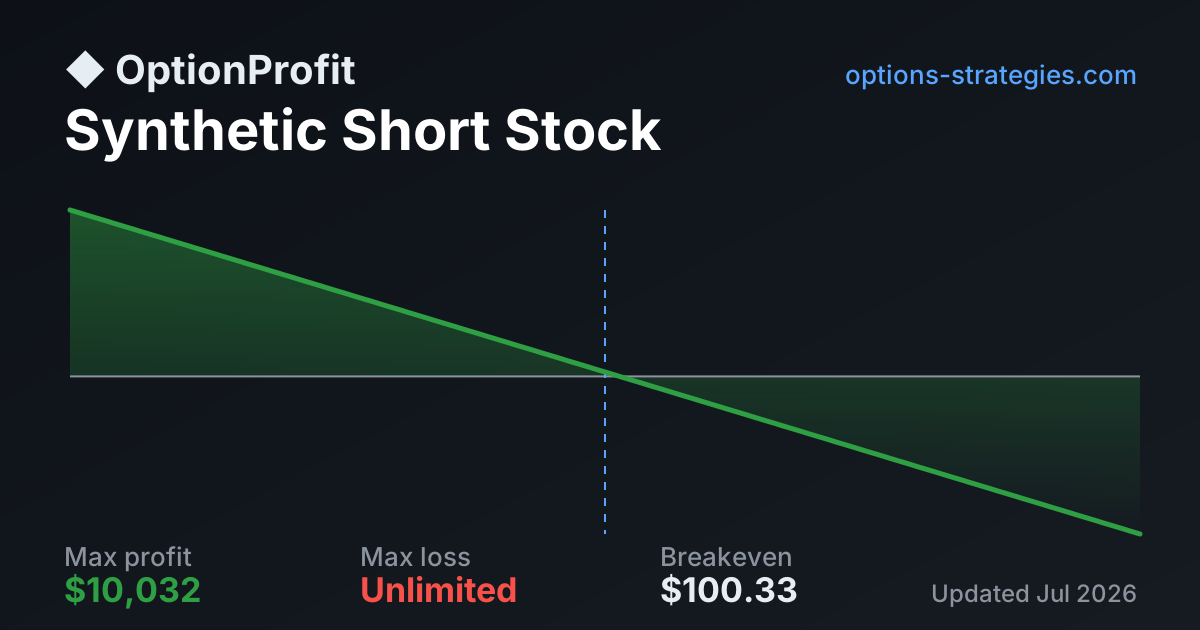
A synthetic short stock combines a short call and a long put at the same strike. Together they replicate the payoff of shorting 100 shares — dollar-for-dollar downside profit and uncapped upside risk — usually for little or no net cost, and without borrowing the stock.
Interactive calculator
Edit the price, strikes and premiums to see the payoff update live.
Want probability of profit and live Greeks on real prices? Open the Synthetic Short Stock calculator →
⧉ Embed this free calculator on your site →
Key characteristics
- Short call + long put at the same strike = the payoff of being short 100 shares.
- Profits as the stock falls, with effectively unlimited loss as it rises.
- Often opened for a small credit or debit, by put-call parity.
- A capital-efficient way to be bearish without locating and borrowing shares.
When to use synthetic short stock
Use a synthetic short when you want a pure bearish, stock-like exposure but shorting the shares is hard, expensive to borrow, or unavailable in your account. The combined position moves almost exactly like short stock: a 100-delta bearish bet.
By put-call parity the call premium you receive roughly offsets the put premium you pay, so the position often costs little to open — the appeal is leverage and capital efficiency versus shorting outright.
Risks and assignment
The risk mirrors short stock: losses are unlimited if the stock rallies, and the short call can be assigned early — especially before a dividend — leaving you actually short the shares. Treat it with the same caution as a real short position.
It is the exact opposite of a synthetic long stock (long call + short put). Pairing the two ideas helps you see how options can rebuild any stock exposure from puts and calls.
On the Greeks, the Synthetic Short Stock is close to vega-neutral, so implied-volatility shifts have little net effect.
Managing the trade and common mistakes
Once the position is on, experienced traders manage it much like an actual short stock position — because the delta exposure is nearly identical. Profit targets are usually set at a meaningful decline in the underlying, often expressed as a target delta move or a fixed percentage gain on the notional value of the position. When the stock falls sharply and quickly, the disciplined move is to close both legs simultaneously at a limit price rather than legging out, since the leg you exit first can move against you while you wait to fill the second. If the stock reverses and climbs, traders will roll the entire synthetic down and out — selling a new put and buying a new call at a lower strike in a later expiration — to reduce delta exposure and buy time, ideally for a net credit or minimal debit.
The mistake that hurts beginners most is treating the synthetic short stock as a capital-efficient substitute for short-selling without fully accounting for the risk profile: the position has theoretically unlimited loss potential to the upside, identical to being short the shares. A hard stop should be defined in delta terms or as a percentage of notional loss before entry — not improvised mid-trade when emotions run high. A second common error is ignoring the short put leg's assignment risk. Unlike a simple long put, the short put in this structure can be assigned at any time the put goes in-the-money. Assignment would leave you long shares — the opposite of the intended exposure — and abruptly converts a defined, margin-efficient synthetic into an outright stock position requiring full capital and carrying dividend risk.
Liquidity is critical for this strategy because you are trading two legs simultaneously. Wide bid-ask spreads on either the call or the put can erode the entry credit or inflate the debit significantly, making the break-even worse before the trade even begins. Always check open interest and volume on both strikes before entering; thinly traded options with wide markets can make adjustments prohibitively expensive. Near expiration, gamma accelerates and small moves in the underlying produce large swings in the combined delta, so most experienced traders will roll or close the position well before the final week rather than holding into expiration. At expiration, if either leg is even fractionally in-the-money, automatic exercise or assignment occurs — an outcome that can produce an unexpected stock position over the weekend with no ability to adjust until the next trading session.
Calculate it live
Use the free OptionProfit Synthetic Short Stock calculator to load a live option chain, build the trade, and instantly see the payoff chart, breakevens, probability of profit, Greeks and a Monte Carlo simulation of outcomes.
- Short call + long put at one strike = the payoff of short 100 shares.
- Bearish, ~100 delta; profits down, unlimited risk up.
- Usually near-zero cost by put-call parity; no share borrow needed.
- The mirror of a synthetic long stock — and as risky as a real short.
MSFT, TSLA, INTC, UBER, SOFI, DIS, HD, MSTR, ARM, CVS, RDDT, DAL, CELH, WYNN
Frequently asked questions
Why use a synthetic short instead of just shorting the stock?
When shares are hard or expensive to borrow, or your account cannot short, the options replicate the exposure capital-efficiently and without a borrow fee.
Is the risk really unlimited?
Yes — like a real short, losses grow without bound as the stock rises, because the short call has no upside cap. Manage it as carefully as short stock.
What is the breakeven?
Roughly the shared strike adjusted for any net credit or debit — close to the stock price when the call and put premiums offset, as they tend to at the at-the-money strike.
Long CallLong PutCovered CallCash Secured PutNaked PutBull Call SpreadBear Put SpreadBull Put Credit SpreadBear Call Credit SpreadIron CondorLong Call ButterflyLong StraddleLong StrangleCollarCall Calendar SpreadNaked CallCall Diagonal SpreadPut Calendar SpreadJade LizardBroken Wing ButterflyCall Ratio SpreadPut Ratio SpreadCall Ratio BackspreadPut Ratio BackspreadSynthetic Long StockStrapStripTwin PeaksKiteProtective PutShort StraddleShort StrangleReverse Iron CondorReverse Iron ButterflyLong Call CondorDouble DiagonalZEBRA (Zero Extrinsic Back Ratio)Box SpreadRisk ReversalCovered StrangleLong GutsChristmas Tree ButterflyDiagonal Put SpreadConversionReversalCovered PutBig LizardReverse Jade LizardStock RepairRatio Call WriteJelly RollDouble CalendarBull Call LadderBear Call LadderBull Put LadderBear Put LadderSeagull SpreadRatio Put WriteLong Put ButterflyLong Put CondorPut Broken Wing ButterflyPut Christmas Tree Butterfly
Educational use only. Quotes are delayed ~15 minutes and nothing here is financial advice. Options trading involves substantial risk of loss. Privacy Policy · Terms & Conditions.