Short Straddle Calculator
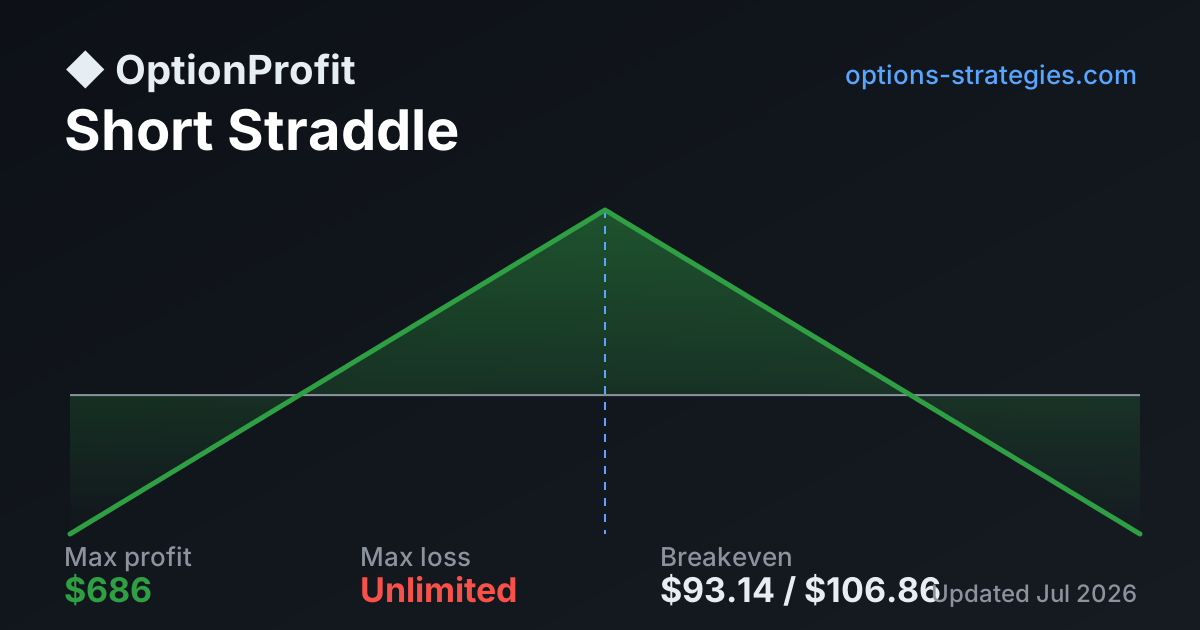
A short straddle sells a call and a put at the same at-the-money strike. You collect the maximum premium and profit if the stock barely moves, with the premium decaying in your favour. The trade-off is serious: the risk is effectively unlimited if the stock makes a big move either way.
Interactive calculator
Edit the price, strikes and premiums to see the payoff update live.
Want probability of profit and live Greeks on real prices? Open the Short Straddle calculator →
⧉ Embed this free calculator on your site →
Key characteristics
- Sell an ATM call + ATM put: maximum premium, profit if the stock stays put.
- Max profit = the premium collected (at the strike, at expiration).
- Risk is unlimited above the upper breakeven and large to the downside.
- A short-volatility, income trade — best when you expect a quiet, range-bound stock.
When to use a short straddle
Sell a straddle when you expect very little movement and believe implied volatility is high relative to what will actually happen. You profit from time decay (theta) and from volatility falling, as long as the stock stays inside your breakevens.
It is the opposite of a long straddle: instead of paying for a big move, you are paid for a quiet stock. The position is delta-neutral at entry, so direction barely matters — only the size of the move does.
The risk you must respect
This is one of the riskiest standard strategies. A short straddle has unlimited loss potential on the upside and very large loss potential on the downside, and the loss grows fast once the stock leaves the breakeven band. A single earnings gap or surprise can dwarf the premium collected.
Many traders prefer a short strangle (wider, lower premium) or an iron butterfly (defined risk) instead, accepting less premium for a safer risk profile. Only sell naked straddles with a clear plan to manage or close the position.
On the Greeks, the Short Straddle is vega-negative — a fall in implied volatility (such as an earnings IV crush) works in your favour, and theta-positive, so time decay adds to the position each day it is held.
Managing the trade and common mistakes
Most experienced traders who sell straddles target 25–50% of the initial credit as their profit exit, then close the position rather than push for every last cent of theta. Holding to expiration looks appealing on paper — maximum profit if the stock pins the strike — but it concentrates all the risk into the final days when gamma accelerates and small moves can produce outsized losses. When the trade moves against you, a common adjustment is to roll the untested side closer to the current price to collect additional credit and reduce the directional exposure, though this narrows the profit zone and should only be done when you still believe the underlying will settle near the original strike. A hard stop at roughly twice the initial credit received is a reasonable rule that keeps a single loss from being catastrophic.
The mistakes beginners make with short straddles are almost always about underestimating how violently the position can move. Selling a straddle into earnings or another binary event because the premium looks rich is the single most common error: implied volatility collapses after the announcement, but if the realized move is large, the loss on the in-the-money leg will swamp any vega gain. Another trap is adding to a losing position — doubling down by selling more premium when the stock has moved is a classic way to turn a manageable loss into a portfolio-threatening one. Ignoring delta as the position becomes directional is equally dangerous; unchecked delta means you are no longer running a neutral trade.
Assignment can happen on either leg at any time if a short option goes deep in the money, but it becomes a serious practical concern as expiration nears. A short call that is exercised leaves you short 100 shares per contract; a short put leaves you long 100 shares — both are large, unhedged exposures if you are not prepared. Watch the extrinsic value of each leg in the final days: when extrinsic value on an in-the-money option approaches zero, early assignment is likely. On expiration day itself, pin risk is unique to straddles — if the stock closes exactly at the strike, you may face partial assignment depending on whether counterparties exercise. Closing or rolling before expiration removes this uncertainty entirely.
Calculate it live
Use the free OptionProfit Short Straddle calculator to load a live option chain, build the trade, and instantly see the payoff chart, breakevens, probability of profit, Greeks and a Monte Carlo simulation of outcomes.
- Sell an ATM call + put to collect maximum premium on a quiet stock.
- Max profit = the premium; you keep it all only if the stock pins the strike.
- Risk is unlimited up and very large down — a big move is the enemy.
- A short-volatility income trade; defined-risk alternatives exist (iron butterfly).
SPY, QQQ, IWM, AAPL, NVDA, AMD, NFLX, MU, SHOP, COIN, JPM, BAC, BA, F
Frequently asked questions
How much can I lose on a short straddle?
Potentially an unlimited amount on the upside (the stock can keep rising) and a very large amount on the downside (down to zero). The premium collected is only a small cushion against a big move.
When does a short straddle make money?
When the stock stays near the strike through expiration, so both options expire nearly worthless and you keep the premium. Falling implied volatility and time decay both help.
Is there a safer version?
Yes — an iron butterfly adds long wings to cap the risk, and a short strangle widens the profit zone. Both reduce the premium in exchange for a safer risk profile.
Long CallLong PutCovered CallCash Secured PutNaked PutBull Call SpreadBear Put SpreadBull Put Credit SpreadBear Call Credit SpreadIron CondorLong Call ButterflyLong StraddleLong StrangleCollarCall Calendar SpreadNaked CallCall Diagonal SpreadPut Calendar SpreadJade LizardBroken Wing ButterflyCall Ratio SpreadPut Ratio SpreadCall Ratio BackspreadPut Ratio BackspreadSynthetic Long StockStrapStripTwin PeaksKiteProtective PutShort StrangleSynthetic Short StockReverse Iron CondorReverse Iron ButterflyLong Call CondorDouble DiagonalZEBRA (Zero Extrinsic Back Ratio)Box SpreadRisk ReversalCovered StrangleLong GutsChristmas Tree ButterflyDiagonal Put SpreadConversionReversalCovered PutBig LizardReverse Jade LizardStock RepairRatio Call WriteJelly RollDouble CalendarBull Call LadderBear Call LadderBull Put LadderBear Put LadderSeagull SpreadRatio Put WriteLong Put ButterflyLong Put CondorPut Broken Wing ButterflyPut Christmas Tree Butterfly
Educational use only. Quotes are delayed ~15 minutes and nothing here is financial advice. Options trading involves substantial risk of loss. Privacy Policy · Terms & Conditions.