Synthetic Long Stock Calculator
Synthetic long stock combines a long call and a short put at the same strike to replicate the payoff of owning 100 shares — moving dollar-for-dollar with the stock, but tying up far less capital.
Interactive calculator
Edit the price, strikes and premiums to see the payoff update live.
Want probability of profit and live Greeks on real prices? Open the Synthetic Long Stock calculator →
⧉ Embed this free calculator on your site →
Key characteristics
- Long call + short put at the same strike and expiration.
- Payoff mirrors owning 100 shares — one-to-one with the price.
- Uses much less capital than buying the shares outright.
- Full downside risk like the stock, plus assignment risk on the short put.
When to use synthetic long stock
Use it when you want stock-like exposure but prefer the leverage and capital efficiency of options, or to set up other strategies (a covered call against a synthetic, for example).
Because it carries the same downside as the shares, size the position as if you owned the stock outright. The capital you save doesn’t reduce the risk.
How the payoff works
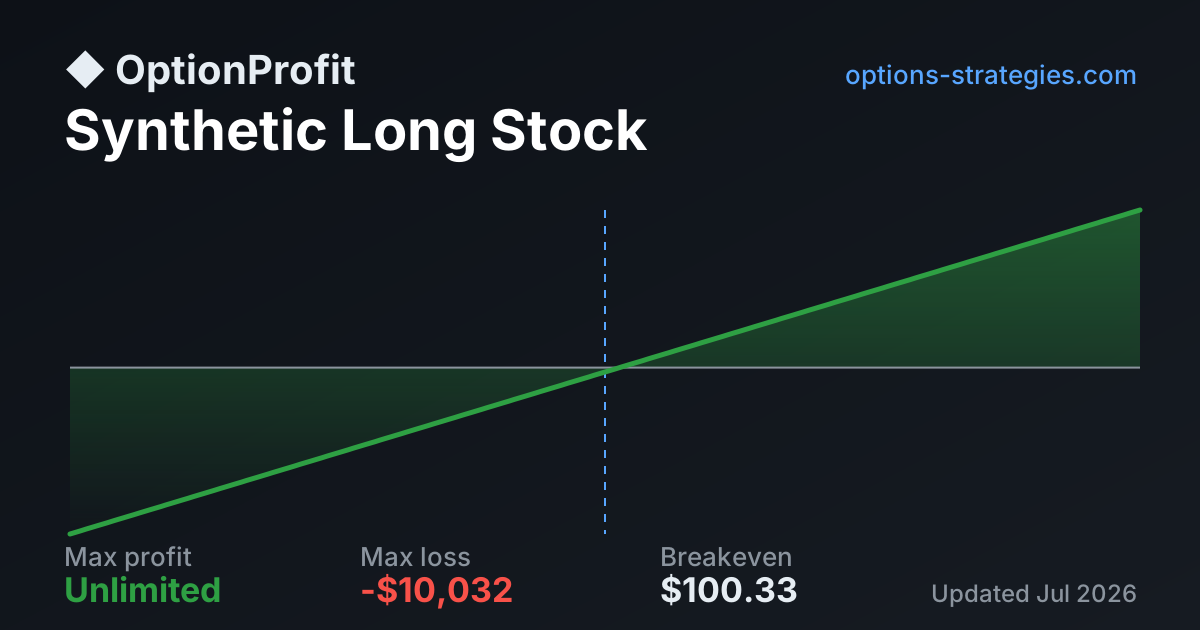
Above the strike the long call gains like stock; below the strike the short put loses like stock. The two combine into a straight line with slope 1 — identical to holding shares, offset by the small net debit or credit.
Maximum profit is open-ended on the upside; the loss grows as the stock falls, down to (strike − net credit) × 100 at a zero stock price, and you may be assigned the shares.
On the Greeks, the Synthetic Long Stock is close to vega-neutral, so implied-volatility shifts have little net effect.
Managing the trade and common mistakes
Managing a synthetic long stock is fundamentally different from managing a covered call or a spread, because the position behaves almost identically to owning shares — gains and losses accumulate in real time with no built-in ceiling or floor. Experienced traders treat profit-taking the same way they would with stock: they scale out at predetermined price targets rather than trying to ride the full move, because the short put leg means a sharp reversal can turn a winner into a significant loser quickly. On the loss side, a hard stop — defined before entry as a specific move against you — is essential. Unlike a long call where your maximum loss is capped at the premium paid, the synthetic carries substantial downside through the short put, so cutting the loss early is far more important than it is with a purely long-options trade.
Rolling is the primary adjustment tool. When the position moves in your favor and expiration approaches, you roll the entire structure — buy back the short put, sell the long call, and reopen both at the same strike in a further expiry — collecting or paying a small net amount to extend the trade. If the stock moves sharply against you, rolling down (moving both legs to a lower strike) reduces delta and buys time, but it also locks in a realized loss on the original strikes, so do it deliberately. Avoid rolling for a large net debit just to stay in a losing trade; that compounds the risk without changing the underlying thesis.
The short put leg creates assignment risk that beginners systematically underestimate. Early assignment is possible any time the put is in-the-money, not just at expiration — and it is most likely when the put is deep in-the-money or when a dividend is approaching on the underlying. If you are assigned on the put, you are suddenly long 100 shares per contract in addition to the long call, which is not the intended exposure. Check dividend dates before entry and monitor the short put's intrinsic value carefully. Also watch liquidity: at expiration, if both legs are near the strike, the bid-ask spreads on each leg can widen independently, making the combined exit more expensive than it looks on paper.
Calculate it live
Use the free OptionProfit Synthetic Long Stock calculator to load a live option chain, build the trade, and instantly see the payoff chart, breakevens, probability of profit, Greeks and a Monte Carlo simulation of outcomes.
- Synthetic long stock = long call + short put, same strike.
- Replicates 100 shares, one-to-one, for far less capital.
- Full stock-like downside plus short-put assignment risk.
- Size it as if you owned the shares.
META, GOOGL, AVGO, CRM, PLTR, WFC, GS, MA, KO, WMT, SBUX, XOM, BABA, MARA
Frequently asked questions
Why use synthetic long stock instead of buying shares?
Capital efficiency and leverage — you get the same dollar-for-dollar exposure while tying up far less cash, which frees capital for other positions.
What is the risk of synthetic long stock?
The same downside as owning the stock: large losses if it falls, plus assignment on the short put. It is not lower risk, just lower capital.
Does synthetic long stock pay dividends?
No — you do not own the shares, so you receive no dividends; the cost of carry and dividends are reflected in the call and put prices.
Long CallLong PutCovered CallCash Secured PutNaked PutBull Call SpreadBear Put SpreadBull Put Credit SpreadBear Call Credit SpreadIron CondorLong Call ButterflyLong StraddleLong StrangleCollarCall Calendar SpreadNaked CallCall Diagonal SpreadPut Calendar SpreadJade LizardBroken Wing ButterflyCall Ratio SpreadPut Ratio SpreadCall Ratio BackspreadPut Ratio BackspreadStrapStripTwin PeaksKiteProtective PutShort StraddleShort StrangleSynthetic Short StockReverse Iron CondorReverse Iron ButterflyLong Call CondorDouble DiagonalZEBRA (Zero Extrinsic Back Ratio)Box SpreadRisk ReversalCovered StrangleLong GutsChristmas Tree ButterflyDiagonal Put SpreadConversionReversalCovered PutBig LizardReverse Jade LizardStock RepairRatio Call WriteJelly RollDouble CalendarBull Call LadderBear Call LadderBull Put LadderBear Put LadderSeagull SpreadRatio Put WriteLong Put ButterflyLong Put CondorPut Broken Wing ButterflyPut Christmas Tree Butterfly
Educational use only. Quotes are delayed ~15 minutes and nothing here is financial advice. Options trading involves substantial risk of loss. Privacy Policy · Terms & Conditions.