Iron Condor Calculator
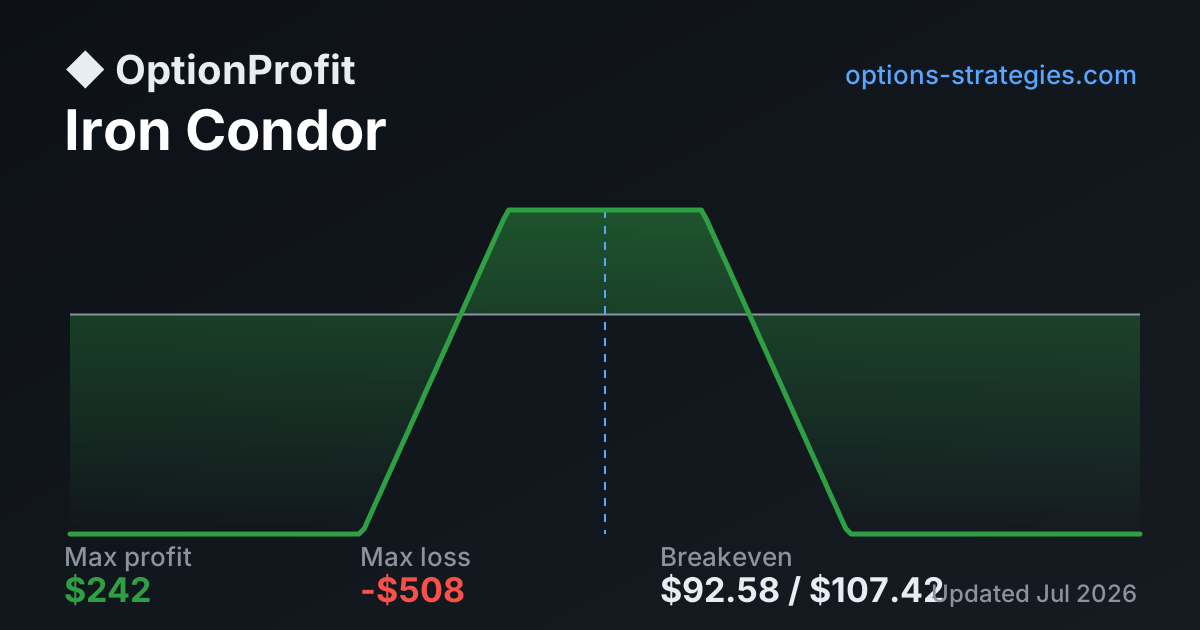
An iron condor sells an out-of-the-money put spread and call spread at once, collecting premium that you keep if the stock stays within a range. Defined risk on both sides.
Interactive calculator
Edit the price, strikes and premiums to see the payoff update live.
Want probability of profit and live Greeks on real prices? Open the Iron Condor calculator →
⧉ Embed this free calculator on your site →
Key characteristics
- Max profit = total credit, kept if price stays between the short strikes.
- Max loss = wider wing width − credit. Two breakevens bracket the range.
- Thrives in low-movement, high-implied-volatility conditions.
- A core income strategy for neutral markets.
When to use an iron condor
Use an iron condor when you expect a stock or index to trade sideways within a range. You sell an out-of-the-money put spread and an out-of-the-money call spread at once, collecting two credits while defining the risk on both sides.
It works best when implied volatility is high and then settles: the fat premium you collect decays in your favour as long as the price stays between the short strikes.
Risks and management
Maximum profit is the total credit, kept if the price finishes between the short strikes. Maximum loss is the wider wing width minus the credit, reached if the stock breaks through either side.
Condors need active management — many traders take profit around 50% and adjust or roll the tested side if the price trends toward one of the short strikes.
On the Greeks, the Iron Condor is vega-negative — a fall in implied volatility (such as an earnings IV crush) works in your favour, and theta-positive, so time decay adds to the position each day it is held.
Managing the trade and common mistakes
Most experienced traders target 25–50 % of the maximum credit as a profit exit. Because an iron condor earns theta every day the underlying stays inside the wings, the trade does most of its work in the final weeks — but holding too long invites gamma risk. If the underlying drifts toward one of the short strikes, a common adjustment is to roll the threatened side further out-of-the-money, or to close the challenged spread and reopen it at a higher or lower strike, collecting additional credit. When the position moves against you and the loss approaches the width of one spread minus the credit received, cutting the trade outright preserves capital for the next setup.
Beginners most often make two mistakes: selling the condor with strikes too close to the current price in search of a bigger premium, and then refusing to close a losing side because they hope the underlying will reverse. Tight strikes mean a narrower profit zone and faster losses when volatility expands. On the expiration side, be aware that short options can be assigned early if they go deep in-the-money, particularly around ex-dividend dates for equity options. In the final days before expiration, bid-ask spreads on near-the-money options can widen sharply and liquidity thins, so many traders close the entire condor rather than risk pin risk or an unexpected assignment on a short strike that expires barely in-the-money.
Calculate it live
Use the free OptionProfit Iron Condor calculator to load a live option chain, build the trade, and instantly see the payoff chart, breakevens, probability of profit, Greeks and a Monte Carlo simulation of outcomes.
- Profits when the stock stays within a defined range.
- Max profit = total credit; max loss = wing width − credit.
- Two breakevens bracket the profit zone.
- Best in high IV that calms; manage at ~50% profit.
SPY, QQQ, IWM, AAPL, NVDA, AMZN, AMD, NFLX, MU, PYPL, SOFI, JPM, BAC, V
Frequently asked questions
When does an iron condor make maximum profit?
When the underlying finishes between the two short strikes at expiration, so all four options expire worthless and you keep the full credit.
Iron condor or iron butterfly?
The condor has a wider profit range and less premium; the butterfly collects more premium but only profits in a narrow band around one strike.
How do I manage a tested side?
Roll the threatened spread further out, take profit on the safe side, or close the whole position to cap the loss — model it first in the calculator.
Long CallLong PutCovered CallCash Secured PutNaked PutBull Call SpreadBear Put SpreadBull Put Credit SpreadBear Call Credit SpreadLong Call ButterflyLong StraddleLong StrangleCollarCall Calendar SpreadNaked CallCall Diagonal SpreadPut Calendar SpreadJade LizardBroken Wing ButterflyCall Ratio SpreadPut Ratio SpreadCall Ratio BackspreadPut Ratio BackspreadSynthetic Long StockStrapStripTwin PeaksKiteProtective PutShort StraddleShort StrangleSynthetic Short StockReverse Iron CondorReverse Iron ButterflyLong Call CondorDouble DiagonalZEBRA (Zero Extrinsic Back Ratio)Box SpreadRisk ReversalCovered StrangleLong GutsChristmas Tree ButterflyDiagonal Put SpreadConversionReversalCovered PutBig LizardReverse Jade LizardStock RepairRatio Call WriteJelly RollDouble CalendarBull Call LadderBear Call LadderBull Put LadderBear Put LadderSeagull SpreadRatio Put WriteLong Put ButterflyLong Put CondorPut Broken Wing ButterflyPut Christmas Tree Butterfly
Educational use only. Quotes are delayed ~15 minutes and nothing here is financial advice. Options trading involves substantial risk of loss. Privacy Policy · Terms & Conditions.