Seagull Spread Calculator
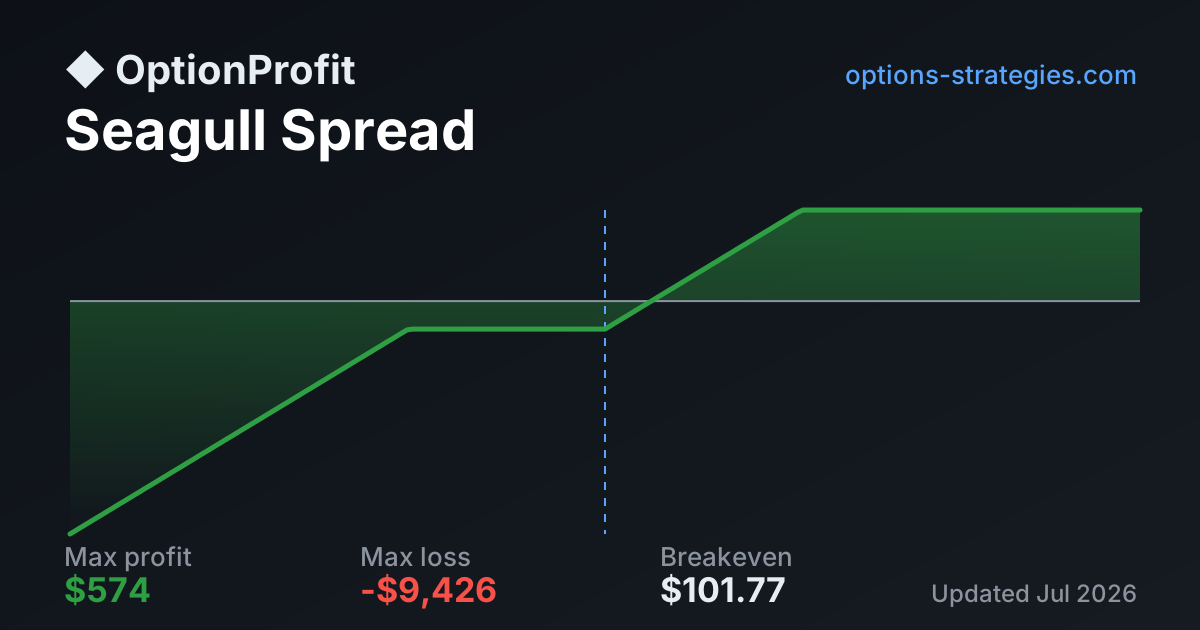
A bullish seagull is a three-leg structure: buy a call, sell a higher call to cap the upside, and sell an out-of-the-money put to pay for it. The short put often reduces the cost to near zero, giving you bullish exposure with a capped gain and a "dead zone" of little P/L between the strikes — at the price of taking assignment if the stock drops below the short put.
Interactive calculator
Edit the price, strikes and premiums to see the payoff update live.
Want probability of profit and live Greeks on real prices? Open the Seagull Spread calculator →
⧉ Embed this free calculator on your site →
Key characteristics
- Legs: long 1 call, short 1 higher call, short 1 OTM put (same expiration).
- The short put finances the call spread — often bringing the cost near zero.
- Gains are capped at the short call strike; below the short put, losses grow like long stock.
- A cheaper, capped alternative to a risk reversal for a moderately bullish view.
When to use a seagull
Use a seagull when you are moderately bullish and want cheap upside without paying full price for a call spread. Selling an out-of-the-money put covers most or all of the cost, in exchange for an obligation to buy the stock if it falls to that strike — much like a cash-secured put underneath a call spread.
It is popular in currency and commodity hedging and among equity traders who are comfortable owning the stock lower. The capped call spread keeps the upside defined, so you know your best case in advance.
Risks and management
The real risk is below the short put: there your losses track the stock lower just as if you owned shares, so a sharp decline can hurt well beyond the small premium outlay. Between the put and the long call there is a flat "dead zone" where little happens.
Only place the short put at a strike where you would genuinely accept assignment, and size it to the capital you would commit to owning the stock. Roll the put down or close it if the stock weakens toward it.
On the Greeks, the Seagull Spread is vega-negative — a fall in implied volatility (such as an earnings IV crush) works in your favour, and theta-positive, so time decay adds to the position each day it is held.
Managing the trade and common mistakes
The call spread caps your upside at its higher strike, so a realistic target is a large fraction of the distance between the two call strikes — chasing the final increment rarely pays once theta and slippage are working against three legs. Because a seagull is usually opened for near zero cost, profit-taking often means closing the whole structure once the long call spread has captured most of its width. As expiration nears, watch the short put: its gamma spikes if the stock hovers near that strike, and while theta decays the put in your favor when price stays above it, it also erodes your long call spread. If the stock slides toward the short put, roll it down and out to push the assignment threat away; if the bullish thesis has genuinely broken, close before the downside below the put compounds.
The biggest error is treating near zero cost as if it were free: the short put leaves you effectively long the stock below its strike, so the downside is real and margin-heavy, much like a cash-secured put. A related mistake is sizing that put as a small option rather than as the share exposure it becomes if assigned. Legging in invites slippage — you sell the put and the market can move before you complete the call spread, so a single combination order is safer. Near expiry, the short call of the spread can be assigned early around an ex-dividend date, and the short put can be assigned when deep in-the-money; pin risk at either strike plus widening bid-ask across three legs makes late adjustments costly.
Calculate it live
Use the free OptionProfit Seagull Spread calculator to load a live option chain, build the trade, and instantly see the payoff chart, breakevens, probability of profit, Greeks and a Monte Carlo simulation of outcomes.
- A long call spread paid for by a short OTM put — often near zero cost.
- Upside is capped at the short call strike.
- Downside below the short put behaves like owning the stock.
- Only sell the put where you would happily be assigned.
META, GOOGL, AVGO, CRM, PLTR, PYPL, WFC, GS, MA, GM, WMT, SBUX, XOM, BABA
Frequently asked questions
Why is it called a seagull?
The payoff diagram — a flat middle with wings that rise and fall on either side — resembles a seagull in flight.
How is a seagull different from a risk reversal?
A risk reversal is just a short put plus a long call (uncapped upside). A seagull adds a short call to cap the upside, which cheapens the trade further.
What is my worst case?
A large drop below the short put, where losses grow like a long stock position. Size the put to the shares you are willing to own.
Selling Puts for IncomeHow to Pick a Strike PricePut-Call Parity and Synthetic Positions
Long CallLong PutCovered CallCash Secured PutNaked PutBull Call SpreadBear Put SpreadBull Put Credit SpreadBear Call Credit SpreadIron CondorLong Call ButterflyLong StraddleLong StrangleCollarCall Calendar SpreadNaked CallCall Diagonal SpreadPut Calendar SpreadJade LizardBroken Wing ButterflyCall Ratio SpreadPut Ratio SpreadCall Ratio BackspreadPut Ratio BackspreadSynthetic Long StockStrapStripTwin PeaksKiteProtective PutShort StraddleShort StrangleSynthetic Short StockReverse Iron CondorReverse Iron ButterflyLong Call CondorDouble DiagonalZEBRA (Zero Extrinsic Back Ratio)Box SpreadRisk ReversalCovered StrangleLong GutsChristmas Tree ButterflyDiagonal Put SpreadConversionReversalCovered PutBig LizardReverse Jade LizardStock RepairRatio Call WriteJelly RollDouble CalendarBull Call LadderBear Call LadderBull Put LadderBear Put LadderRatio Put WriteLong Put ButterflyLong Put CondorPut Broken Wing ButterflyPut Christmas Tree Butterfly
Educational use only. Quotes are delayed ~15 minutes and nothing here is financial advice. Options trading involves substantial risk of loss. Privacy Policy · Terms & Conditions.