Twin Peaks Calculator
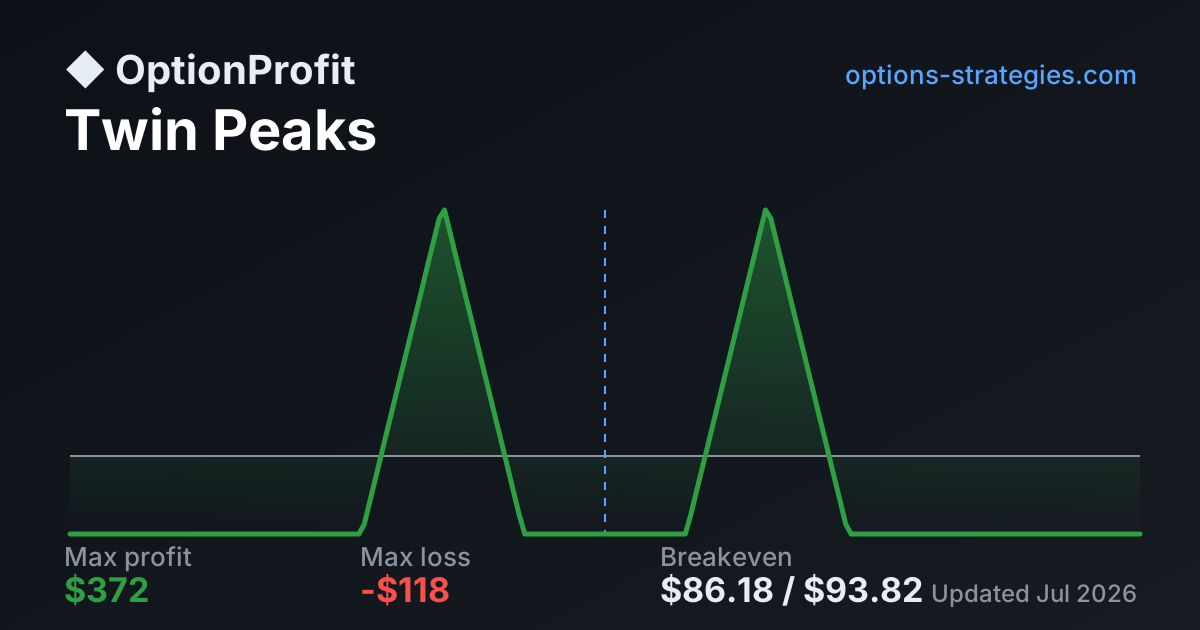
Twin Peaks is an original, experimental structure — two butterflies at once: a put butterfly below the current price and a call butterfly above it. The payoff has two peaks, so it profits from a moderate move in either direction while keeping the risk defined and small.
Interactive calculator
Edit the price, strikes and premiums to see the payoff update live.
Want probability of profit and live Greeks on real prices? Open the Twin Peaks calculator →
⧉ Embed this free calculator on your site →
Key characteristics
- Six legs: a put butterfly centred below spot plus a call butterfly centred above it.
- Two profit peaks — one on a moderate drop, one on a moderate rally.
- Direction-agnostic: you do not need to know which way the stock moves, only that it moves a little.
- Defined risk, net debit — the most you can lose is the small premium paid.
When to use Twin Peaks
Twin Peaks is an experimental, non-textbook structure. Use it when you expect the stock to make a moderate move but are genuinely unsure of the direction — and you think it will land near one of two target zones rather than exploding far past them.
Because it is two butterflies, it is cheap to put on and the risk is small, but it also has a narrow sweet spot: a flat stock or a huge move both leave it at a small loss.
How the payoff works
Each butterfly peaks at its own body strike, so the combined payoff has two humps — one below the current price, one above. Between and beyond the peaks the value falls back toward the small net debit you paid.
Maximum profit is reached if the stock pins one of the two body strikes at expiration. The maximum loss is the net debit, lost if the stock either sits still or runs far past both wings.
On the Greeks, the Twin Peaks is close to vega-neutral, so implied-volatility shifts have little net effect, and theta-negative, so time decay erodes it and the move needs to come reasonably soon.
Managing the trade and common mistakes
Because Twin Peaks is a net debit position built from two butterflies, theta is your enemy when the stock goes nowhere and your ally only if you get lucky timing — the position decays whether the underlying sits still or drifts past both wings. Experienced traders treat this as a binary-outcome trade rather than something to babysit: if the stock pins near one of the two body strikes well before expiration, they close the whole six-leg structure immediately and bank the gain. Holding on, hoping to squeeze out the last few cents of theoretical max profit, usually hands most of the gain back to theta and bid-ask spread. Adjusting or rolling Twin Peaks mid-trade is rarely worthwhile — each butterfly is already a four-leg spread, so legging in or out of a six-leg structure doubles the transaction cost exposure and can easily exceed any incremental gain.
The most common beginner error is misidentifying the sweet spot. Because there are two profit peaks, traders sometimes believe the range of profitability is wide. It is not: each butterfly has a narrow body, and the region between the two peaks — where the stock begins and where it must not stay — is a loss zone. Entering with body strikes set too close to the current price turns both peaks inward and kills the setup. A related mistake is underestimating how rarely a stock pins a specific strike; the probability of landing precisely at either body strike at expiration is genuinely low, which is why sizing must stay small. Do not allocate more to a Twin Peaks trade than you are fully comfortable losing entirely.
With six legs across two expirations is possible but risky; using a single expiration for all legs keeps execution cleaner and avoids calendar-spread risk creeping in. At expiration, watch all six strikes: any leg that lands in-the-money will be automatically exercised, and the short puts or short calls at the body strikes can trigger assignment if they finish even slightly in the money. Close or roll all in-the-money legs before the final session ends to avoid waking up with an unintended stock position. Liquidity matters acutely here — six legs means six bid-ask spreads, and in illiquid names the total slippage can wipe out the entire theoretical edge before the trade even begins. Always use limit orders on the net debit of the whole structure, not market orders on individual legs.
Calculate it live
Use the free OptionProfit Twin Peaks calculator to load a live option chain, build the trade, and instantly see the payoff chart, breakevens, probability of profit, Greeks and a Monte Carlo simulation of outcomes.
- Twin Peaks = a put butterfly below spot + a call butterfly above it (an experimental double butterfly).
- Two profit peaks reward a moderate move in either direction.
- Defined, small risk: the net debit paid is the most you lose.
- Worst outcomes are a flat stock or a move that overshoots both wings.
Frequently asked questions
Is Twin Peaks a real options strategy?
It is an original, experimental structure we built for exploration — but it is made entirely of standard butterflies, so it is a perfectly valid (if exotic) defined-risk trade. It is the same idea as a double butterfly.
When does Twin Peaks make the most money?
When the stock finishes right at one of the two body strikes at expiration, pinning the top of one of the two peaks.
What is the risk of Twin Peaks?
Only the net debit you pay. You lose it if the stock barely moves, or moves so far that it blows past both butterflies.
Long CallLong PutCovered CallCash Secured PutNaked PutBull Call SpreadBear Put SpreadBull Put Credit SpreadBear Call Credit SpreadIron CondorLong Call ButterflyLong StraddleLong StrangleCollarCall Calendar SpreadNaked CallCall Diagonal SpreadPut Calendar SpreadJade LizardBroken Wing ButterflyCall Ratio SpreadPut Ratio SpreadCall Ratio BackspreadPut Ratio BackspreadSynthetic Long StockStrapStripKiteProtective PutShort StraddleShort StrangleSynthetic Short StockReverse Iron CondorReverse Iron ButterflyLong Call CondorDouble DiagonalZEBRA (Zero Extrinsic Back Ratio)Box SpreadRisk ReversalCovered StrangleLong GutsChristmas Tree ButterflyDiagonal Put SpreadConversionReversalCovered PutBig LizardReverse Jade LizardStock RepairRatio Call WriteJelly RollDouble CalendarBull Call LadderBear Call LadderBull Put LadderBear Put LadderSeagull SpreadRatio Put WriteLong Put ButterflyLong Put CondorPut Broken Wing ButterflyPut Christmas Tree Butterfly
Educational use only. Quotes are delayed ~15 minutes and nothing here is financial advice. Options trading involves substantial risk of loss. Privacy Policy · Terms & Conditions.