Bull Put Ladder Calculator
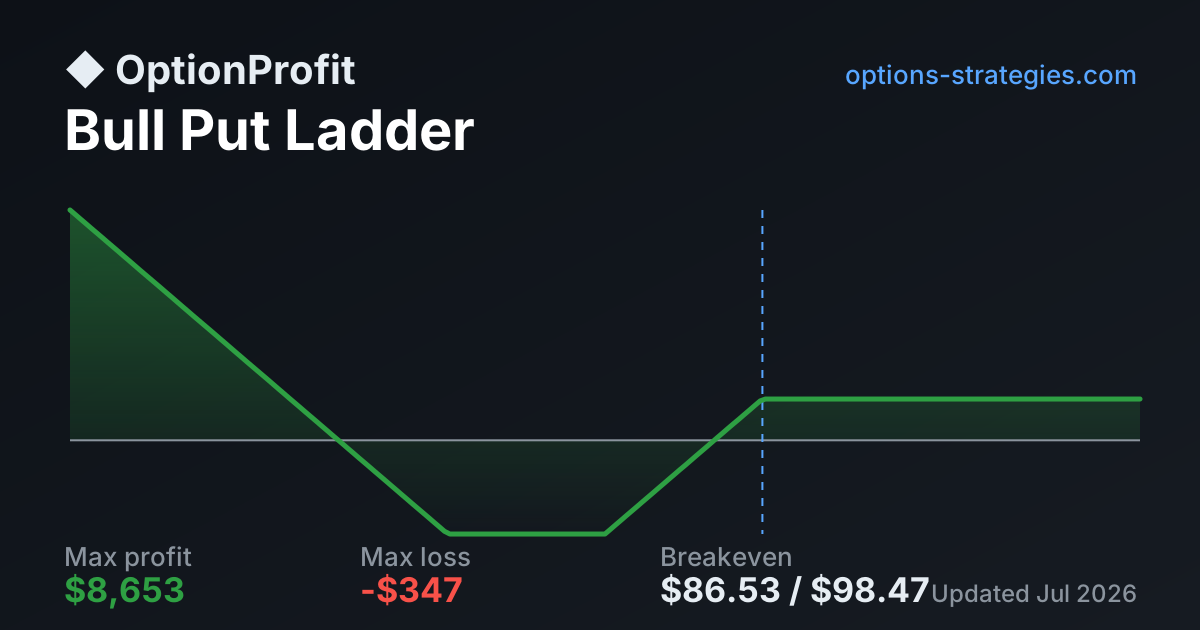
A bull put ladder starts as a bull put credit spread and adds a second long put below it: short one higher put, long one middle put, long one lower put. The two long puts make it a net-bearish, volatile trade — large profit on a sharp drop, a small credit kept if the stock rises, and the worst outcome a modest decline into the middle zone. It is the put-side mirror of the bear call ladder.
Interactive calculator
Edit the price, strikes and premiums to see the payoff update live.
Want probability of profit and live Greeks on real prices? Open the Bull Put Ladder calculator →
⧉ Embed this free calculator on your site →
Key characteristics
- Legs: short 1 higher put, long 1 middle put, long 1 lower put (same expiration).
- Large, near-unlimited profit if the stock falls hard (bounded only by zero).
- Usually a net credit, kept if the stock stays above the highest strike.
- Maximum loss is defined and occurs on a modest decline into the middle of the ladder.
When to use a bull put ladder
Reach for a bull put ladder when you expect either a large drop or no move at all, but want protection against a slow slide lower. Adding a second long put to a bull put spread converts a capped-risk income trade into one that pays off convexly on a crash, while still collecting a small credit if the stock holds up.
It is a natural fit before events that could break a stock sharply lower, or as an adjustment when a short-put position starts to look vulnerable and you want downside convexity without abandoning the premium.
Risks and management
The loss zone is a moderate decline that ends near the middle long strike, where the short put is in the money but the extra longs have not yet paid off. The defined maximum loss is the width between the short and first long strike, less the credit received.
Manage it by leaving room for the move to develop, and by taking the defined loss if the stock drifts into the pain zone near expiration rather than counting on a late plunge. Size for the credit, not the notional of the long puts.
On the Greeks, the Bull Put Ladder is vega-positive — rising implied volatility helps it, while an IV crush works against you, and theta-negative, so time decay erodes it and the move needs to come reasonably soon.
Managing the trade and common mistakes
Because a bull put ladder pairs a bull put spread with an extra long put, the profit map has two very different faces, and your management should respect both. If price simply holds above the highest strike, the credit decays in your favour and taking profit once most of that premium has eroded is usually smarter than squeezing the last bit while theta thins and gamma sharpens near expiry. The painful zone is the middle band, where the structure carries its limited loss. If price is drifting into it, you can roll the threatened short put down and out to buy time, or convert the position by tightening the long puts. When a sharp drop lifts the deep long put into the money, that leg becomes the reward, so cutting early to escape a modest middle loss can forfeit the very move you built the ladder to catch.
The most common error is misreading which direction actually pays. Traders open the ladder as a bland income trade, forget the extra long put is the whole point, and then panic out during the small drop into the middle band, right before a larger move would have rewarded them. A second mistake is sizing it like a plain credit spread and ignoring that the middle zone loss is real and repeatable if you keep rolling badly. Watch the expiration hazards too: short puts can face early assignment around ex-dividend or when deep in-the-money, pin risk near the highest strike can leave you unexpectedly assigned, and thin liquidity with widening spreads late in the cycle makes legging in or out costly, so prefer working the whole ladder as one order.
Calculate it live
Use the free OptionProfit Bull Put Ladder calculator to load a live option chain, build the trade, and instantly see the payoff chart, breakevens, probability of profit, Greeks and a Monte Carlo simulation of outcomes.
- The put-side mirror of the bear call ladder — net bearish and volatile.
- Big profit on a sharp drop; a small credit kept on a rise.
- Worst case is a modest decline into the middle of the ladder (defined loss).
- Useful as crash convexity or a downside adjustment to short puts.
MSFT, TSLA, INTC, UBER, SHOP, DIS, MSTR, ARM, CVS, TGT, SE, LI, ELF, ZM
Frequently asked questions
Is a bull put ladder bullish or bearish?
Net bearish. The two long puts dominate, so it profits most on a sharp decline, though it keeps a small credit if the stock rises instead.
Where is my maximum loss?
On a moderate decline that finishes near the middle long strike, where the short put is in the money and the long puts have not yet caught up. The loss is defined.
How is it different from a long put?
The short put finances the position — you are paid a credit to wait — but it creates a middle loss zone a single long put does not have.
Credit vs Debit SpreadsHedging a Stock Position: Protective Put vs Short TurboPosition Sizing and Risk Management for Options
Long CallLong PutCovered CallCash Secured PutNaked PutBull Call SpreadBear Put SpreadBull Put Credit SpreadBear Call Credit SpreadIron CondorLong Call ButterflyLong StraddleLong StrangleCollarCall Calendar SpreadNaked CallCall Diagonal SpreadPut Calendar SpreadJade LizardBroken Wing ButterflyCall Ratio SpreadPut Ratio SpreadCall Ratio BackspreadPut Ratio BackspreadSynthetic Long StockStrapStripTwin PeaksKiteProtective PutShort StraddleShort StrangleSynthetic Short StockReverse Iron CondorReverse Iron ButterflyLong Call CondorDouble DiagonalZEBRA (Zero Extrinsic Back Ratio)Box SpreadRisk ReversalCovered StrangleLong GutsChristmas Tree ButterflyDiagonal Put SpreadConversionReversalCovered PutBig LizardReverse Jade LizardStock RepairRatio Call WriteJelly RollDouble CalendarBull Call LadderBear Call LadderBear Put LadderSeagull SpreadRatio Put WriteLong Put ButterflyLong Put CondorPut Broken Wing ButterflyPut Christmas Tree Butterfly
Educational use only. Quotes are delayed ~15 minutes and nothing here is financial advice. Options trading involves substantial risk of loss. Privacy Policy · Terms & Conditions.