Stock Repair Calculator
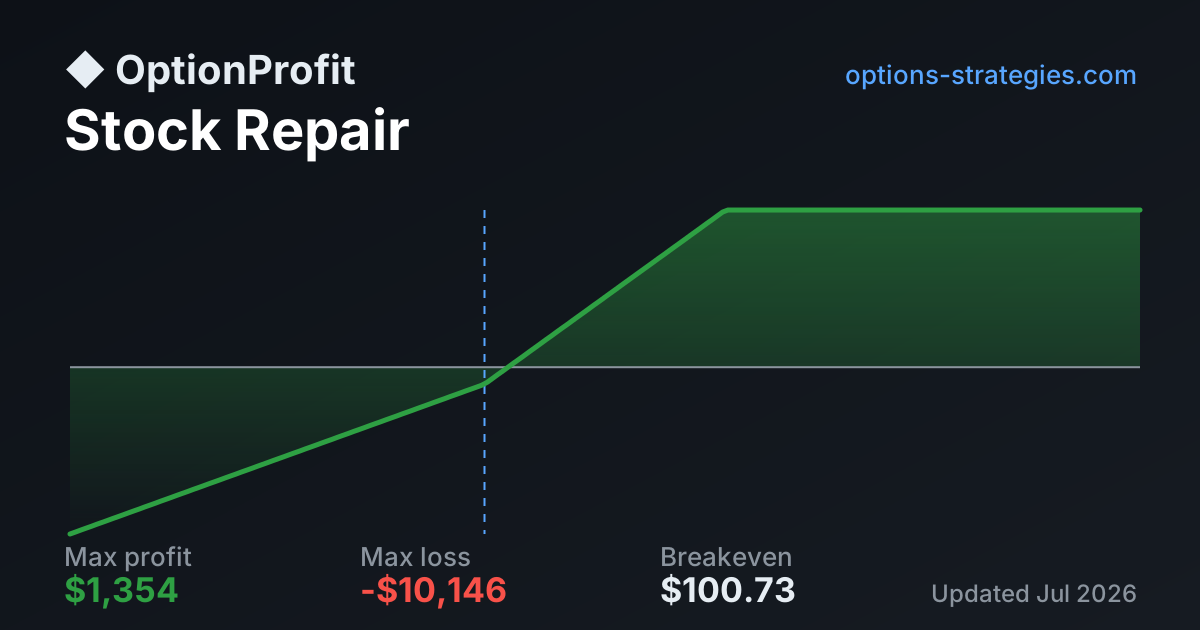
The stock repair strategy adds a 1×2 call ratio spread to a losing long position — buy one at-the-money call and sell two out-of-the-money calls, usually for near-zero cost. It doubles your recovery between the current price and the short strike, lowering your effective breakeven without adding capital.
Interactive calculator
Edit the price, strikes and premiums to see the payoff update live.
Want probability of profit and live Greeks on real prices? Open the Stock Repair calculator →
⧉ Embed this free calculator on your site →
Key characteristics
- Own the stock + buy 1 ATM call + sell 2 OTM calls: typically a zero-cost add-on.
- Doubles the gains between today’s price and the short strike, speeding recovery.
- No extra capital and no new downside — the ratio spread is self-financing.
- Upside is capped at the short strike; it is a recovery tool, not a growth trade.
When to use stock repair
Use it when a stock you own has fallen and you expect a partial rebound — enough to get back toward your cost, but not a full moon-shot. The extra long call doubles your participation in a bounce up to the short strike, lowering the price at which you break even.
Because the two short calls usually pay for the one long call, it costs little or nothing and adds no new downside: if the stock keeps falling you are no worse off than simply holding the shares.
Risks and management
The trade-off is a capped upside. Above the short strike the two short calls offset the extra gains, so a strong rally past that level is the good kind of problem — you recover fully but give up the runaway upside.
It does not fix the original downside: you still own the stock and lose if it keeps falling. Choose the short strike around your target rebound, and remember it is a repair, not a way to add risk.
On the Greeks, the Stock Repair is vega-negative — a fall in implied volatility (such as an earnings IV crush) works in your favour, and theta-positive, so time decay adds to the position each day it is held.
Managing the trade and common mistakes
After entering a stock repair, the primary metric to watch is how far the stock has recovered toward the upper call strike. Experienced traders look to close the entire structure — the long call and both short calls — once the stock has rallied enough that the spread has captured the bulk of its theoretical maximum gain, typically around 80 to 90 percent of max profit. Leaving it on too long and risking a reversal that wipes out open gains is the most common late-stage error. If the stock instead continues falling, there is little to adjust because the structure was built at zero or near-zero net debit; the rational move is to accept the situation and close everything to free up capital if the original thesis is broken.
Assignment risk sits at the heart of the nuances that catch beginners off guard. Because the stock repair involves two short calls, both can be assigned if the stock is above their strike at expiration. Early assignment is most likely on the calls closest to expiration when they go deep in-the-money — especially ahead of an ex-dividend date, when it becomes rational for the call buyer to capture the dividend instead of holding the option. Monitor the short calls if the stock rallies strongly, and consider closing or rolling them out in time before that window opens. At expiration, if the stock pins right at the short strike, there is genuine pin risk: you may be partially assigned on one short call but not the other, leaving a naked long call overnight — close everything by end of day to avoid that ambiguity.
The mistake that shows up most often is choosing strikes that are too close together or a short call ratio that is too aggressive, just to collect a credit rather than build a true break-even repair. This turns a defensive strategy into an accidental bearish bet if the stock rallies past the upper short strike. A second trap is treating the stock repair as a substitute for honest portfolio triage: if the original reason for holding the stock no longer holds, adding options on top of a fundamentally broken position simply delays a necessary decision. The repair works best when the underlying thesis remains intact and only the entry price was poorly timed.
Calculate it live
Use the free OptionProfit Stock Repair calculator to load a live option chain, build the trade, and instantly see the payoff chart, breakevens, probability of profit, Greeks and a Monte Carlo simulation of outcomes.
- A near-zero-cost 1×2 call ratio spread bolted onto a losing long.
- Doubles recovery up to the short strike, lowering your breakeven.
- Adds no capital and no new downside — but caps the upside.
- A repair tool for a modest rebound, not a way to chase gains.
META, GOOGL, AVGO, CRM, PYPL, BAC, WFC, GS, MA, GM, KO, WMT, SBUX, MARA
Frequently asked questions
Does stock repair cost anything?
Usually very little. The two out-of-the-money calls you sell typically pay for the one at-the-money call you buy, so the add-on is close to zero cost.
Does it add downside risk?
No. If the stock keeps falling you are in the same place as just holding the shares — the ratio spread expires worthless and you lose nothing extra on it.
What happens if the stock soars?
Your gains are capped at the short strike, because the two short calls offset the extra upside. You still recover fully; you just do not benefit from a runaway rally.
Long CallLong PutCovered CallCash Secured PutNaked PutBull Call SpreadBear Put SpreadBull Put Credit SpreadBear Call Credit SpreadIron CondorLong Call ButterflyLong StraddleLong StrangleCollarCall Calendar SpreadNaked CallCall Diagonal SpreadPut Calendar SpreadJade LizardBroken Wing ButterflyCall Ratio SpreadPut Ratio SpreadCall Ratio BackspreadPut Ratio BackspreadSynthetic Long StockStrapStripTwin PeaksKiteProtective PutShort StraddleShort StrangleSynthetic Short StockReverse Iron CondorReverse Iron ButterflyLong Call CondorDouble DiagonalZEBRA (Zero Extrinsic Back Ratio)Box SpreadRisk ReversalCovered StrangleLong GutsChristmas Tree ButterflyDiagonal Put SpreadConversionReversalCovered PutBig LizardReverse Jade LizardRatio Call WriteJelly RollDouble CalendarBull Call LadderBear Call LadderBull Put LadderBear Put LadderSeagull SpreadRatio Put WriteLong Put ButterflyLong Put CondorPut Broken Wing ButterflyPut Christmas Tree Butterfly
Educational use only. Quotes are delayed ~15 minutes and nothing here is financial advice. Options trading involves substantial risk of loss. Privacy Policy · Terms & Conditions.