Long Call Butterfly Calculator
A long butterfly combines a bull and bear spread to profit if the stock pins near the middle strike at expiration. Low cost, defined risk, high reward-to-risk near the target.
Interactive calculator
Edit the price, strikes and premiums to see the payoff update live.
Want probability of profit and live Greeks on real prices? Open the Long Call Butterfly calculator →
⧉ Embed this free calculator on your site →
Key characteristics
- Max profit near the middle strike; max loss = the small net debit.
- Cheap, with a high payoff ratio if the stock lands on target.
- Best when you expect very little movement into a known date.
How a butterfly is built
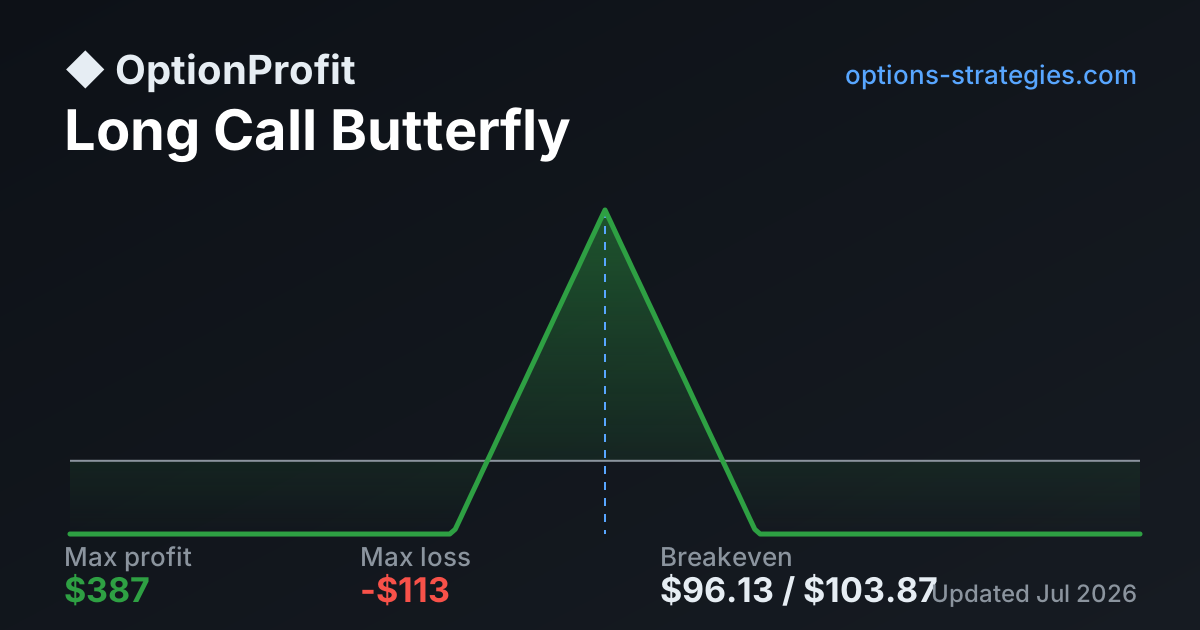
A long call butterfly buys one lower-strike call, sells two middle-strike calls, and buys one higher-strike call, with the strikes equally spaced. The result is a low-cost position whose payoff looks like a tent peaking at the middle strike.
It is a precise, low-cost bet on the stock landing at a specific price by expiration, offering a high reward-to-risk ratio if you are right about where it pins.
Risks and management
Maximum profit occurs only if the stock finishes exactly at the middle strike; maximum loss is the small net debit, lost if the stock moves well beyond either wing.
Because the peak is a single point, butterflies are usually managed for a partial profit rather than held for a perfect pin, and they benefit from low volatility and time decay drawing the price toward the centre.
On the Greeks, the Long Call Butterfly is vega-negative — a fall in implied volatility (such as an earnings IV crush) works in your favour, and theta-positive, so time decay adds to the position each day it is held.
Managing the trade and common mistakes
Experienced traders typically look to close a long call butterfly when it reaches 50–60% of its maximum theoretical profit rather than riding it to expiration. The reason is straightforward: the final gains are hard to capture because the position becomes very sensitive to where the stock closes relative to the short strikes, and bid-ask spreads on a four-leg structure widen sharply in the last week. If the trade moves decisively against you — the stock breaks away from the body of the spread early — cut the loss while extrinsic value still remains in the legs you are long. Rolling is rarely worth the additional commission and slippage, because the butterfly needs a very specific price outcome; moving the tent to a new strike often just resets a lottery ticket.
The most common beginner mistake is treating the short middle strikes as inert. They are short calls, and if the stock rallies hard into them before expiration, those legs accumulate delta quickly, turning a position you thought was neutral into one with real directional risk. Closely related is ignoring liquidity: butterflies in thinly traded underlyings have wide markets on every leg, meaning your theoretical edge disappears in the spread. Always check the implied volatility environment before entry — selling the two middle strikes embeds a short-vega position, so rising IV after you enter will hurt the spread even if the stock stays where you want it.
Assignment risk concentrates at the short strikes if the stock pins near them heading into expiration. With American-style equity options, early assignment on the short calls is possible any time they go deep in-the-money, particularly around an ex-dividend date. If you are assigned on one short call and your corresponding long call has not yet been exercised, you carry overnight stock exposure. The cleanest way to avoid this: monitor the position as expiration approaches, and close the entire spread rather than legging out. Trying to close one pair of strikes while leaving the other open is almost always more expensive and more dangerous than exiting the whole structure at once.
Calculate it live
Use the free OptionProfit Long Call Butterfly calculator to load a live option chain, build the trade, and instantly see the payoff chart, breakevens, probability of profit, Greeks and a Monte Carlo simulation of outcomes.
- A cheap, tent-shaped bet on the stock pinning a target price.
- Max loss = the small net debit; max profit at the middle strike.
- High reward-to-risk if the stock lands on target.
- Best with low expected movement; manage for partial profit.
SPY, QQQ, IWM, AAPL, NVDA, AMZN, AMD, NFLX, MU, COIN, PYPL, SOFI, JPM, BAC
Frequently asked questions
When do I make the most on a butterfly?
Only if the stock finishes exactly at the middle strike at expiration; in practice most traders close early for a partial profit.
Is a butterfly defined risk?
Yes — the most you can lose is the small net debit you paid to open it.
Butterfly or iron condor?
A butterfly targets a precise price with a low cost and high payoff; an iron condor profits over a wider range for a steadier credit.
Long CallLong PutCovered CallCash Secured PutNaked PutBull Call SpreadBear Put SpreadBull Put Credit SpreadBear Call Credit SpreadIron CondorLong StraddleLong StrangleCollarCall Calendar SpreadNaked CallCall Diagonal SpreadPut Calendar SpreadJade LizardBroken Wing ButterflyCall Ratio SpreadPut Ratio SpreadCall Ratio BackspreadPut Ratio BackspreadSynthetic Long StockStrapStripTwin PeaksKiteProtective PutShort StraddleShort StrangleSynthetic Short StockReverse Iron CondorReverse Iron ButterflyLong Call CondorDouble DiagonalZEBRA (Zero Extrinsic Back Ratio)Box SpreadRisk ReversalCovered StrangleLong GutsChristmas Tree ButterflyDiagonal Put SpreadConversionReversalCovered PutBig LizardReverse Jade LizardStock RepairRatio Call WriteJelly RollDouble CalendarBull Call LadderBear Call LadderBull Put LadderBear Put LadderSeagull SpreadRatio Put WriteLong Put ButterflyLong Put CondorPut Broken Wing ButterflyPut Christmas Tree Butterfly
Educational use only. Quotes are delayed ~15 minutes and nothing here is financial advice. Options trading involves substantial risk of loss. Privacy Policy · Terms & Conditions.