Broken Wing Butterfly Calculator
A broken wing butterfly is a butterfly with one wing moved further out. Shifting the wing cheapens the trade — often to a net credit — which removes the loss on that side, at the cost of a larger loss on the other.
Interactive calculator
Edit the price, strikes and premiums to see the payoff update live.
Want probability of profit and live Greeks on real prices? Open the Broken Wing Butterfly calculator →
⧉ Embed this free calculator on your site →
Key characteristics
- Built from a long call, two short calls, and a long call with the far wing skipped further out.
- Often opened for a small net credit, which eliminates risk on the skipped-wing side.
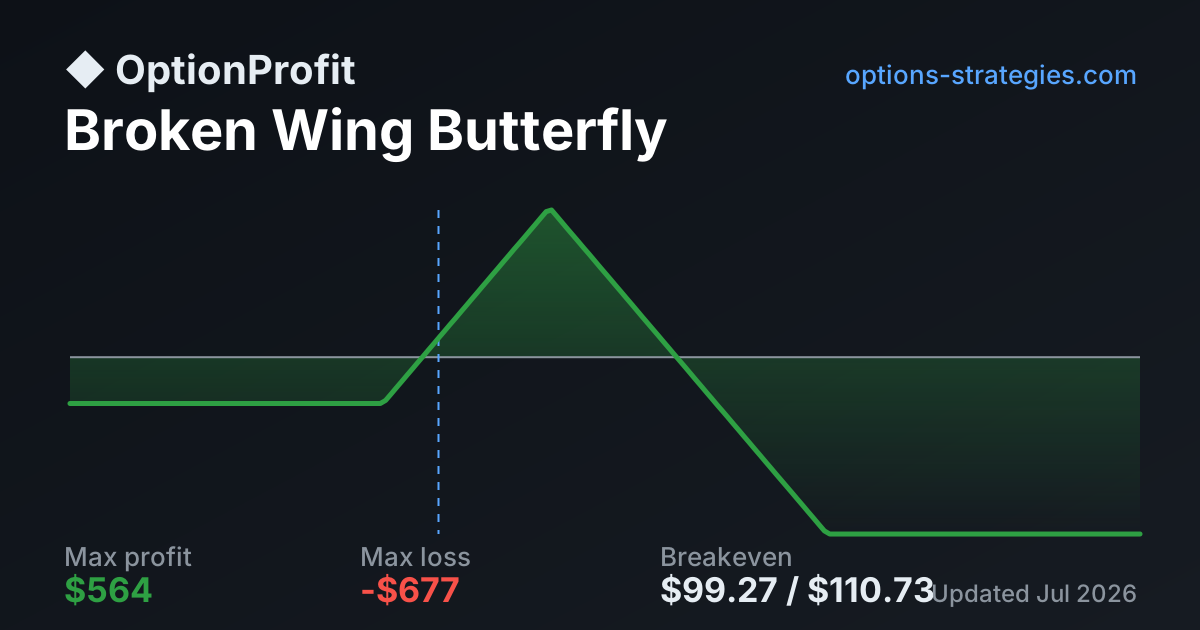
- Max profit still occurs near the short (body) strike at expiration.
- The remaining risk sits on the side where the wing was NOT widened.
When to use a broken wing butterfly
Use it when you expect the stock to drift toward a target but want a cheaper, lower-risk version of a butterfly — ideally one that costs nothing or pays a small credit to put on.
It is popular as a directional-neutral income trade because the credit version cannot lose on one side, so a wrong-way move in that direction is harmless.
How the payoff works
Like a standard butterfly, profit peaks if the stock pins the body strike at expiration. By skipping the far wing, you reduce the cost (or collect a credit), which flattens the payoff to zero on that side.
The trade-off: the near side now has a wider gap, so the maximum loss there is larger than a symmetric butterfly would have.
On the Greeks, the Broken Wing Butterfly is vega-negative — a fall in implied volatility (such as an earnings IV crush) works in your favour, and theta-positive, so time decay adds to the position each day it is held.
Managing the trade and common mistakes
With a broken wing butterfly, the asymmetry is the whole point — so managing it requires understanding which side carries the real risk. Because the spread widths are unequal, the position is entered for a small net credit on the wider side and a debit risk on the narrower side, or vice versa depending on construction. Experienced traders typically target 50–75 % of the maximum theoretical profit, then close. Unlike a symmetric butterfly where you can afford to wait, the uneven wing means a sharp move toward the wider spread can erase gains quickly. If the underlying drifts toward the short strikes before expiration, the most common adjustment is to close the entire structure rather than leg out, because partially unwinding a broken wing butterfly often creates naked short exposure for a brief moment.
The most frequent beginner mistake is misidentifying which side of the trade carries the tail risk. Traders who build the structure for a net credit sometimes assume the position is always safe because premium was received — but the wider short spread can produce a loss that far exceeds that credit if the underlying moves aggressively through the short strike. A second common error is holding through expiration to collect the last fragments of theta. In the final days, gamma on the short strikes accelerates, and a modest move can flip a profitable trade into a loss. Always know your breakeven point on the dangerous side before entry, not after.
Assignment and pin risk are especially relevant for the broken wing butterfly because the two short strikes are at different distances from the underlying. If expiration approaches with the underlying near the inner short strike, the outer short strike may go deep in-the-money and carry significant assignment risk even before the close. For equity options, early assignment on the uncovered short can leave you with an unexpected stock position and a gap in your hedge. Liquidity is another concern: the combination of four legs at non-standard strikes can produce wide bid-ask spreads, particularly in less actively traded underlyings. Sizing the position conservatively and using limit orders for the full spread are standard practice for experienced traders.
Calculate it live
Use the free OptionProfit Broken Wing Butterfly calculator to load a live option chain, build the trade, and instantly see the payoff chart, breakevens, probability of profit, Greeks and a Monte Carlo simulation of outcomes.
- A broken wing butterfly is an asymmetric butterfly with one wing skipped further out.
- Often a net credit, removing risk on the skipped-wing side.
- Max profit is still near the body strike.
- The remaining (non-widened) side carries the risk.
SPY, QQQ, IWM, AAPL, NVDA, AMZN, AMD, NFLX, MU, COIN, PYPL, SOFI, JPM, BAC
Frequently asked questions
Why open a broken wing butterfly for a credit?
A credit means you cannot lose on the skipped-wing side — a wrong-way move there simply leaves you keeping the credit, which is why traders prefer it over a debit butterfly.
Where is the risk in a broken wing butterfly?
On the side where you did NOT widen the wing. That gap is larger than a symmetric butterfly, so the maximum loss there is bigger.
Is a broken wing butterfly defined risk?
Yes — all four legs are long or short options with capped payoffs, so the maximum loss is known when you open it.
Long CallLong PutCovered CallCash Secured PutNaked PutBull Call SpreadBear Put SpreadBull Put Credit SpreadBear Call Credit SpreadIron CondorLong Call ButterflyLong StraddleLong StrangleCollarCall Calendar SpreadNaked CallCall Diagonal SpreadPut Calendar SpreadJade LizardCall Ratio SpreadPut Ratio SpreadCall Ratio BackspreadPut Ratio BackspreadSynthetic Long StockStrapStripTwin PeaksKiteProtective PutShort StraddleShort StrangleSynthetic Short StockReverse Iron CondorReverse Iron ButterflyLong Call CondorDouble DiagonalZEBRA (Zero Extrinsic Back Ratio)Box SpreadRisk ReversalCovered StrangleLong GutsChristmas Tree ButterflyDiagonal Put SpreadConversionReversalCovered PutBig LizardReverse Jade LizardStock RepairRatio Call WriteJelly RollDouble CalendarBull Call LadderBear Call LadderBull Put LadderBear Put LadderSeagull SpreadRatio Put WriteLong Put ButterflyLong Put CondorPut Broken Wing ButterflyPut Christmas Tree Butterfly
Educational use only. Quotes are delayed ~15 minutes and nothing here is financial advice. Options trading involves substantial risk of loss. Privacy Policy · Terms & Conditions.