Double Diagonal Calculator
A double diagonal sells a near-term out-of-the-money call and put and buys longer-dated, further-out-of-the-money call and put. It is a neutral income strategy: the short near-term options decay fast in your favour while the long-dated options cap the risk and can be kept after the front month expires.
Interactive calculator
Edit the price, strikes and premiums to see the payoff update live.
Want probability of profit and live Greeks on real prices? Open the Double Diagonal calculator →
⧉ Embed this free calculator on your site →
Key characteristics
- Sell a near-term OTM call + put, buy longer-dated further-OTM call + put.
- Profits from near-term time decay while the stock stays range-bound.
- The long-dated options define the risk and survive the front-month expiry.
- A two-sided, income-oriented cousin of the calendar and diagonal spreads.
When to use a double diagonal
Use it when you expect a calm, range-bound stock and want to harvest premium on both sides at once. It is essentially a call diagonal and a put diagonal run together, so you collect time decay above and below the price while the back-month options provide protection and residual value.
After the near-term options expire you are left holding the long-dated call and put — you can close them, or roll new short options against them for another cycle of income.
Risks and management
The position is long volatility on the back month but short volatility on the front, so it is sensitive to how implied volatility shifts between the two expirations. A sharp move, or a large IV change, can turn the trade against you.
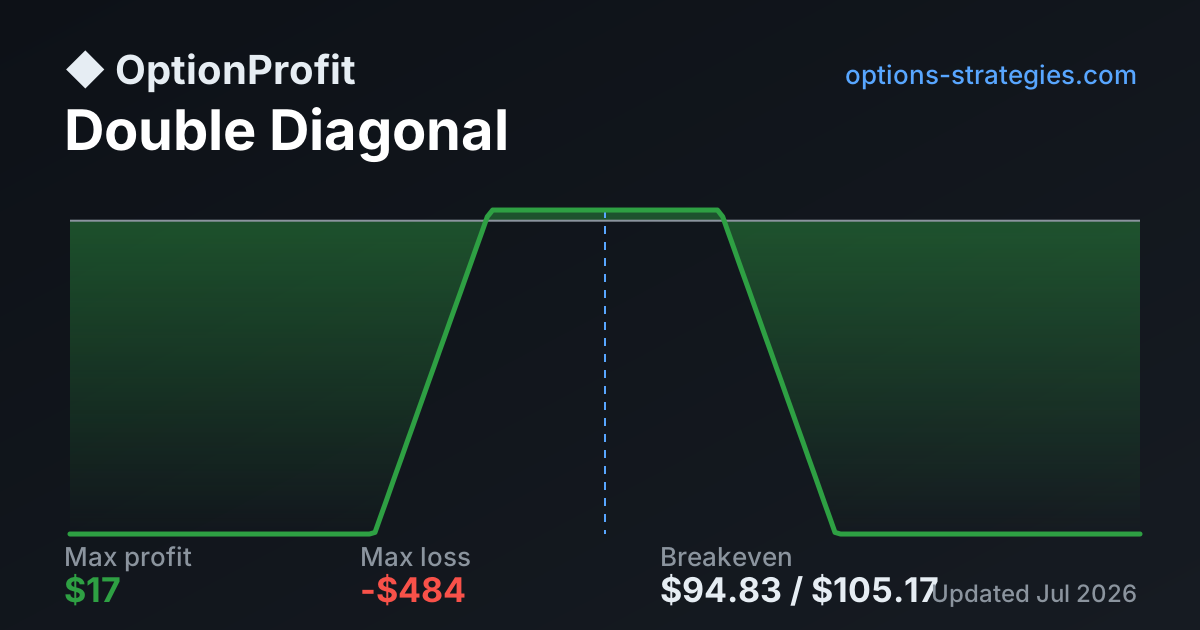
Risk is defined but not trivial to picture, because the long options still carry time value at the near-term expiration. Model the payoff at the front-month expiry (as this calculator does) before committing, and have a plan to adjust if the stock leaves the range.
On the Greeks, the Double Diagonal is vega-negative — a fall in implied volatility (such as an earnings IV crush) works in your favour, and theta-positive, so time decay adds to the position each day it is held.
Managing the trade and common mistakes
Once a double diagonal is on, the position lives and dies by two forces pulling in opposite directions: the short options decaying fast while the long options retain most of their value. Experienced traders typically look to close or take partial profits when the net credit received on the short options has decayed to roughly 50 percent of its original value, because the remaining theta has been harvested and the gamma risk of approaching expiration starts to outweigh the reward. If the underlying drifts close to one of the short strikes before that threshold is reached, the standard adjustment is to roll that threatened short option out in time or further away from the current price — doing both simultaneously if needed — ideally for a credit or at worst breakeven, to keep the structure intact without adding meaningful new debit.
The most common beginner mistake is treating the two calendar spreads as independent positions and managing them separately, which destroys the directional cushion the structure is designed to provide. Another frequent error is ignoring the volatility relationship between the near and far expirations: entering when implied volatility is already elevated in the long-dated options inflates the debit paid and collapses the edge the strategy depends on. A third pitfall is sizing the spread too tightly — placing the short strikes too close to the current price chasing maximum premium — so that any modest move forces a costly adjustment or an outright loss before theta has had time to work.
Assignment risk on the short calls or puts is real but manageable: because you hold long options at the same strikes in a further expiration, any shares you receive on assignment can be hedged immediately with those longs. Still, to avoid the operational hassle and the capital drag of holding stock overnight, most practitioners close or roll the short leg before it enters the final day before expiration with meaningful intrinsic value. Liquidity deserves equal attention — double diagonals involve four legs, so wide bid-ask spreads on any leg compound quickly; using limit orders at or near the mid-price and checking open interest on all four strikes before entry are non-negotiable habits for keeping transaction costs from eroding the entire theoretical edge.
Calculate it live
Use the free OptionProfit Double Diagonal calculator to load a live option chain, build the trade, and instantly see the payoff chart, breakevens, probability of profit, Greeks and a Monte Carlo simulation of outcomes.
- Sell near-term OTM call + put, buy longer-dated further-OTM call + put.
- Earns from front-month time decay on a range-bound stock.
- The long-dated options cap the risk and can be reused after the front expires.
- Sensitive to volatility shifts between the two expirations — model it first.
SPY, QQQ, IWM, AAPL, NVDA, AMD, NFLX, MU, SHOP, COIN, JPM, BAC, BA, F
Frequently asked questions
What is the difference between a double diagonal and an iron condor?
An iron condor uses one expiration for all four legs; a double diagonal buys the protective wings in a later expiration. That longer-dated protection retains value and can be kept after the near-term options expire, but adds volatility sensitivity.
When does a double diagonal make money?
When the stock stays range-bound through the near-term expiration, so the short call and put decay while the long-dated options hold their value. Stable or mildly falling implied volatility helps.
Can I reuse the long options?
Yes — that is part of the appeal. Once the front-month options expire you can sell new short options against the surviving long-dated call and put for another income cycle.
Long CallLong PutCovered CallCash Secured PutNaked PutBull Call SpreadBear Put SpreadBull Put Credit SpreadBear Call Credit SpreadIron CondorLong Call ButterflyLong StraddleLong StrangleCollarCall Calendar SpreadNaked CallCall Diagonal SpreadPut Calendar SpreadJade LizardBroken Wing ButterflyCall Ratio SpreadPut Ratio SpreadCall Ratio BackspreadPut Ratio BackspreadSynthetic Long StockStrapStripTwin PeaksKiteProtective PutShort StraddleShort StrangleSynthetic Short StockReverse Iron CondorReverse Iron ButterflyLong Call CondorZEBRA (Zero Extrinsic Back Ratio)Box SpreadRisk ReversalCovered StrangleLong GutsChristmas Tree ButterflyDiagonal Put SpreadConversionReversalCovered PutBig LizardReverse Jade LizardStock RepairRatio Call WriteJelly RollDouble CalendarBull Call LadderBear Call LadderBull Put LadderBear Put LadderSeagull SpreadRatio Put WriteLong Put ButterflyLong Put CondorPut Broken Wing ButterflyPut Christmas Tree Butterfly
Educational use only. Quotes are delayed ~15 minutes and nothing here is financial advice. Options trading involves substantial risk of loss. Privacy Policy · Terms & Conditions.