Call Ratio Backspread Calculator
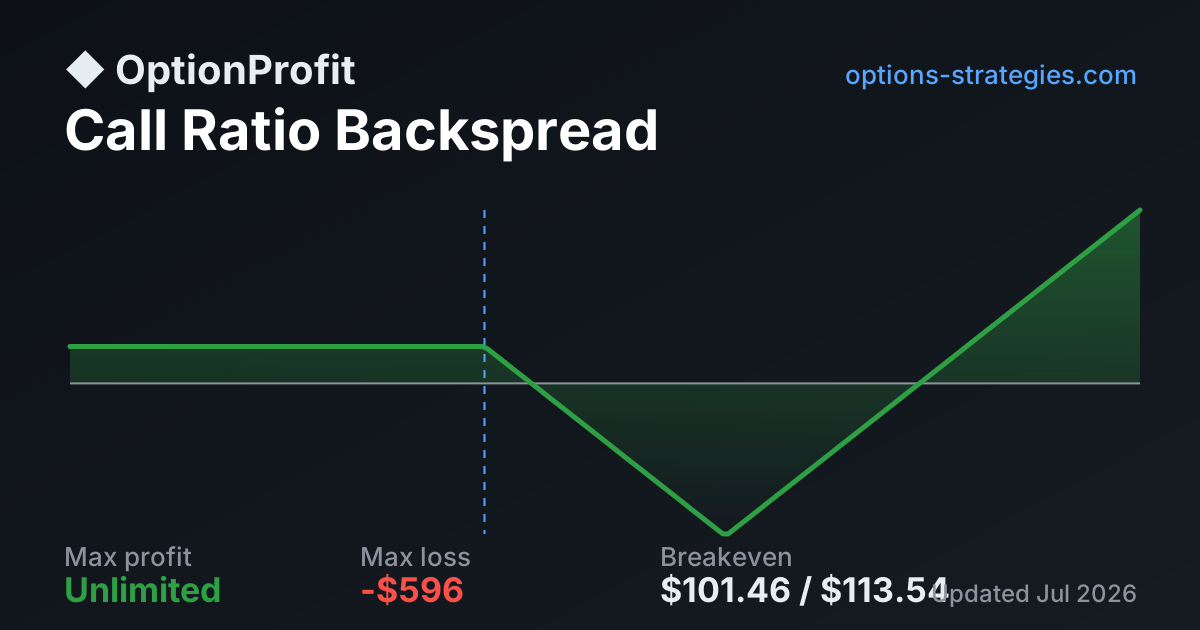
A call backspread sells one call and buys two higher calls. It profits from a strong rally with unlimited upside, often costs little or nothing to open, and has limited, defined risk if the stock stalls in a middle zone.
Interactive calculator
Edit the price, strikes and premiums to see the payoff update live.
Want probability of profit and live Greeks on real prices? Open the Call Ratio Backspread calculator →
⧉ Embed this free calculator on your site →
Key characteristics
- Sell 1 lower call, buy 2 higher calls — the reverse of a ratio spread.
- Unlimited profit on a big up-move (two long calls).
- Often a credit or near-zero cost to open.
- Maximum loss is limited and occurs if the stock pins the long strike.
When to use a call backspread
Use it when you expect a large upside move — for example before a catalyst — but want to risk little if you are wrong and the stock barely moves. It is a long-volatility, bullish trade.
It is most attractive when you can put it on for a credit, so a flat-to-down stock simply leaves you keeping that credit.
How the payoff works
Below the short strike everything expires worthless and you keep any credit. The worst case is a stock that finishes right at the long strike, where the single short call is in the money but the long calls have little value — that is the defined maximum loss.
Above the long strike the two long calls outrun the single short call, so profit grows without limit as the stock rallies.
On the Greeks, the Call Ratio Backspread is vega-positive — rising implied volatility helps it, while an IV crush works against you, and theta-negative, so time decay erodes it and the move needs to come reasonably soon.
Managing the trade and common mistakes
After entry, the call ratio backspread behaves very differently depending on how quickly and how far the underlying moves. Experienced traders treat it primarily as a long-volatility position and take profits when a strong, sustained rally has pushed the long calls deep in the money and delta is working heavily in their favor. There is little reason to sit through a slow grind upward: if the move you anticipated has materialized, close the position and realize the gain. The danger zone — a moderate rise that pins the underlying near the short strike at expiration — is where the position loses the most, so if the underlying is drifting slowly toward that level with weeks left on the clock, consider rolling the short strike up or adding a defensive hedge rather than waiting passively.
The mistake beginners make most often is underestimating the damage that a moderate, steady rally can do. Because the strategy sounds bullish and involves buying more calls than you sell, many new traders assume any upward move is good news — it is not. A move that lands right around the short strike at expiration can produce the maximum loss. A related error is ignoring the net credit or net debit at entry: if the spread was opened for a net credit, you also profit if the underlying falls sharply, which is a meaningful cushion that beginners often fail to exploit or even recognize. Never enter this trade without a clear plan for what the position looks like at the short strike one week before expiration.
Assignment risk deserves particular attention here because the short call is a naked short in the sense that the ratio of long calls does not fully cover it the way a spread does — one short call against two long calls means the lower strike is effectively a synthetic short stock position if assigned early while the long calls have not yet moved deeply in the money. If the short call goes in the money before expiration, monitor it daily; any sign of early assignment should prompt immediate action to close or adjust. At expiration, if the underlying lands between the short and long strikes, the short call will be assigned and you will be short stock unless you act — your long calls may still have some extrinsic value worth selling before they too expire. Liquidity in the individual legs can widen significantly during volatile periods, so always use limit orders and price each leg separately rather than routing the spread as a package.
Calculate it live
Use the free OptionProfit Call Ratio Backspread calculator to load a live option chain, build the trade, and instantly see the payoff chart, breakevens, probability of profit, Greeks and a Monte Carlo simulation of outcomes.
- Call backspread = short 1 call, long 2 higher calls.
- Unlimited upside on a big rally; limited risk if flat.
- Best opened for a credit before an upside catalyst.
- Worst case is a stock that pins the long strike.
META, GOOGL, AVGO, CRM, PLTR, WFC, GS, MA, KO, WMT, SBUX, XOM, BABA, MARA
Frequently asked questions
When does a call backspread make money?
On a large up-move: the two long calls more than offset the single short call, so profit is unlimited above the long strike. A flat-to-down stock leaves you keeping any credit.
What is the maximum loss on a call backspread?
It is limited and occurs if the stock finishes at the long strike at expiration, where the short call is in the money but the long calls are nearly worthless.
How is a backspread different from a ratio spread?
A ratio spread is net short extra options (uncapped risk on a big move); a backspread is net long extra options (uncapped profit on a big move, limited risk).
Long CallLong PutCovered CallCash Secured PutNaked PutBull Call SpreadBear Put SpreadBull Put Credit SpreadBear Call Credit SpreadIron CondorLong Call ButterflyLong StraddleLong StrangleCollarCall Calendar SpreadNaked CallCall Diagonal SpreadPut Calendar SpreadJade LizardBroken Wing ButterflyCall Ratio SpreadPut Ratio SpreadPut Ratio BackspreadSynthetic Long StockStrapStripTwin PeaksKiteProtective PutShort StraddleShort StrangleSynthetic Short StockReverse Iron CondorReverse Iron ButterflyLong Call CondorDouble DiagonalZEBRA (Zero Extrinsic Back Ratio)Box SpreadRisk ReversalCovered StrangleLong GutsChristmas Tree ButterflyDiagonal Put SpreadConversionReversalCovered PutBig LizardReverse Jade LizardStock RepairRatio Call WriteJelly RollDouble CalendarBull Call LadderBear Call LadderBull Put LadderBear Put LadderSeagull SpreadRatio Put WriteLong Put ButterflyLong Put CondorPut Broken Wing ButterflyPut Christmas Tree Butterfly
Educational use only. Quotes are delayed ~15 minutes and nothing here is financial advice. Options trading involves substantial risk of loss. Privacy Policy · Terms & Conditions.