Naked Call Calculator
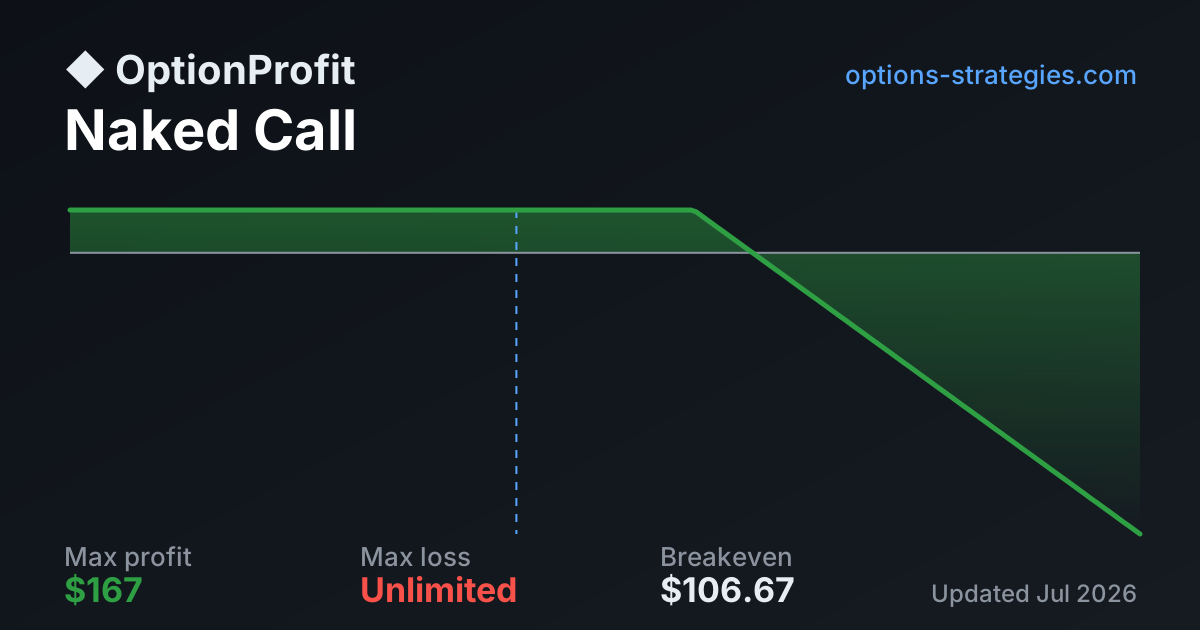
A naked (short) call sells a call without owning the stock. You keep the premium if the stock stays below the strike, but the risk is theoretically unlimited if it rallies — one of the highest-risk options trades.
Interactive calculator
Edit the price, strikes and premiums to see the payoff update live.
Want probability of profit and live Greeks on real prices? Open the Naked Call calculator →
⧉ Embed this free calculator on your site →
Key characteristics
- Max profit = premium received. Loss is unlimited as the stock rises.
- Breakeven = strike price + premium received.
- Requires significant margin and is restricted for most retail accounts.
- A bearish-to-neutral bet that a stock will not rise above the strike.
When (and whether) to use a naked call
A naked call profits when a stock stays flat or falls, letting the call expire worthless so you keep the premium. It is used by experienced, well-capitalised traders who are confident a stock will not rally past the strike.
Unlike a covered call, you do not own the shares to deliver if assigned — so a sharp rally forces you to buy the stock at the market price to cover, with losses that grow without limit.
Risks and management
The unlimited upside risk is what makes the naked call so dangerous: a takeover or a squeeze can move a stock far beyond the strike overnight, dwarfing the small premium collected. Brokers require large margin for exactly this reason.
Most traders cap the risk by buying a higher-strike call against it — turning the position into a defined-risk bear call credit spread. Beginners should not sell naked calls at all.
On the Greeks, the Naked Call is vega-negative — a fall in implied volatility (such as an earnings IV crush) works in your favour, and theta-positive, so time decay adds to the position each day it is held.
Managing the trade and common mistakes
Experienced traders typically close a naked call when it has decayed to roughly 20–25% of the original credit received. Holding on for the last few cents of theta is rarely worth the tail risk. If the underlying drifts against the position — particularly if it climbs through the short strike — the standard adjustment is to roll the call up and out: buy back the current call and sell a higher-strike call in a later expiration, ideally collecting an additional net credit. Rolling out in time buys theta and buys room; rolling up reduces delta exposure. If the stock gaps above the strike and a credit roll is no longer available, cutting the loss outright is almost always preferable to doubling down.
The single most dangerous mistake beginners make is treating the premium received as pure profit before expiration. A naked call has theoretically unlimited upside risk, and a modest move against the trade can erase several cycles of collected premium in a single session. A hard stop — typically at two to three times the credit received — should be defined before the trade is placed, not improvised after the loss is already painful. Beginners also underestimate how quickly implied volatility expansion (a 'vol spike') inflates the mark-to-market loss even when the underlying has moved only modestly.
Assignment risk on a naked call is real from the moment the call goes in-the-money, not just at expiration. Early assignment is more likely when the call has little extrinsic value left and the underlying pays a dividend shortly before expiration — the long holder may exercise early to capture the dividend, leaving you short shares with no hedge. Liquidity matters enormously: always verify that the option has tight bid-ask spreads before selling, because a wide spread turns every adjustment into a hidden cost. At expiration, any short call that is even one cent in-the-money will be automatically exercised by the OCC, so close or roll positions before the final bell unless you intend to deliver shares.
Calculate it live
Use the free OptionProfit Naked Call calculator to load a live option chain, build the trade, and instantly see the payoff chart, breakevens, probability of profit, Greeks and a Monte Carlo simulation of outcomes.
- Collect premium, but take on theoretically unlimited risk.
- Breakeven = strike + premium; profit only if the stock stays below.
- Buy a further call to cap the risk (a bear call credit spread).
- Not for beginners — assignment forces buying at the market price.
MSFT, TSLA, INTC, UBER, SHOP, DIS, HD, LCID, MSTR, ARM, CVS, DAL, CELH, ZM
Frequently asked questions
How much can I lose on a naked call?
In theory an unlimited amount — losses grow as the stock rises with no cap, which is why a naked call is one of the riskiest options trades.
Is a naked call the same as a covered call?
No. A covered call is backed by 100 shares you own (capped risk); a naked call has no shares behind it, so the upside risk is unlimited.
How do I make it less risky?
Buy a cheaper, higher-strike call to define the maximum loss — that converts it into a bear call credit spread.
Long CallLong PutCovered CallCash Secured PutNaked PutBull Call SpreadBear Put SpreadBull Put Credit SpreadBear Call Credit SpreadIron CondorLong Call ButterflyLong StraddleLong StrangleCollarCall Calendar SpreadCall Diagonal SpreadPut Calendar SpreadJade LizardBroken Wing ButterflyCall Ratio SpreadPut Ratio SpreadCall Ratio BackspreadPut Ratio BackspreadSynthetic Long StockStrapStripTwin PeaksKiteProtective PutShort StraddleShort StrangleSynthetic Short StockReverse Iron CondorReverse Iron ButterflyLong Call CondorDouble DiagonalZEBRA (Zero Extrinsic Back Ratio)Box SpreadRisk ReversalCovered StrangleLong GutsChristmas Tree ButterflyDiagonal Put SpreadConversionReversalCovered PutBig LizardReverse Jade LizardStock RepairRatio Call WriteJelly RollDouble CalendarBull Call LadderBear Call LadderBull Put LadderBear Put LadderSeagull SpreadRatio Put WriteLong Put ButterflyLong Put CondorPut Broken Wing ButterflyPut Christmas Tree Butterfly
Educational use only. Quotes are delayed ~15 minutes and nothing here is financial advice. Options trading involves substantial risk of loss. Privacy Policy · Terms & Conditions.