Collar Calculator
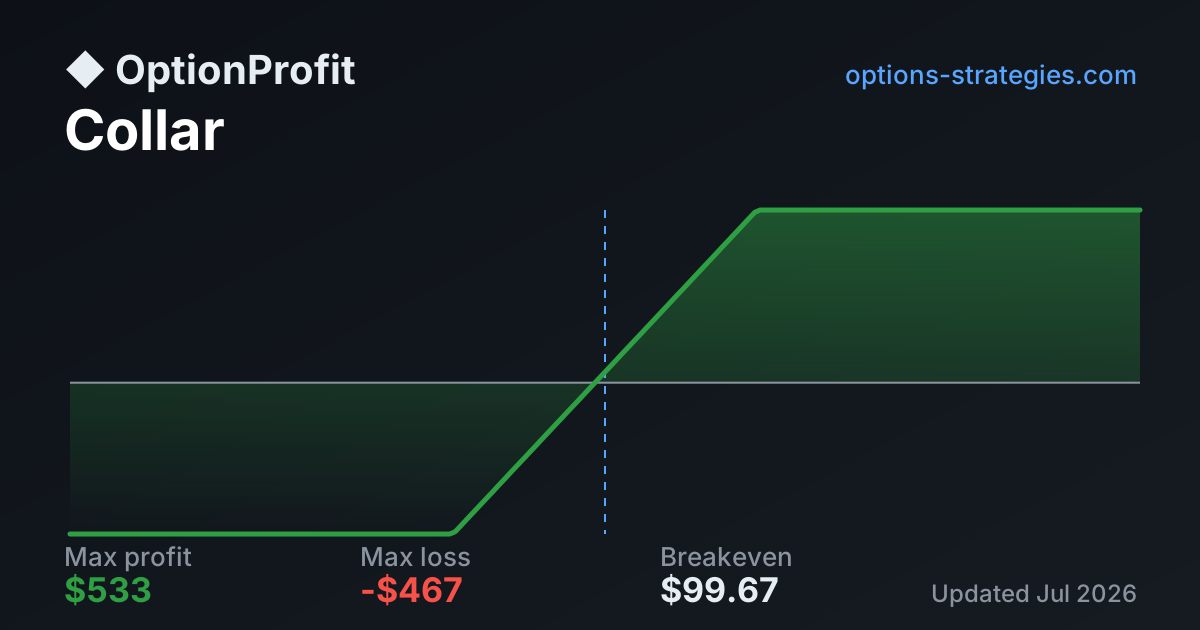
A collar protects a stock position by buying a put and financing it with a covered call. It caps both downside and upside — low-cost insurance for gains you want to keep.
Interactive calculator
Edit the price, strikes and premiums to see the payoff update live.
Want probability of profit and live Greeks on real prices? Open the Collar calculator →
⧉ Embed this free calculator on your site →
Key characteristics
- The put sets a floor; the call caps the upside and pays for the put.
- Often built for little or no net cost.
- Ideal for protecting an appreciated long-term holding.
When to use a collar
Use a collar to protect gains on a stock you own without selling it. You buy a protective put to set a floor and sell a covered call to pay for that put, bracketing your position between the two strikes.
It is ideal after a big run-up, when you want to lock in most of the gain through an uncertain period but stay invested for tax or conviction reasons.
The trade-off
The put guarantees a floor; the call caps your upside and finances the protection — often making the collar cost little or nothing to put on (a "zero-cost collar").
The cost is opportunity: if the stock keeps rallying past the call strike, your shares are called away and you miss the rest. You are trading some upside for downside certainty.
On the Greeks, the Collar is close to vega-neutral, so implied-volatility shifts have little net effect.
Managing the trade and common mistakes
Once a collar is on, the main lever experienced traders reach for is the short call. If the stock rallies toward your call strike early in the cycle and that call has lost most of its value, you can buy it back and sell a higher-strike call further out in time — a roll-up-and-out — to let the position breathe and collect fresh credit. On the downside, if the stock slides sharply, you can close the put early to harvest its gained value, or roll the put up to lock in a higher floor before the move reverses.
The assignment nuance that trips up beginners: the short call can be exercised early if it goes deep in-the-money, especially just before an ex-dividend date when it becomes rational for the call buyer to capture the dividend. Check the dividend calendar before expiration and consider rolling the call out or closing it before that date if intrinsic value substantially exceeds time value. At expiration, if the stock pins near your call strike, do not assume you are safe — pin risk means you could be assigned and simultaneously need to exercise your put; closing both legs the day before avoids that ambiguity.
The most common beginner mistake is choosing the call strike based purely on premium rather than on where they would genuinely be content to surrender the shares. Setting the call too close to the current price often means giving up the stock in a modest rally — exactly the outcome they were trying to avoid. A second mistake is letting the entire structure expire without re-evaluating: if circumstances change before expiration, rolling the collar or simply removing one leg may be far better than sitting idle until expiry day.
Calculate it live
Use the free OptionProfit Collar calculator to load a live option chain, build the trade, and instantly see the payoff chart, breakevens, probability of profit, Greeks and a Monte Carlo simulation of outcomes.
- Protects an appreciated stock position with a floor and a cap.
- The covered call finances the protective put — often near zero cost.
- Caps upside above the call strike in exchange for downside safety.
- Great for locking in gains while staying invested.
SPY, QQQ, IWM, AAPL, NVDA, AMZN, AMD, NFLX, MU, COIN, PYPL, SOFI, JPM, BAC
Frequently asked questions
Does a collar cost money?
Often very little — the premium from the call you sell pays for the put you buy, which is why "zero-cost collars" are common.
What happens if the stock soars?
Your shares are called away at the call strike, so you keep the gain up to that level but miss any move beyond it.
When should I use a collar?
When you have a meaningful unrealised gain you want to protect through an uncertain period without selling the shares outright.
Long CallLong PutCovered CallCash Secured PutNaked PutBull Call SpreadBear Put SpreadBull Put Credit SpreadBear Call Credit SpreadIron CondorLong Call ButterflyLong StraddleLong StrangleCall Calendar SpreadNaked CallCall Diagonal SpreadPut Calendar SpreadJade LizardBroken Wing ButterflyCall Ratio SpreadPut Ratio SpreadCall Ratio BackspreadPut Ratio BackspreadSynthetic Long StockStrapStripTwin PeaksKiteProtective PutShort StraddleShort StrangleSynthetic Short StockReverse Iron CondorReverse Iron ButterflyLong Call CondorDouble DiagonalZEBRA (Zero Extrinsic Back Ratio)Box SpreadRisk ReversalCovered StrangleLong GutsChristmas Tree ButterflyDiagonal Put SpreadConversionReversalCovered PutBig LizardReverse Jade LizardStock RepairRatio Call WriteJelly RollDouble CalendarBull Call LadderBear Call LadderBull Put LadderBear Put LadderSeagull SpreadRatio Put WriteLong Put ButterflyLong Put CondorPut Broken Wing ButterflyPut Christmas Tree Butterfly
Educational use only. Quotes are delayed ~15 minutes and nothing here is financial advice. Options trading involves substantial risk of loss. Privacy Policy · Terms & Conditions.