Put Ratio Spread Calculator
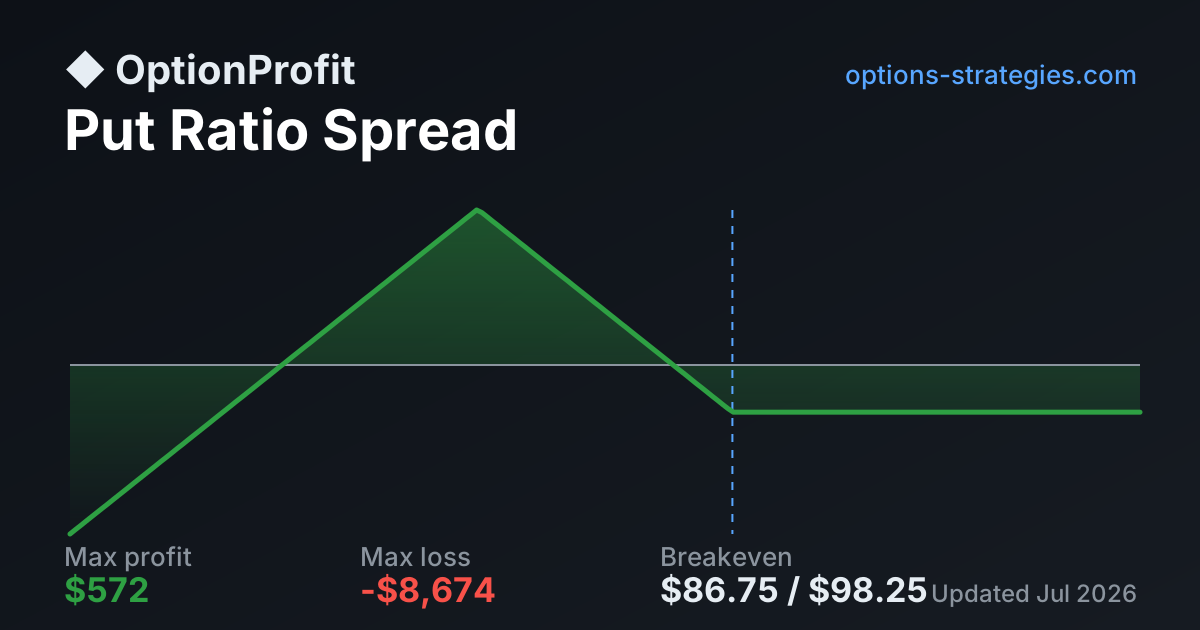
A put ratio spread buys one put and sells two lower-strike puts. It is cheap or a credit and profits from a moderate decline — but the extra short put leaves growing risk if the stock falls too far.
Interactive calculator
Edit the price, strikes and premiums to see the payoff update live.
Want probability of profit and live Greeks on real prices? Open the Put Ratio Spread calculator →
⧉ Embed this free calculator on your site →
Key characteristics
- Buy 1 higher put, sell 2 lower puts — a 1×2 ratio.
- Often opened for little cost or a small credit.
- Best outcome: the stock falls to around the short strike at expiration.
- Risk grows below the short strikes (down to a zero stock price).
When to use a put ratio spread
Use it when you are moderately bearish with a downside target near the short strikes, and you do not expect a crash. The short puts pay for the long put, making the trade cheap or free.
The extra short put creates assignment and downside risk, so this is an advanced trade — keep size small and plan an exit if the stock breaks below the short strikes.
How the payoff works
Profit peaks if the stock finishes at the short strike: the long put is in the money while the short puts are at or near worthless. Above the long strike you keep any credit or lose only a small debit.
Below the short strike the position becomes net short puts, so losses increase as the stock falls — large, though bounded at a zero stock price.
On the Greeks, the Put Ratio Spread is vega-negative — a fall in implied volatility (such as an earnings IV crush) works in your favour, and theta-positive, so time decay adds to the position each day it is held.
Managing the trade and common mistakes
Once a Put Ratio Spread is open — typically one long put and two short puts — the risk profile is asymmetric in a way that demands active attention. The position collects a small net credit or costs a small debit at entry, which can give a false sense of safety. Profit peaks if the underlying lands near the short put strikes at expiration; if it falls well below them, the extra short put creates uncapped downside. Experienced traders set a clear exit trigger — often closing the entire spread if the underlying breaches the short strike by a meaningful amount — rather than waiting to see if the move reverses.
Rolling or adjusting a Put Ratio Spread is more complex than with defined-risk strategies. If the underlying is sliding toward the short strikes faster than expected, one common adjustment is to buy back one of the short puts to convert the position into a simple long put or a vertical spread, removing the naked-like exposure. Rolling the entire structure down and out for a credit buys time but also shifts the danger zone lower; do this only when you have a well-reasoned view that the move will stabilize.
The most dangerous beginner mistake is underestimating how quickly the extra short put generates losses in a fast, sustained decline — the very scenario a bearish trader might have hoped to profit from. A second common error is entering the spread during high implied volatility without a plan: if vol collapses quickly, the short puts lose value faster than the long put, which looks like a profit, but if the underlying then drops hard, the position can turn sharply against you. At expiration, be alert to assignment risk on both short puts if they finish in-the-money; partial assignment — one put exercised but not the other — can leave an unexpected short stock position over a weekend or holiday.
Calculate it live
Use the free OptionProfit Put Ratio Spread calculator to load a live option chain, build the trade, and instantly see the payoff chart, breakevens, probability of profit, Greeks and a Monte Carlo simulation of outcomes.
- Put ratio spread = long 1 put, short 2 lower puts.
- Cheap or credit; best if the stock falls to the short strike.
- Growing risk below the short strikes — size small.
- A moderately-bearish trade, not a crash trade.
MSFT, TSLA, INTC, UBER, SHOP, DIS, HD, LCID, MSTR, ARM, CVS, DAL, CELH, ZM
Frequently asked questions
Is a put ratio spread bullish or bearish?
Moderately bearish — it profits most from a decline toward the short strike, but a very large drop hurts it because of the extra short put.
What is the risk of a put ratio spread?
Below the short strikes you are net short puts, so losses grow as the stock falls (bounded only at a zero stock price) and you may be assigned shares.
Can a put ratio spread be a credit?
Often yes — two short puts usually bring in more than the single long put costs, giving a small starting credit.
Long CallLong PutCovered CallCash Secured PutNaked PutBull Call SpreadBear Put SpreadBull Put Credit SpreadBear Call Credit SpreadIron CondorLong Call ButterflyLong StraddleLong StrangleCollarCall Calendar SpreadNaked CallCall Diagonal SpreadPut Calendar SpreadJade LizardBroken Wing ButterflyCall Ratio SpreadCall Ratio BackspreadPut Ratio BackspreadSynthetic Long StockStrapStripTwin PeaksKiteProtective PutShort StraddleShort StrangleSynthetic Short StockReverse Iron CondorReverse Iron ButterflyLong Call CondorDouble DiagonalZEBRA (Zero Extrinsic Back Ratio)Box SpreadRisk ReversalCovered StrangleLong GutsChristmas Tree ButterflyDiagonal Put SpreadConversionReversalCovered PutBig LizardReverse Jade LizardStock RepairRatio Call WriteJelly RollDouble CalendarBull Call LadderBear Call LadderBull Put LadderBear Put LadderSeagull SpreadRatio Put WriteLong Put ButterflyLong Put CondorPut Broken Wing ButterflyPut Christmas Tree Butterfly
Educational use only. Quotes are delayed ~15 minutes and nothing here is financial advice. Options trading involves substantial risk of loss. Privacy Policy · Terms & Conditions.