Covered Strangle Calculator
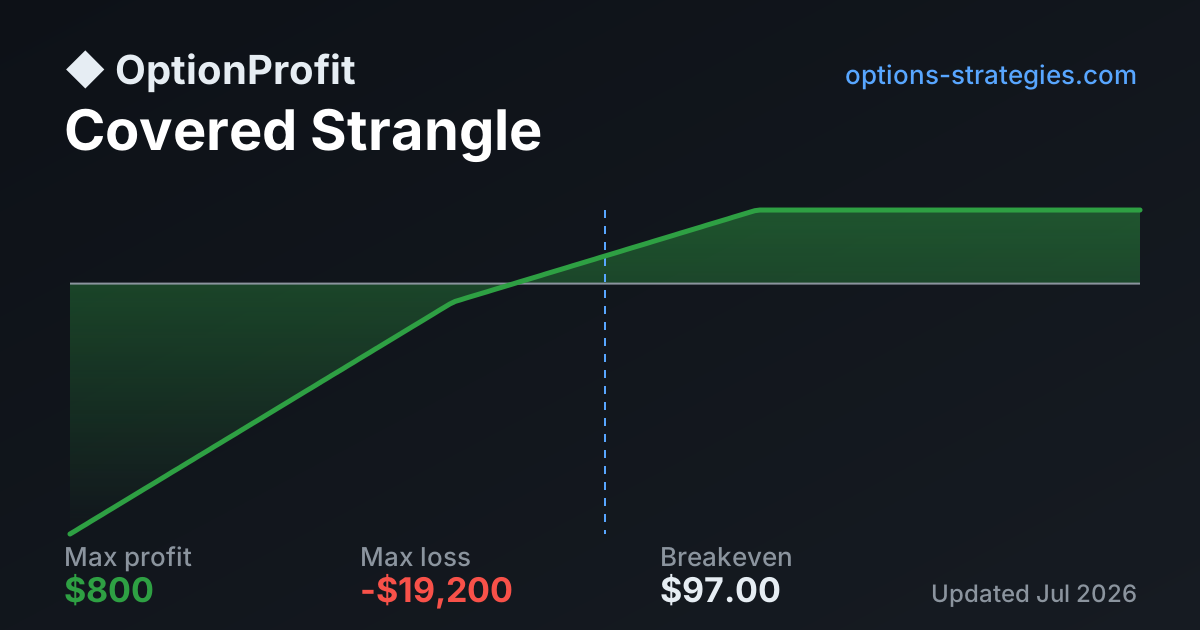
A covered strangle owns 100 shares and sells both an out-of-the-money call and an out-of-the-money put. You collect double the premium of a covered call, but you take on extra downside: a falling stock loses on the shares and obligates you to buy 100 more at the put strike.
Interactive calculator
Edit the price, strikes and premiums to see the payoff update live.
Want probability of profit and live Greeks on real prices? Open the Covered Strangle calculator →
⧉ Embed this free calculator on your site →
Key characteristics
- Own 100 shares, sell an OTM call and an OTM put: two premiums of income.
- Best when mildly bullish to neutral and happy to own more shares lower.
- Max profit = (call strike − cost basis) × 100 + both premiums, reached at or above the call.
- Heavy downside: stock losses plus the short put (a second 100-share obligation).
When to use a covered strangle
Use it on a stock you already own and would happily buy more of at a lower price. The short put turns "I would add lower" into income today, while the short call does the usual covered-call job of selling upside for premium.
It suits range-bound or slowly rising names where you want maximum income and are comfortable with the share count changing — adding at the put strike or being called away at the call strike.
Risks and management
The downside is the catch. If the stock falls hard you lose on your shares and the short put goes in the money, forcing you to buy another 100 shares — effectively a leveraged long into weakness. Keep enough cash to honour the put.
Manage it like two trades: roll or close the short put if the stock breaks down, and let the short call cap or exit the upside. Avoid it ahead of binary events where a gap down hurts twice.
On the Greeks, the Covered Strangle is vega-negative — a fall in implied volatility (such as an earnings IV crush) works in your favour, and theta-positive, so time decay adds to the position each day it is held.
Managing the trade and common mistakes
Managing a covered strangle requires watching both legs independently while keeping the stock position in mind. Experienced traders take profits when the combined credit has decayed by 50–70%, closing both short options together rather than legging out one at a time — the residual extrinsic value on the surviving leg rarely justifies the asymmetric risk of leaving it open. If the stock rallies toward the short call strike, the position behaves like a covered call: the trader can roll the call up and out to a higher strike and later expiration, collecting additional credit. If the stock falls toward the short put strike, the dynamic shifts — early assignment becomes a real possibility, which would double the stock exposure by forcing a second lot of shares onto the trader. Rolling the put down and out before assignment is the standard response, but only if the trader is comfortable holding more shares at that price.
The most common beginner mistake is treating the two legs as if they carry equal risk. The short call is covered by the existing stock, so its downside is capped — but the short put is effectively a cash-secured obligation to buy more stock. If the stock drops sharply through the put strike, the trader ends up owning twice the intended position at a combined average cost well above the market price, turning a neutral income trade into an unintended leveraged long. A second frequent error is selecting strikes that are too close to the current price in pursuit of higher premium: tighter strikes slash the profit zone and dramatically increase the chance that one leg is tested before expiration. Keeping the short call at a delta of roughly 0.20–0.30 and the short put at a similar delta gives the strategy room to breathe.
On the expiration and liquidity side, the covered strangle has nuances that pure option sellers often underestimate. The short put carries pin risk near expiration: if the stock closes just below the put strike, automatic exercise delivers shares the trader may not have planned for. Checking whether early exercise is worth it for the put holder (dividends, deep-in-the-money situations) matters when the stock approaches that zone. Liquidity is generally better than in a naked strangle because the covered call side is a common strategy, but the short put leg on lower-volume stocks can carry wide bid–ask spreads. Always enter with limit orders on the combined position and avoid letting either leg expire in-the-money without a conscious decision to take assignment or close.
Calculate it live
Use the free OptionProfit Covered Strangle calculator to load a live option chain, build the trade, and instantly see the payoff chart, breakevens, probability of profit, Greeks and a Monte Carlo simulation of outcomes.
- Double-premium income: a covered call plus a cash-secured put on the same stock.
- Max profit is capped at the call strike; income cushions a small drop.
- Big risk if the stock falls — you own shares and must buy 100 more at the put.
- Use only on names you want to own more of, and keep cash for assignment.
SPY, QQQ, IWM, AAPL, NVDA, AMD, NFLX, MU, SHOP, COIN, JPM, BAC, BA, F
Frequently asked questions
How is a covered strangle different from a covered call?
A covered call sells only an upside call. A covered strangle adds a short put below, doubling the income but adding the obligation to buy another 100 shares if the stock falls to the put strike.
Do I need extra capital?
Yes. The short put should be cash-secured — keep enough cash to buy 100 more shares at the put strike, otherwise a drop can force a margin problem on top of share losses.
What is the ideal outcome?
The stock drifts up to or just below the call strike at expiration: you keep both premiums and most of the share gains, and neither option is assigned painfully.
Long CallLong PutCovered CallCash Secured PutNaked PutBull Call SpreadBear Put SpreadBull Put Credit SpreadBear Call Credit SpreadIron CondorLong Call ButterflyLong StraddleLong StrangleCollarCall Calendar SpreadNaked CallCall Diagonal SpreadPut Calendar SpreadJade LizardBroken Wing ButterflyCall Ratio SpreadPut Ratio SpreadCall Ratio BackspreadPut Ratio BackspreadSynthetic Long StockStrapStripTwin PeaksKiteProtective PutShort StraddleShort StrangleSynthetic Short StockReverse Iron CondorReverse Iron ButterflyLong Call CondorDouble DiagonalZEBRA (Zero Extrinsic Back Ratio)Box SpreadRisk ReversalLong GutsChristmas Tree ButterflyDiagonal Put SpreadConversionReversalCovered PutBig LizardReverse Jade LizardStock RepairRatio Call WriteJelly RollDouble CalendarBull Call LadderBear Call LadderBull Put LadderBear Put LadderSeagull SpreadRatio Put WriteLong Put ButterflyLong Put CondorPut Broken Wing ButterflyPut Christmas Tree Butterfly
Educational use only. Quotes are delayed ~15 minutes and nothing here is financial advice. Options trading involves substantial risk of loss. Privacy Policy · Terms & Conditions.