Put Broken Wing Butterfly Calculator
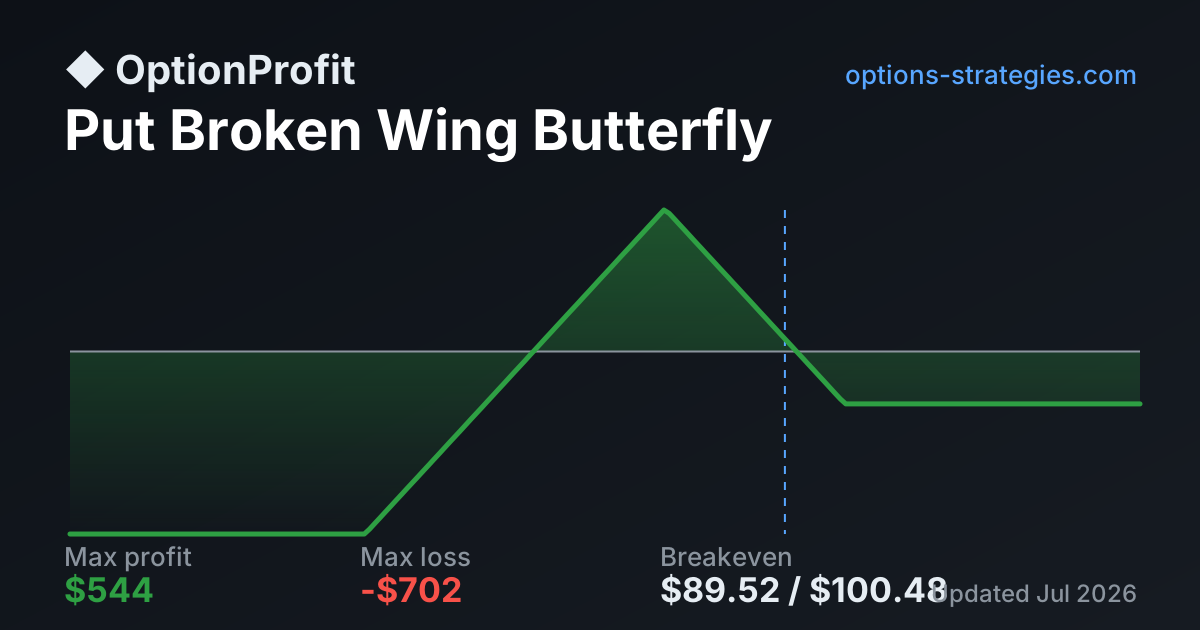
A put broken wing butterfly is a put butterfly with the lower wing pushed further out, skewing the risk to one side. It is long one near put, short two middle puts, and long one far lower put. Widening the lower wing often turns the trade into a net credit that carries no risk to the upside — you keep the credit if the stock rises — in exchange for a larger, but still defined, maximum loss on the downside.
Interactive calculator
Edit the price, strikes and premiums to see the payoff update live.
Want probability of profit and live Greeks on real prices? Open the Put Broken Wing Butterfly calculator →
⧉ Embed this free calculator on your site →
Key characteristics
- Legs: long 1 near put, short 2 middle puts, long 1 far lower put (unequal wings).
- Often opened for a net credit, removing risk on the upside entirely.
- The far long put caps the downside, so the maximum loss stays defined.
- A bearish-leaning, defined-risk twin of the call broken wing butterfly.
When to use a put broken wing butterfly
Open a put broken wing butterfly when you are neutral to mildly bearish and want a butterfly that does not lose money if you are wrong to the upside. By skewing the wings for a credit, you remove the upside risk — the stock rising simply lets you keep the premium.
It is a favourite income structure: defined risk, a directional lean toward a modest decline, and no debit to recover. Traders place the body where they expect the stock to drift.
Risks and management
The cost of the free upside is a larger maximum loss on the downside, concentrated in a zone around the short strikes — though the far long put still caps it. The exact profit zone and loss sit between the strikes and are best read off the payoff chart.
Manage it by choosing a body strike aligned with your target, sizing for the (defined) maximum loss rather than the credit, and taking profits as the stock settles near the body. Skew and strike spacing drive whether it opens for a credit.
On the Greeks, the Put Broken Wing Butterfly is vega-negative — a fall in implied volatility (such as an earnings IV crush) works in your favour, and theta-positive, so time decay adds to the position each day it is held.
Managing the trade and common mistakes
With a put broken wing butterfly, the whole structure is deliberately lopsided: one wing is wider than the other, so the position often opens for a credit or with no risk on the far upside, while the wider downside wing carries the real, larger loss. Because it is built from puts, the peak payoff only appears very close to expiration, when the underlying sits near the short strikes and the tent has fully formed — so patient management matters more than chasing a target early. Realistic traders take 50 to 75 percent of the maximum theoretical profit and close, rather than holding for the last fragment. Theta works in your favor while price hovers over the body, but gamma turns sharp in the final days: a modest drop toward the wide wing can swing the trade quickly. If the underlying falls toward the threatened lower strikes, rolling the wide wing down or out, or simply closing the whole structure, is usually cleaner than legging out, since a partial unwind can briefly leave a naked short put. Cutting the trade is the right call once price breaks decisively into the wide side and the downside risk is no longer theoretical.
The most common mistake is treating the opening credit as if the trade were risk-free. Because there is little or no risk on the upside, beginners assume the position is safe everywhere — but the wider downside wing can produce a loss that dwarfs the premium collected if the underlying breaks hard through the short strikes. A second error is holding into expiration to squeeze out the final theta while gamma is whipping the short strikes around; a small move then flips a winner into a loser. Expiration-side hazards are real here: the short puts can face early assignment if they go deep in-the-money late in the cycle, and pin risk arises when the underlying settles right at a short strike, leaving you unsure whether you will be assigned. Liquidity also thins near expiry, and four legs at non-standard strikes tend to show wide bid-ask spreads, so filling with separate orders invites slippage — experienced traders use a single limit order for the full spread and size the position for the wide wing, not the credit.
Calculate it live
Use the free OptionProfit Put Broken Wing Butterfly calculator to load a live option chain, build the trade, and instantly see the payoff chart, breakevens, probability of profit, Greeks and a Monte Carlo simulation of outcomes.
- A skewed put butterfly, usually opened for a credit.
- No risk to the upside — you keep the credit if the stock rises.
- Larger but defined downside risk, capped by the far long put.
- A neutral-to-bearish, defined-risk income structure.
SPY, QQQ, IWM, AAPL, NVDA, AMZN, AMD, NFLX, MU, COIN, SOFI, JPM, BAC, V
Frequently asked questions
Why open it for a credit?
Skewing the lower wing further out lets the two short puts bring in more than the two longs cost, so you often collect a credit and eliminate the upside risk entirely.
Where is my maximum loss?
On the downside, in a zone around the short strikes, but capped by the far long put — so the risk is defined, just larger than the credit received.
How is it different from a standard put butterfly?
A standard butterfly has equal wings and a debit; the broken wing widens one wing to remove risk on one side, usually for a credit, at the cost of a larger defined loss on the other.
Credit vs Debit SpreadsTheta Decay & Selling PremiumVolatility Skew and the Volatility Smile
Long CallLong PutCovered CallCash Secured PutNaked PutBull Call SpreadBear Put SpreadBull Put Credit SpreadBear Call Credit SpreadIron CondorLong Call ButterflyLong StraddleLong StrangleCollarCall Calendar SpreadNaked CallCall Diagonal SpreadPut Calendar SpreadJade LizardBroken Wing ButterflyCall Ratio SpreadPut Ratio SpreadCall Ratio BackspreadPut Ratio BackspreadSynthetic Long StockStrapStripTwin PeaksKiteProtective PutShort StraddleShort StrangleSynthetic Short StockReverse Iron CondorReverse Iron ButterflyLong Call CondorDouble DiagonalZEBRA (Zero Extrinsic Back Ratio)Box SpreadRisk ReversalCovered StrangleLong GutsChristmas Tree ButterflyDiagonal Put SpreadConversionReversalCovered PutBig LizardReverse Jade LizardStock RepairRatio Call WriteJelly RollDouble CalendarBull Call LadderBear Call LadderBull Put LadderBear Put LadderSeagull SpreadRatio Put WriteLong Put ButterflyLong Put CondorPut Christmas Tree Butterfly
Educational use only. Quotes are delayed ~15 minutes and nothing here is financial advice. Options trading involves substantial risk of loss. Privacy Policy · Terms & Conditions.