Covered Call Calculator
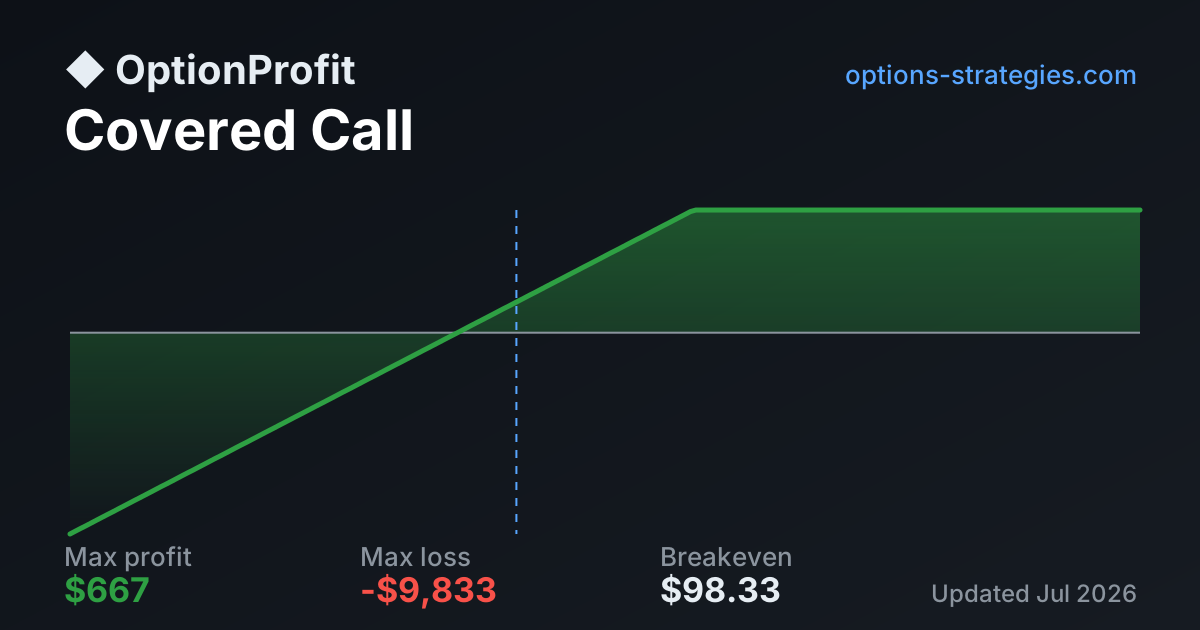
A covered call sells a call against 100 shares you own to collect premium income. It caps upside at the strike in exchange for a cushion and steady yield — a favorite of income investors.
Interactive calculator
Edit the price, strikes and premiums to see the payoff update live.
Want probability of profit and live Greeks on real prices? Open the Covered Call calculator →
⧉ Embed this free calculator on your site →
Key characteristics
- Collect premium now; keep it if the stock stays below the strike.
- Max profit = (strike − cost basis) + premium. Downside is your stock minus the premium cushion.
- Best in flat or slowly rising markets.
- Popular for generating monthly income on long-term holdings.
When to use a covered call
Sell a covered call when you own at least 100 shares, expect the stock to stay flat or rise only modestly, and are willing to sell at the strike. The premium gives you income and a small downside cushion.
Strike selection sets the trade-off: a closer (lower) strike collects more premium but caps your upside sooner, while a further (higher) strike collects less but leaves more room to run.
Risks and management
The covered call does not protect against a large decline — you still own the shares, just with a small premium cushion. The other cost is opportunity: in a sharp rally your shares are called away at the strike and you miss the rest.
If the stock approaches your strike and you want to keep the shares, you can roll the call up and out for more time; if you are happy to sell, simply let it be assigned.
On the Greeks, the Covered Call is vega-negative — a fall in implied volatility (such as an earnings IV crush) works in your favour, and theta-positive, so time decay adds to the position each day it is held.
Managing the trade and common mistakes
Once the covered call is on, the main decision is knowing when to close early. A common rule of thumb is to buy back the short call when it has lost around 50–80% of its value — locking in most of the theta decay without waiting for expiration and freeing the stock to run if momentum shifts. If the stock drifts well below the strike and the call is nearly worthless, closing the entire position rather than chasing a small remaining premium is often the cleaner choice.
Rolling is the adjustment traders reach for most often. When the stock approaches the strike with time still remaining, you can buy back the current call and sell a new one — further out in time, higher in strike, or both — ideally collecting a net credit. Rolling for a debit just to avoid assignment usually destroys edge; if the numbers don't work, accepting assignment or closing is more disciplined.
The mistake beginners make most is selling the call with a strike so far out of the money that the premium is negligible, thinking they are 'safe.' They collect almost nothing and still carry full downside on the stock. The opposite error is selling an aggressive, deep in-the-money call to maximize premium, which caps upside so severely that any stock rally becomes a loss of opportunity. Assignment itself is rarely a problem if you genuinely want to sell at that strike — but be aware that early assignment is most likely just before an ex-dividend date, so track dividends on any stock you hold.
Calculate it live
Use the free OptionProfit Covered Call calculator to load a live option chain, build the trade, and instantly see the payoff chart, breakevens, probability of profit, Greeks and a Monte Carlo simulation of outcomes.
- Generates income on shares you already own.
- Max profit = (strike − cost basis) + premium; upside is capped.
- Premium cushions small declines but does not stop a big drop.
- Roll up and out to keep shares, or let them be called away.
Frequently asked questions
What happens if the stock rises above my strike?
Your shares are assigned (sold) at the strike. You keep the premium and the gain up to the strike, but miss any further upside.
Is a covered call safe?
It is one of the more conservative options trades, but your downside is still essentially owning the stock minus the small premium cushion.
Covered call or cash-secured put?
They are equivalent at the same strike. Sell a covered call if you already own the shares; sell a cash-secured put if you want to buy in lower.
Long CallLong PutCash Secured PutNaked PutBull Call SpreadBear Put SpreadBull Put Credit SpreadBear Call Credit SpreadIron CondorLong Call ButterflyLong StraddleLong StrangleCollarCall Calendar SpreadNaked CallCall Diagonal SpreadPut Calendar SpreadJade LizardBroken Wing ButterflyCall Ratio SpreadPut Ratio SpreadCall Ratio BackspreadPut Ratio BackspreadSynthetic Long StockStrapStripTwin PeaksKiteProtective PutShort StraddleShort StrangleSynthetic Short StockReverse Iron CondorReverse Iron ButterflyLong Call CondorDouble DiagonalZEBRA (Zero Extrinsic Back Ratio)Box SpreadRisk ReversalCovered StrangleLong GutsChristmas Tree ButterflyDiagonal Put SpreadConversionReversalCovered PutBig LizardReverse Jade LizardStock RepairRatio Call WriteJelly RollDouble CalendarBull Call LadderBear Call LadderBull Put LadderBear Put LadderSeagull SpreadRatio Put WriteLong Put ButterflyLong Put CondorPut Broken Wing ButterflyPut Christmas Tree Butterfly
Educational use only. Quotes are delayed ~15 minutes and nothing here is financial advice. Options trading involves substantial risk of loss. Privacy Policy · Terms & Conditions.