Long Call Calculator
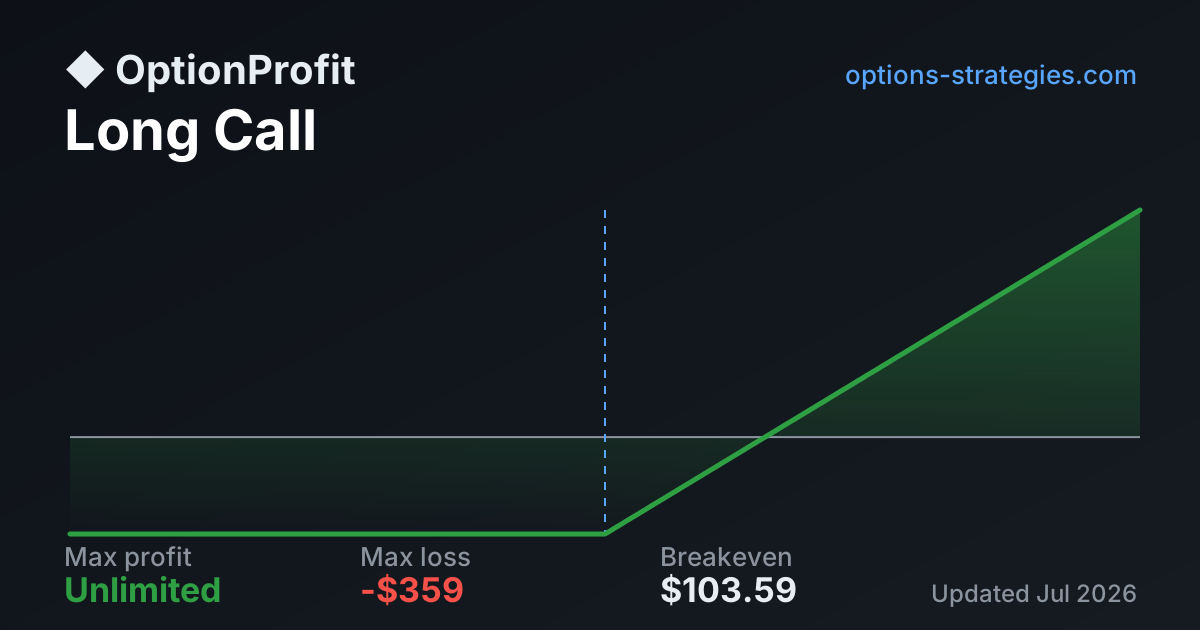
A long call is the simplest bullish options trade: you buy a call to profit if the stock rises above the strike before expiration. Risk is limited to the premium paid; upside is theoretically unlimited.
Interactive calculator
Edit the price, strikes and premiums to see the payoff update live.
Want probability of profit and live Greeks on real prices? Open the Long Call calculator →
⧉ Embed this free calculator on your site →
Key characteristics
- Max loss = the premium you pay. Max profit = unlimited as the stock rises.
- Breakeven = strike price + premium paid.
- Best when you expect a strong move up and want defined risk with leverage.
- Time decay (theta) works against you — the stock needs to move before expiration.
When to use a long call
Buy a call when you are confident a stock will rise meaningfully before a known date and you want leverage with a strictly defined risk. For the same dollar outlay you control far more shares than buying stock outright.
Strike choice matters: an in-the-money call costs more but behaves like the stock (high delta), while an out-of-the-money call is cheaper, has lower odds, and needs a bigger move to pay off.
Risks and management
The two enemies of a long call are time and falling volatility. Even if you are right on direction, a slow move lets theta erode the premium, and a drop in implied volatility lowers the option’s value.
Many traders take profits before expiration rather than holding for the perfect move, and avoid paying up for calls when implied volatility is already high (for example right before earnings).
On the Greeks, the Long Call is vega-positive — rising implied volatility helps it, while an IV crush works against you, and theta-negative, so time decay erodes it and the move needs to come reasonably soon.
Managing the trade and common mistakes
After buying a call, experienced traders watch two things closely: time decay and the underlying's momentum. A common rule of thumb is to take profits when the position has doubled, and to cut the loss if the option loses roughly 50% of its premium — because theta accelerates as expiration approaches and a recovery becomes increasingly unlikely. Rolling forward (closing the current call and opening a later-expiring one at the same or a higher strike) can extend the trade when the thesis is intact but the timing was off, though the debit widens the overall cost basis.
The mistakes beginners make most often are buying options with too little time to expiration, overpaying during high implied-volatility environments, and sizing too large because the dollar cost appears small. A call can be directionally correct and still expire worthless if the move comes too late or if IV contracts sharply after entry — a phenomenon sometimes called 'buying the top of volatility.' Keeping position size modest relative to the portfolio and choosing expiries at least 30–60 days out gives the trade room to breathe.
Long calls carry no assignment risk — only the seller of a call can be assigned. At expiration, any call that is in-the-money by even one cent will be automatically exercised by most brokers unless you instruct otherwise, which means you would receive 100 shares per contract. If you do not want the shares, close the position before the end of the last trading day. For deep-in-the-money calls close to expiry, the bid-ask spread can widen considerably; leg out early or use a limit order rather than hitting the bid.
Calculate it live
Use the free OptionProfit Long Call calculator to load a live option chain, build the trade, and instantly see the payoff chart, breakevens, probability of profit, Greeks and a Monte Carlo simulation of outcomes.
- Defined risk (the premium) with theoretically unlimited upside.
- Breakeven = strike + premium; you need a move, not just direction.
- ITM calls track the stock; OTM calls are cheap, leveraged bets.
- Time decay and falling IV work against you — manage actively.
META, GOOGL, AVGO, CRM, PLTR, WFC, GS, MA, KO, WMT, SBUX, XOM, BABA, MARA
Frequently asked questions
How much can I lose on a long call?
Only the premium you paid — that is the maximum loss, no matter how far the stock falls.
Which strike should I buy?
ITM for reliability and high delta, ATM for balance, OTM for cheap leverage with lower probability. Match it to your conviction and timeframe.
Do I need to exercise the call to take profit?
No — most traders simply sell the call back for its market value before expiration to realise the gain.
Call vs Put OptionsUnderstanding the Option GreeksBest Options Strategy for Beginners
Long PutCovered CallCash Secured PutNaked PutBull Call SpreadBear Put SpreadBull Put Credit SpreadBear Call Credit SpreadIron CondorLong Call ButterflyLong StraddleLong StrangleCollarCall Calendar SpreadNaked CallCall Diagonal SpreadPut Calendar SpreadJade LizardBroken Wing ButterflyCall Ratio SpreadPut Ratio SpreadCall Ratio BackspreadPut Ratio BackspreadSynthetic Long StockStrapStripTwin PeaksKiteProtective PutShort StraddleShort StrangleSynthetic Short StockReverse Iron CondorReverse Iron ButterflyLong Call CondorDouble DiagonalZEBRA (Zero Extrinsic Back Ratio)Box SpreadRisk ReversalCovered StrangleLong GutsChristmas Tree ButterflyDiagonal Put SpreadConversionReversalCovered PutBig LizardReverse Jade LizardStock RepairRatio Call WriteJelly RollDouble CalendarBull Call LadderBear Call LadderBull Put LadderBear Put LadderSeagull SpreadRatio Put WriteLong Put ButterflyLong Put CondorPut Broken Wing ButterflyPut Christmas Tree Butterfly
Educational use only. Quotes are delayed ~15 minutes and nothing here is financial advice. Options trading involves substantial risk of loss. Privacy Policy · Terms & Conditions.