Put Ratio Backspread Calculator
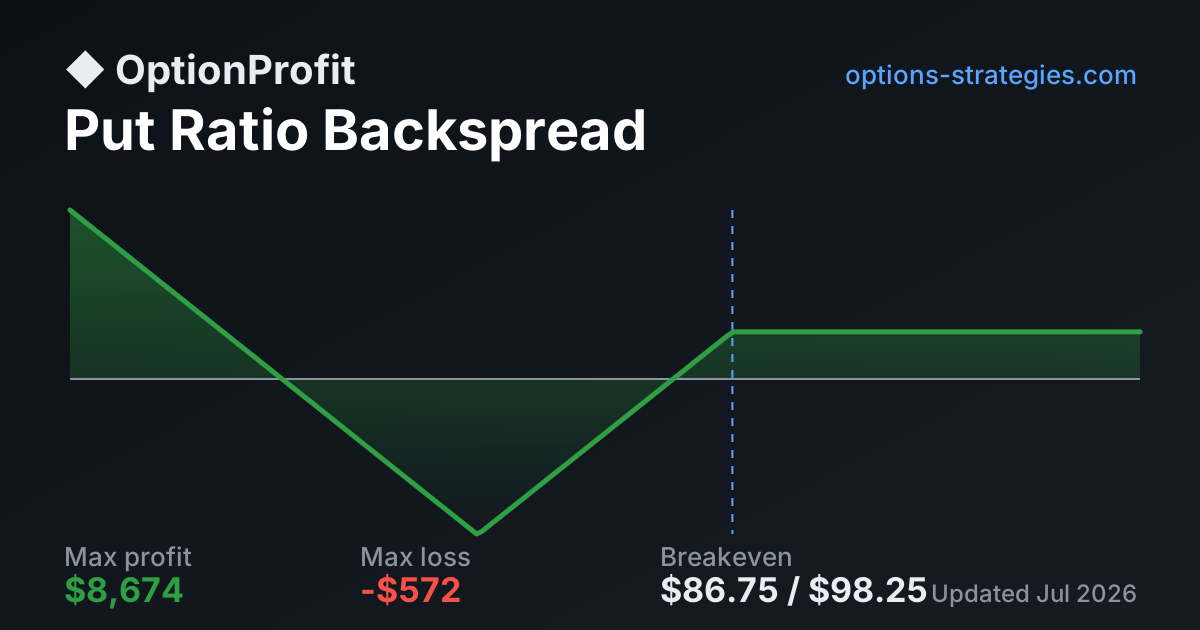
A put backspread sells one put and buys two lower puts. It profits from a sharp decline with large downside payoff, often costs little or nothing, and has limited, defined risk if the stock holds steady.
Interactive calculator
Edit the price, strikes and premiums to see the payoff update live.
Want probability of profit and live Greeks on real prices? Open the Put Ratio Backspread calculator →
⧉ Embed this free calculator on your site →
Key characteristics
- Sell 1 higher put, buy 2 lower puts.
- Large profit on a big down-move (two long puts).
- Often a credit or near-zero cost to open.
- Maximum loss is limited and occurs if the stock pins the long strike.
When to use a put backspread
Use it when you expect a sharp drop — around an earnings miss or macro risk — but want to lose little if the stock holds. It is a long-volatility, bearish trade.
Like the call version, it is best opened for a credit so a flat-to-up stock simply leaves you with that credit.
How the payoff works
Above the short strike everything expires worthless and you keep any credit. The worst case is the stock finishing at the long strike, where the single short put is in the money but the long puts have little value — the defined maximum loss.
Below the long strike the two long puts outrun the short put, so profit grows steeply as the stock falls toward zero.
On the Greeks, the Put Ratio Backspread is vega-positive — rising implied volatility helps it, while an IV crush works against you, and theta-negative, so time decay erodes it and the move needs to come reasonably soon.
Managing the trade and common mistakes
Once you are in a put ratio backspread, the position requires active watching rather than passive holding. If the underlying drops sharply and quickly — exactly the move you wanted — experienced traders often take profits on the long puts while they still carry strong delta and before implied volatility begins to mean-revert. Rolling the long puts to a lower strike can lock in partial gains and keep bearish exposure alive if you still expect further downside. If instead the underlying grinds sideways or drifts higher, theta erodes the long puts faster than the short put, so cutting the position early limits the damage; waiting for expiration in a flat market turns a manageable loss into the maximum loss.
The most common beginner mistake is entering the trade for a net debit without fully appreciating the 'danger zone' between the strikes at expiration — the region where you own more puts than cover you. If expiration pins the underlying just below the short strike, losses can exceed what most newcomers expect, because the short put is deep in the money while the long puts have not yet caught up in delta. A second error is selecting strikes that are too close together, which compresses the tent of potential profit and widens that dangerous middle region relative to the premium collected or paid.
Assignment risk sits almost entirely on the short put. Early assignment is most likely when that put goes deep in the money and carries little time value, particularly around dividend dates on the underlying stock. If assigned, you are long 100 shares per contract — a position you may not want — so monitor carefully and consider closing or rolling the short leg before expiration when it is deep in the money. Liquidity also matters: put ratio backspreads involve at least three option legs, and wide bid-ask spreads on low-volume strikes can make both entry and exit far more expensive than the theoretical edge of the strategy.
Calculate it live
Use the free OptionProfit Put Ratio Backspread calculator to load a live option chain, build the trade, and instantly see the payoff chart, breakevens, probability of profit, Greeks and a Monte Carlo simulation of outcomes.
- Put backspread = short 1 put, long 2 lower puts.
- Large downside payoff; limited risk if the stock holds.
- Best opened for a credit before a downside catalyst.
- Worst case is a stock that pins the long strike.
MSFT, TSLA, INTC, UBER, SHOP, DIS, HD, LCID, MSTR, ARM, CVS, DAL, CELH, ZM
Frequently asked questions
When does a put backspread make money?
On a sharp decline: the two long puts more than offset the short put, so profit grows steeply below the long strike. A flat-to-up stock leaves you keeping any credit.
What is the maximum loss on a put backspread?
Limited — it occurs if the stock finishes at the long strike, where the short put is in the money but the long puts are nearly worthless.
Is a put backspread the same as a long put?
No — the short put lowers the cost (often to a credit) and creates a defined loss zone near the long strike, in exchange for needing a bigger move to profit.
Long CallLong PutCovered CallCash Secured PutNaked PutBull Call SpreadBear Put SpreadBull Put Credit SpreadBear Call Credit SpreadIron CondorLong Call ButterflyLong StraddleLong StrangleCollarCall Calendar SpreadNaked CallCall Diagonal SpreadPut Calendar SpreadJade LizardBroken Wing ButterflyCall Ratio SpreadPut Ratio SpreadCall Ratio BackspreadSynthetic Long StockStrapStripTwin PeaksKiteProtective PutShort StraddleShort StrangleSynthetic Short StockReverse Iron CondorReverse Iron ButterflyLong Call CondorDouble DiagonalZEBRA (Zero Extrinsic Back Ratio)Box SpreadRisk ReversalCovered StrangleLong GutsChristmas Tree ButterflyDiagonal Put SpreadConversionReversalCovered PutBig LizardReverse Jade LizardStock RepairRatio Call WriteJelly RollDouble CalendarBull Call LadderBear Call LadderBull Put LadderBear Put LadderSeagull SpreadRatio Put WriteLong Put ButterflyLong Put CondorPut Broken Wing ButterflyPut Christmas Tree Butterfly
Educational use only. Quotes are delayed ~15 minutes and nothing here is financial advice. Options trading involves substantial risk of loss. Privacy Policy · Terms & Conditions.