Long Straddle Calculator
A long straddle buys a call and a put at the same strike to profit from a large move in either direction — often used around earnings or major events.
Interactive calculator
Edit the price, strikes and premiums to see the payoff update live.
Want probability of profit and live Greeks on real prices? Open the Long Straddle calculator →
⧉ Embed this free calculator on your site →
Key characteristics
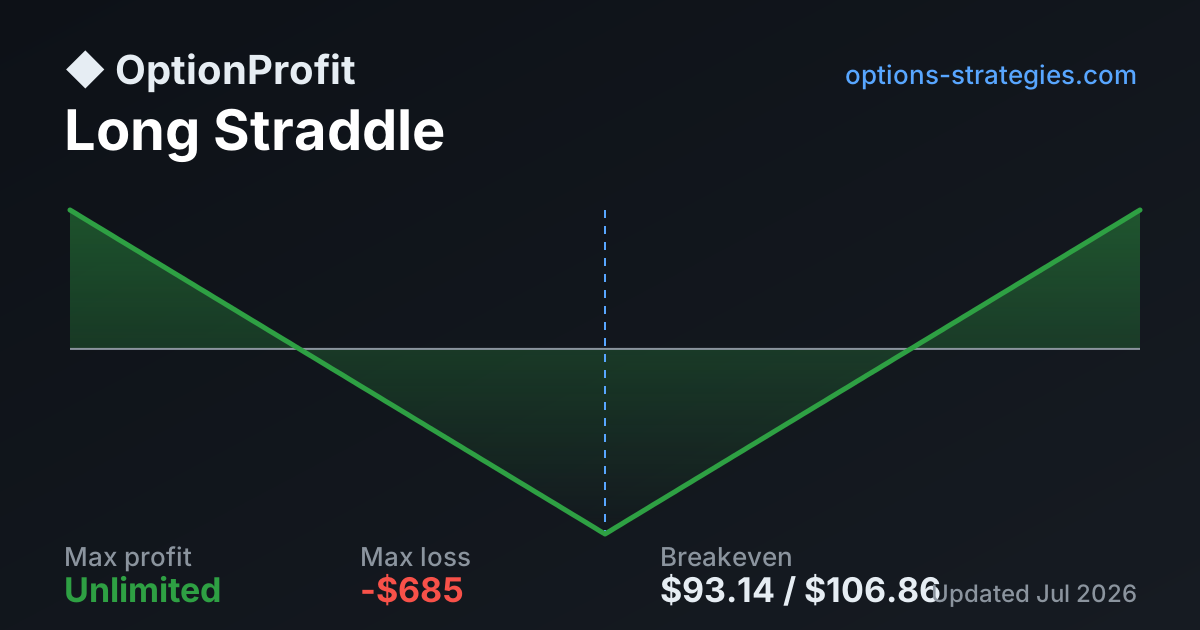
- Profits if the stock moves far enough up OR down. Max loss = total premium.
- Two breakevens = strike ± total premium.
- Needs a big move to overcome the cost of both options and time decay.
When to use a long straddle
Buy a straddle when you expect a large move but are unsure of the direction — for example around earnings, a court ruling, or a product launch. You buy a call and a put at the same at-the-money strike, profiting from a big swing either way.
The key question is whether the move will be larger than the combined premium plus any drop in implied volatility, because you have effectively paid for two options.
The IV crush trap
A straddle bought before earnings can lose even if the stock gaps, because implied volatility collapses afterwards and deflates both options — the infamous IV crush. The stock must move more than the market already priced in.
Maximum loss is the total premium, reached if the stock sits still; the two breakevens are the strike plus and minus the combined premium.
On the Greeks, the Long Straddle is vega-positive — rising implied volatility helps it, while an IV crush works against you, and theta-negative, so time decay erodes it and the move needs to come reasonably soon.
Managing the trade and common mistakes
Once a long straddle is on, the position bleeds theta every day the underlying sits still. Experienced traders watch for a quick, decisive move and take profits when the winning leg has roughly doubled — there is no law that says you must hold to expiration. If the move comes early and implied volatility collapses afterward (a common post-earnings pattern), closing the whole position locks in gains before vega erosion gives them back. Rolling is rarely the right answer here: the strategy is already expensive, and adding another debit to extend duration usually compounds the problem rather than solving it.
The most common beginner mistakes all trace back to buying too much premium. Entering a straddle when implied volatility is already elevated means you need a massive move just to break even, and most moves are never that large. Waiting for a catalyst that everyone else has already priced in is a losing game. A related error is legging out incorrectly — selling only the winning side and holding the loser hoping it reverses. The correct exit is almost always to close both legs simultaneously so theta does not continue to eat the remaining position.
Because both legs are long, assignment risk is not a concern before expiration. At expiration, however, watch carefully if either leg is near the money: an in-the-money put or call will be automatically exercised, leaving you long or short stock overnight. If you do not want that exposure, close or roll the in-the-money leg before the session ends on expiration day. Liquidity also matters: always check the bid-ask spread on both legs individually, not just the mid-price of the straddle, and use limit orders to avoid paying an outsized spread on a two-leg trade.
Calculate it live
Use the free OptionProfit Long Straddle calculator to load a live option chain, build the trade, and instantly see the payoff chart, breakevens, probability of profit, Greeks and a Monte Carlo simulation of outcomes.
- Profits from a big move in either direction.
- Max loss = total premium; breakevens = strike ± total premium.
- Needs a move bigger than the premium plus any IV crush.
- Common around earnings — beware the post-event volatility drop.
Frequently asked questions
Why did my straddle lose money when the stock moved?
Most likely IV crush — the move was smaller than the implied move, so the drop in volatility outweighed the price change.
Straddle or strangle?
A straddle uses the same at-the-money strike (costlier, needs a smaller move); a strangle uses OTM strikes (cheaper, needs a bigger move).
When is the best time to buy a straddle?
When you expect a big move and implied volatility is still relatively low, so you are not overpaying before the event.
Long CallLong PutCovered CallCash Secured PutNaked PutBull Call SpreadBear Put SpreadBull Put Credit SpreadBear Call Credit SpreadIron CondorLong Call ButterflyLong StrangleCollarCall Calendar SpreadNaked CallCall Diagonal SpreadPut Calendar SpreadJade LizardBroken Wing ButterflyCall Ratio SpreadPut Ratio SpreadCall Ratio BackspreadPut Ratio BackspreadSynthetic Long StockStrapStripTwin PeaksKiteProtective PutShort StraddleShort StrangleSynthetic Short StockReverse Iron CondorReverse Iron ButterflyLong Call CondorDouble DiagonalZEBRA (Zero Extrinsic Back Ratio)Box SpreadRisk ReversalCovered StrangleLong GutsChristmas Tree ButterflyDiagonal Put SpreadConversionReversalCovered PutBig LizardReverse Jade LizardStock RepairRatio Call WriteJelly RollDouble CalendarBull Call LadderBear Call LadderBull Put LadderBear Put LadderSeagull SpreadRatio Put WriteLong Put ButterflyLong Put CondorPut Broken Wing ButterflyPut Christmas Tree Butterfly
Educational use only. Quotes are delayed ~15 minutes and nothing here is financial advice. Options trading involves substantial risk of loss. Privacy Policy · Terms & Conditions.