Ratio Put Write Calculator
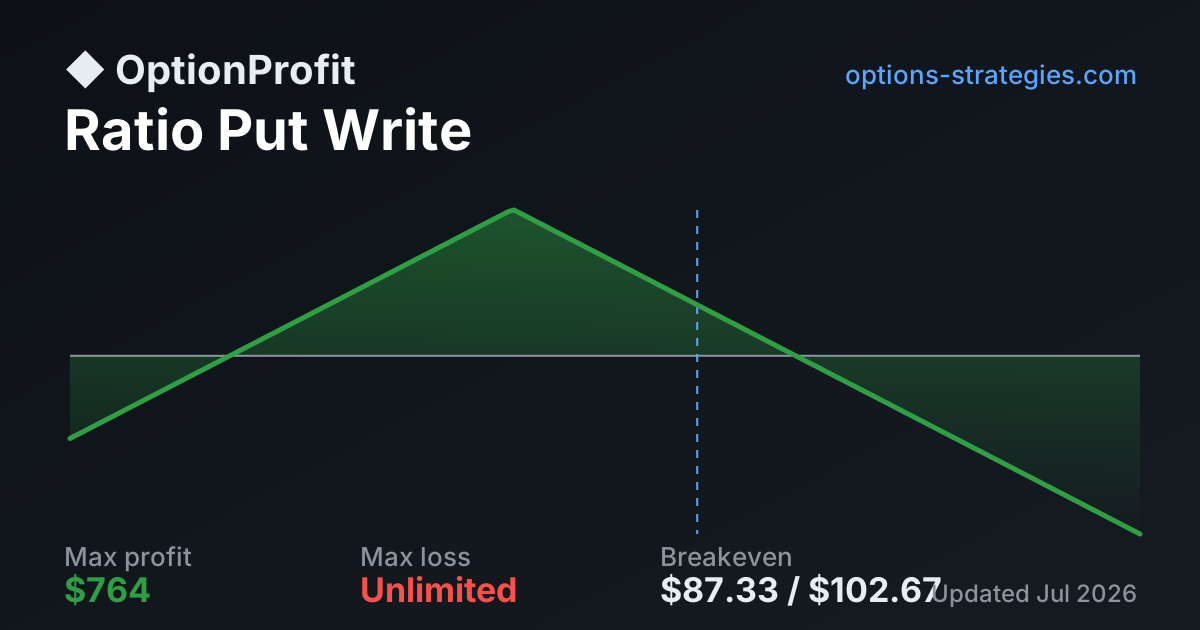
A ratio put write pairs short stock with two short puts at a strike below: one put is covered by the short shares, the other is naked. You collect double premium and profit most if the stock drifts down to the strike, but you carry risk on a large move either way — unlimited above from the short shares, and accelerating below the strike from the naked put. It is the bearish mirror of the ratio call write.
Interactive calculator
Edit the price, strikes and premiums to see the payoff update live.
Want probability of profit and live Greeks on real prices? Open the Ratio Put Write calculator →
⧉ Embed this free calculator on your site →
Key characteristics
- Legs: short 100 shares + short 2 puts at a lower strike.
- Double put premium plus the short-stock gain if the stock eases down to the strike.
- Maximum profit is at the put strike at expiration.
- Two-sided risk: uncapped above (short stock), accelerating below the strike (naked put).
When to use a ratio put write
A ratio put write is an income trade for a mildly bearish-to-neutral view: you expect the stock to drift lower toward the put strike and sit there. The two short puts collect rich premium, and the short stock adds to the gain as the price eases down — the position peaks right at the strike.
It is an aggressive overwrite of a short-stock position, comparable to a ratio call write against long stock. Traders use it to squeeze extra income from a short thesis, accepting the naked put in return.
Risks and management
This trade has risk on both sides. A rally hurts the short shares without limit; a sharp drop below the strike turns the extra naked put against you, and losses accelerate as the stock falls. The best case is a quiet drift that pins the strike.
Manage it by closing or rolling if the stock breaks out either way, and by treating margin and assignment carefully — this is a naked-option position that can demand capital quickly. Reserve it for range-bound names and size it small.
On the Greeks, the Ratio Put Write is vega-negative — a fall in implied volatility (such as an earnings IV crush) works in your favour, and theta-positive, so time decay adds to the position each day it is held.
Managing the trade and common mistakes
A ratio put write only feels calm while the underlying holds above the short strikes; the extra short puts leave open-ended downside, so it needs closer watching than a plain covered put. Many traders bank profit once the position has decayed to roughly half its initial net credit rather than squeezing the last theta out of naked short puts near expiration, when gamma turns sharp and a single down move can swing the P&L violently. If price drifts toward the short strikes, the standard fix is to roll the threatened puts down and out for a credit, buying room and time. When the underlying breaks decisively below the strikes and a credit roll is no longer available, closing the trade is usually wiser than defending an unhedged bearish loss.
The most common error is treating the extra premium as free income and ignoring that every point below the short strikes the naked puts lose money almost like short stock, with no floor until zero. A second mistake is sizing the ratio too aggressively, so a routine pullback creates margin and loss far beyond what the modest credit ever justified. Watch the expiration hazards too: short puts deep in the money with little extrinsic value can be assigned early, leaving you long shares and unexpected margin; pin risk near a short strike makes your final position uncertain; and thinning liquidity with wider bid-ask spreads makes legging out of the multiple puts slower and costlier exactly when you most need to act.
Calculate it live
Use the free OptionProfit Ratio Put Write calculator to load a live option chain, build the trade, and instantly see the payoff chart, breakevens, probability of profit, Greeks and a Monte Carlo simulation of outcomes.
- Short stock + two short puts — the bearish twin of the ratio call write.
- Maximum profit if the stock is pinned at the put strike.
- Uncapped risk on a rally; accelerating risk on a sharp drop.
- A naked, margin-heavy income trade — size it small.
SPY, QQQ, IWM, AAPL, NVDA, AMZN, AMD, NFLX, MU, COIN, SOFI, JPM, BAC, V
Frequently asked questions
Is a ratio put write defined-risk?
No. It has risk on both sides — unlimited on a rally from the short shares and large below the strike from the naked put. It is an advanced, margin-intensive trade.
When does it make the most money?
When the stock drifts down and settles exactly at the put strike at expiration, where both puts expire worthless and the short shares have gained.
How is it different from a covered put?
A covered put sells one put against short stock. The ratio put write sells two, adding a naked put for extra premium and extra downside risk.
Selling Puts for IncomePosition Sizing and Risk Management for OptionsAssignment & Expiration
Long CallLong PutCovered CallCash Secured PutNaked PutBull Call SpreadBear Put SpreadBull Put Credit SpreadBear Call Credit SpreadIron CondorLong Call ButterflyLong StraddleLong StrangleCollarCall Calendar SpreadNaked CallCall Diagonal SpreadPut Calendar SpreadJade LizardBroken Wing ButterflyCall Ratio SpreadPut Ratio SpreadCall Ratio BackspreadPut Ratio BackspreadSynthetic Long StockStrapStripTwin PeaksKiteProtective PutShort StraddleShort StrangleSynthetic Short StockReverse Iron CondorReverse Iron ButterflyLong Call CondorDouble DiagonalZEBRA (Zero Extrinsic Back Ratio)Box SpreadRisk ReversalCovered StrangleLong GutsChristmas Tree ButterflyDiagonal Put SpreadConversionReversalCovered PutBig LizardReverse Jade LizardStock RepairRatio Call WriteJelly RollDouble CalendarBull Call LadderBear Call LadderBull Put LadderBear Put LadderSeagull SpreadLong Put ButterflyLong Put CondorPut Broken Wing ButterflyPut Christmas Tree Butterfly
Educational use only. Quotes are delayed ~15 minutes and nothing here is financial advice. Options trading involves substantial risk of loss. Privacy Policy · Terms & Conditions.