Bear Put Spread Calculator
A bear put spread buys a put and sells a lower-strike put. Defined risk and reward make it a cost-efficient way to profit from a moderate decline.
Interactive calculator
Edit the price, strikes and premiums to see the payoff update live.
Want probability of profit and live Greeks on real prices? Open the Bear Put Spread calculator →
⧉ Embed this free calculator on your site →
Key characteristics
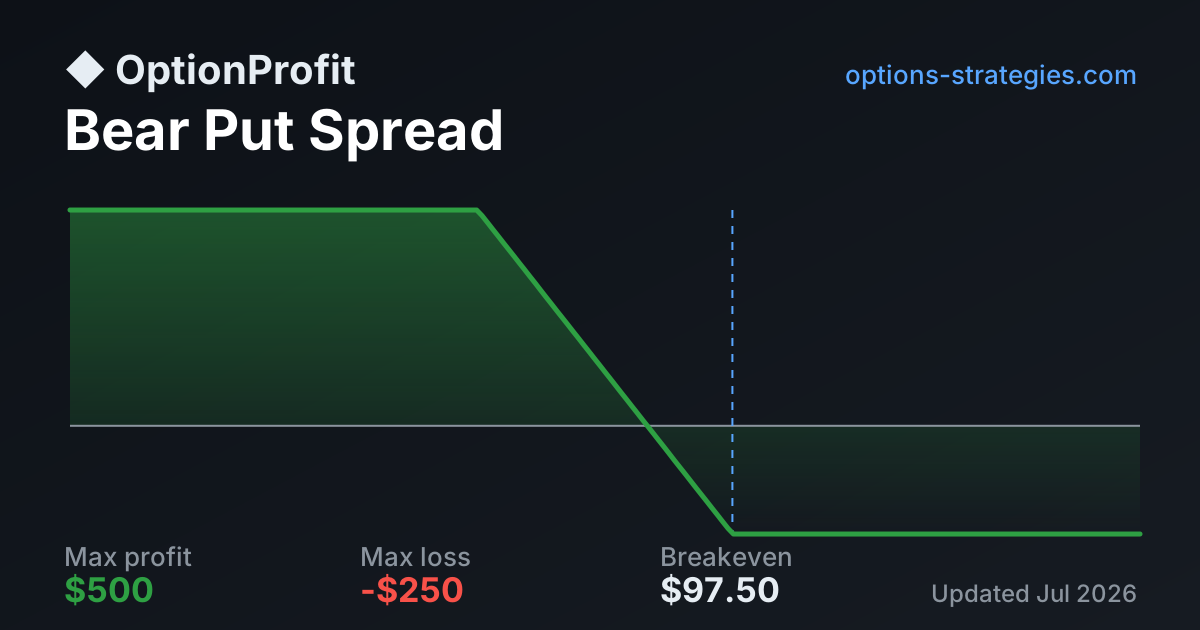
- Max loss = net debit paid. Max profit = strike width − net debit.
- Breakeven = higher strike − net debit.
- Cheaper than a long put with a capped payoff.
When to use a bear put spread
Use it when you expect a moderate decline and want defined risk at a lower cost than a single put. You buy a higher-strike put and sell a lower-strike put, which reduces the premium you pay.
It is most attractive when implied volatility is low and you have a downside target — set the short put near where you think the stock will bottom out.
Risks and management
Maximum loss is the net debit, reached if the stock stays above the higher strike. Maximum profit is the strike width minus the debit, reached if it closes below the lower strike.
Like all debit spreads, the reward is capped, so a crash earns no more than the spread width. Consider closing early once most of the value is captured rather than holding to the last day.
On the Greeks, the Bear Put Spread is vega-positive — rising implied volatility helps it, while an IV crush works against you, and theta-negative, so time decay erodes it and the move needs to come reasonably soon.
Managing the trade and common mistakes
Once a Bear Put Spread is on, most experienced traders treat it as a defined-risk position and let time work — but they set a mental stop at roughly 50% of the maximum loss. If the stock rallies sharply before you expected the move, closing early preserves capital; holding and hoping is where small losses become full losses. On the profit side, taking 50–70% of the maximum gain is a common rule of thumb, because the final percentage points require the stock to sit exactly at or below the short put strike at expiration, which rarely happens cleanly.
Rolling is an option, but it needs a clear rationale. If the underlying is drifting slowly in your direction but time is running out, you can roll the entire spread to a later expiration for a small additional debit — effectively buying more time. Rolling down the short strike to collect a credit only makes sense if you have high conviction the move will continue. Never roll just to avoid booking a loss; that tends to compound the problem rather than solve it.
The most common beginner mistake is buying the long put too close to at-the-money and selling the short put too close to the long put, which creates a narrow spread that expires worthless on any modest bounce. Equally common: ignoring the bid-ask spread on each leg — illiquid options can cost you a significant fraction of the spread's value on entry and exit alone. At expiration, watch for the short put finishing in-the-money: even if your long put is also in-the-money, there is a brief window after the close where the counterparty may exercise the short put against you before you can exercise the long one, leaving you with an unwanted short stock position overnight.
Calculate it live
Use the free OptionProfit Bear Put Spread calculator to load a live option chain, build the trade, and instantly see the payoff chart, breakevens, probability of profit, Greeks and a Monte Carlo simulation of outcomes.
- A cheaper, capped-risk way to play a moderate decline.
- Max loss = net debit; max profit = strike width − debit.
- Breakeven = higher strike − net debit.
- Best in low IV with a downside target.
MSFT, TSLA, INTC, UBER, SHOP, DIS, HD, LCID, MSTR, ARM, CVS, DAL, CELH, ZM
Frequently asked questions
How is this different from buying a put?
Selling the lower put cuts your cost and breakeven, raising your probability of profit, but caps the maximum gain at the spread width.
What is my maximum loss?
The net debit paid — the long put defines and limits your risk.
When should I use a credit spread instead?
A bear call credit spread suits high IV and a "won’t rise" view; the bear put debit spread suits low IV and an active decline thesis.
Long CallLong PutCovered CallCash Secured PutNaked PutBull Call SpreadBull Put Credit SpreadBear Call Credit SpreadIron CondorLong Call ButterflyLong StraddleLong StrangleCollarCall Calendar SpreadNaked CallCall Diagonal SpreadPut Calendar SpreadJade LizardBroken Wing ButterflyCall Ratio SpreadPut Ratio SpreadCall Ratio BackspreadPut Ratio BackspreadSynthetic Long StockStrapStripTwin PeaksKiteProtective PutShort StraddleShort StrangleSynthetic Short StockReverse Iron CondorReverse Iron ButterflyLong Call CondorDouble DiagonalZEBRA (Zero Extrinsic Back Ratio)Box SpreadRisk ReversalCovered StrangleLong GutsChristmas Tree ButterflyDiagonal Put SpreadConversionReversalCovered PutBig LizardReverse Jade LizardStock RepairRatio Call WriteJelly RollDouble CalendarBull Call LadderBear Call LadderBull Put LadderBear Put LadderSeagull SpreadRatio Put WriteLong Put ButterflyLong Put CondorPut Broken Wing ButterflyPut Christmas Tree Butterfly
Educational use only. Quotes are delayed ~15 minutes and nothing here is financial advice. Options trading involves substantial risk of loss. Privacy Policy · Terms & Conditions.