Long Strangle Calculator
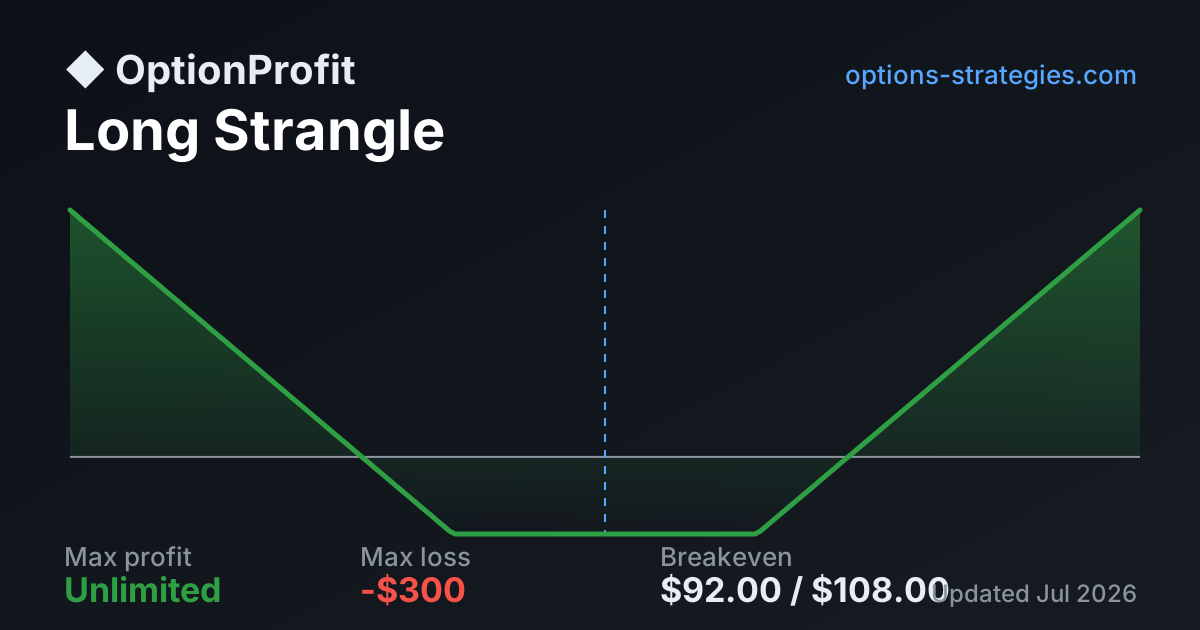
A long strangle buys an out-of-the-money call and put. Cheaper than a straddle but needs a bigger move to pay off — a low-cost bet on volatility.
Interactive calculator
Edit the price, strikes and premiums to see the payoff update live.
Want probability of profit and live Greeks on real prices? Open the Long Strangle calculator →
⧉ Embed this free calculator on your site →
Key characteristics
- Cheaper than a straddle; requires a larger move to profit.
- Max loss = total premium. Breakevens = call strike + premium / put strike − premium.
- Popular ahead of earnings and binary events.
When to use a long strangle
Buy a strangle when you expect a large move but want a cheaper position than a straddle. You buy an out-of-the-money call and an out-of-the-money put, so the upfront cost is lower — but the stock has to travel further before you profit.
It is popular ahead of earnings and binary events for traders who think the implied move understates what could happen.
Risks and management
Maximum loss is the total premium, lost if the stock finishes between the two strikes. The breakevens are the call strike plus the premium and the put strike minus the premium — a wider gap than a straddle.
Like the straddle, a strangle is exposed to IV crush after a scheduled event, so the realised move must beat both the premium and the volatility drop.
On the Greeks, the Long Strangle is vega-positive — rising implied volatility helps it, while an IV crush works against you, and theta-negative, so time decay erodes it and the move needs to come reasonably soon.
Managing the trade and common mistakes
A long strangle profits from a large move in either direction, but time is always working against you — theta erodes both the call and the put simultaneously. Most experienced traders set a profit target of 50–100% of the debit paid and close the position when that target is hit, rather than waiting for an even bigger swing that may never arrive. If the underlying moves sharply in one direction, they will often sell the profitable leg and hold or roll the losing leg closer to the money, reducing cost basis while keeping directional exposure alive.
The most common beginner mistake is buying the strangle too early before the expected catalyst — time decay accumulates and can wipe out much of the gain even if the move eventually happens. A related error is holding through expiration hoping for a last-minute surge: at expiration, the out-of-the-money leg expires worthless with no recovery value. Most traders close a strangle with 7–14 days to expiration to avoid the steepest part of the theta curve and to preserve any remaining extrinsic value on the losing side.
Liquidity matters more for strangles than for at-the-money strategies because both legs are out-of-the-money, where bid–ask spreads tend to be wider. Always check open interest and use limit orders close to the mid-price. Assignment is not a meaningful risk for long options holders; the real risk is paying too much on entry in a high-implied-volatility environment — when IV contracts after the event (IV crush), the position can lose value even if the underlying moves as expected. Sizing small and avoiding earnings plays with stretched implied volatility are the most reliable ways to protect capital.
Calculate it live
Use the free OptionProfit Long Strangle calculator to load a live option chain, build the trade, and instantly see the payoff chart, breakevens, probability of profit, Greeks and a Monte Carlo simulation of outcomes.
- A cheaper volatility play than a straddle; needs a bigger move.
- Max loss = total premium; profits on a large swing either way.
- Breakevens = call strike + premium / put strike − premium.
- Exposed to IV crush around scheduled events.
Frequently asked questions
Strangle or straddle for earnings?
A strangle is cheaper but needs a larger move; a straddle costs more but profits on a smaller move. Both face IV crush afterwards.
How big a move do I need?
Enough to push the stock past a breakeven — the call strike plus the premium, or the put strike minus the premium.
Can I sell a strangle instead?
Yes, a short strangle collects premium and profits if the stock stays range-bound, but it carries undefined risk — quite different from buying one.
Long CallLong PutCovered CallCash Secured PutNaked PutBull Call SpreadBear Put SpreadBull Put Credit SpreadBear Call Credit SpreadIron CondorLong Call ButterflyLong StraddleCollarCall Calendar SpreadNaked CallCall Diagonal SpreadPut Calendar SpreadJade LizardBroken Wing ButterflyCall Ratio SpreadPut Ratio SpreadCall Ratio BackspreadPut Ratio BackspreadSynthetic Long StockStrapStripTwin PeaksKiteProtective PutShort StraddleShort StrangleSynthetic Short StockReverse Iron CondorReverse Iron ButterflyLong Call CondorDouble DiagonalZEBRA (Zero Extrinsic Back Ratio)Box SpreadRisk ReversalCovered StrangleLong GutsChristmas Tree ButterflyDiagonal Put SpreadConversionReversalCovered PutBig LizardReverse Jade LizardStock RepairRatio Call WriteJelly RollDouble CalendarBull Call LadderBear Call LadderBull Put LadderBear Put LadderSeagull SpreadRatio Put WriteLong Put ButterflyLong Put CondorPut Broken Wing ButterflyPut Christmas Tree Butterfly
Educational use only. Quotes are delayed ~15 minutes and nothing here is financial advice. Options trading involves substantial risk of loss. Privacy Policy · Terms & Conditions.