Long Guts Calculator
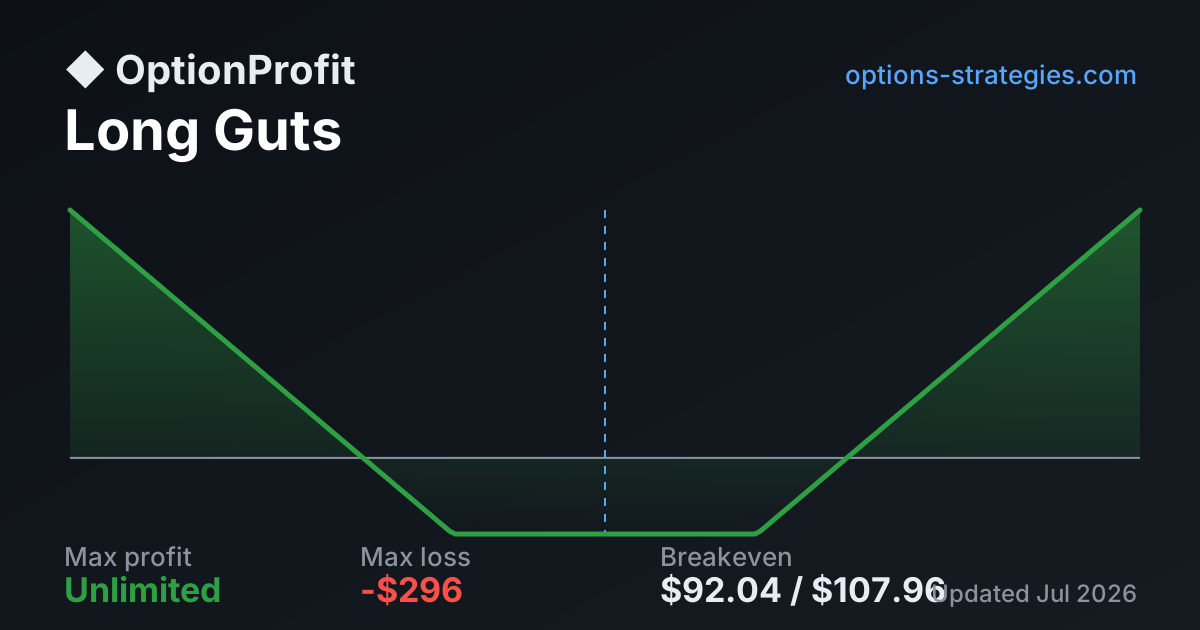
Long guts buys an in-the-money call and an in-the-money put — a strangle built from ITM options. Like a straddle, it profits from a big move in either direction, but both legs carry intrinsic value, so the position is more expensive and a guaranteed slice of value sits between the strikes.
Interactive calculator
Edit the price, strikes and premiums to see the payoff update live.
Want probability of profit and live Greeks on real prices? Open the Long Guts calculator →
⧉ Embed this free calculator on your site →
Key characteristics
- Buy an ITM call and an ITM put: a long-volatility trade with built-in intrinsic value.
- Profits from a large move either way; loses if the stock stalls between the strikes.
- Max loss = net debit − strike width (the intrinsic value guaranteed between strikes).
- Breakevens sit just outside the two strikes by the small net time premium paid.
When to use long guts
Use it when you expect a sharp move but want most of your premium parked in intrinsic value rather than at-the-money extrinsic value. Because both options are in the money, a smaller share of the cost is pure time value, so less of the position decays away if the move is slow.
It is the in-the-money cousin of the strangle. The strike width (call strike below spot, put strike above spot) is always worth its full amount at expiration, which is why the maximum loss is only the time premium, not the whole debit.
Risks and management
The trade-offs are cost and liquidity. ITM options tie up more capital and usually have wider bid/ask spreads, so you pay more to enter and exit. The guaranteed intrinsic value limits the loss, but you can still lose the entire time premium if the stock pins between the strikes.
As with any long-volatility trade, avoid opening it when implied volatility is already elevated — an IV crush after an event can erode the extrinsic portion even if the stock moves.
On the Greeks, the Long Guts is vega-positive — rising implied volatility helps it, while an IV crush works against you, and theta-negative, so time decay erodes it and the move needs to come reasonably soon.
Managing the trade and common mistakes
Once a long guts position is open, managing it is more about monitoring intrinsic value than watching time decay. Because both legs are in the money, theta erodes only the small net time premium you paid — the intrinsic value between the strikes is always recoverable. Experienced traders set a profit target linked to the underlying's move relative to the strike width: when the stock has cleared one strike convincingly and the winning leg's intrinsic gain well exceeds the residual time premium on the losing leg, they close the whole position. There is rarely a good reason to hold to expiration, because at that point both legs are likely deep in the money and will trigger automatic exercise or assignment, leaving you with an unintended stock position.
The biggest mistake beginners make with long guts is ignoring assignment risk. Unlike a strangle, where both legs are out of the money, here both legs are in the money from day one — and a sufficiently deep-in-the-money leg can be assigned early, especially the put around an ex-dividend date or the call on a hard-to-borrow stock. The correct response is not to panic but to monitor delta on each leg and close or roll the threatened leg before assignment occurs. A related error is treating the small maximum loss as a reason to be careless about entry price: the strategy is capital-intensive, and paying a bloated spread on two ITM options can silently consume most of the theoretical edge.
Liquidity deserves more attention here than with a straddle or strangle. ITM options carry wide bid-ask spreads, and with two legs to cross you can give up a meaningful slice of the strike width just on transaction costs. Always leg into the position with limit orders and check open interest on both strikes independently. Rolling a long guts is expensive because you are moving two ITM legs simultaneously; if the trade is going wrong, cutting the loss outright is usually cheaper than rolling. Finally, never let both legs expire in the money without a plan — automatic exercise on both sides will leave you simultaneously long and short stock, a flat but messy position that requires an extra trade to unwind.
Calculate it live
Use the free OptionProfit Long Guts calculator to load a live option chain, build the trade, and instantly see the payoff chart, breakevens, probability of profit, Greeks and a Monte Carlo simulation of outcomes.
- A strangle made of ITM options — long volatility with built-in intrinsic value.
- Max loss is only the time premium (debit − strike width), not the full cost.
- More expensive and wider spreads than a straddle or strangle.
- Still hurt by a flat stock and by falling implied volatility.
Frequently asked questions
Why buy guts instead of a straddle?
Because a larger share of the cost is intrinsic value, which cannot decay. Less of your premium is at-risk time value, though you commit more capital and cross wider spreads.
How can the max loss be so small?
The ITM call and ITM put always retain the strike-width in intrinsic value at expiration. You can only lose the net time premium you paid on top of that intrinsic value.
Is short guts a thing?
Yes — selling an ITM call and ITM put is short guts, a short-volatility income trade, but it carries large risk and assignment complications, so it is far less common.
Long CallLong PutCovered CallCash Secured PutNaked PutBull Call SpreadBear Put SpreadBull Put Credit SpreadBear Call Credit SpreadIron CondorLong Call ButterflyLong StraddleLong StrangleCollarCall Calendar SpreadNaked CallCall Diagonal SpreadPut Calendar SpreadJade LizardBroken Wing ButterflyCall Ratio SpreadPut Ratio SpreadCall Ratio BackspreadPut Ratio BackspreadSynthetic Long StockStrapStripTwin PeaksKiteProtective PutShort StraddleShort StrangleSynthetic Short StockReverse Iron CondorReverse Iron ButterflyLong Call CondorDouble DiagonalZEBRA (Zero Extrinsic Back Ratio)Box SpreadRisk ReversalCovered StrangleChristmas Tree ButterflyDiagonal Put SpreadConversionReversalCovered PutBig LizardReverse Jade LizardStock RepairRatio Call WriteJelly RollDouble CalendarBull Call LadderBear Call LadderBull Put LadderBear Put LadderSeagull SpreadRatio Put WriteLong Put ButterflyLong Put CondorPut Broken Wing ButterflyPut Christmas Tree Butterfly
Educational use only. Quotes are delayed ~15 minutes and nothing here is financial advice. Options trading involves substantial risk of loss. Privacy Policy · Terms & Conditions.