Covered Put Calculator
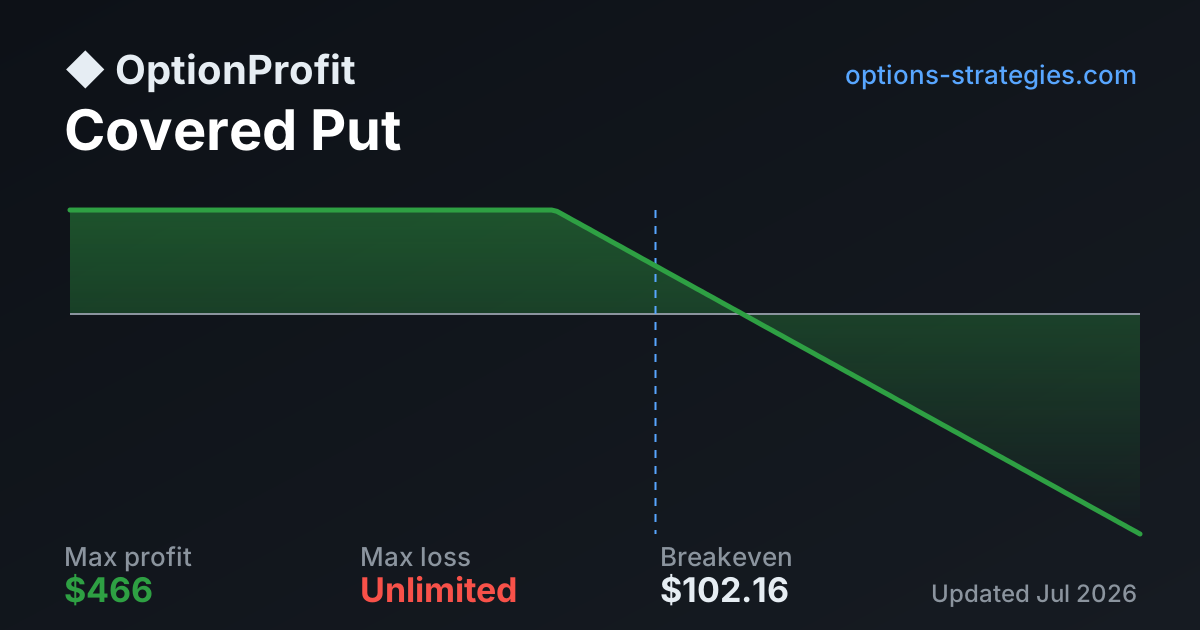
A covered put shorts 100 shares and sells a put against them. It is the bearish mirror of a covered call: you collect premium and profit while the stock drifts down to the put strike, where your gain is capped — but a rally brings unlimited risk from the short shares.
Interactive calculator
Edit the price, strikes and premiums to see the payoff update live.
Want probability of profit and live Greeks on real prices? Open the Covered Put calculator →
⧉ Embed this free calculator on your site →
Key characteristics
- Short 100 shares + sell a put: income on a flat-to-falling stock.
- Max profit = (entry − put strike) × 100 + premium, reached at or below the put.
- Breakeven = short entry price + premium received.
- Unlimited risk to the upside — the short stock loses as the price rises.
When to use a covered put
Use it when you are mildly bearish on a stock you are already short, and you want to be paid while you wait for a slow decline. The short put adds premium income and defines the price at which your downside profit is capped.
It is the exact mirror of the covered call: instead of capping the upside of long shares, you cap the downside profit of short shares in exchange for a premium today.
Risks and management
The danger is a rally. Short stock has theoretically unlimited risk, and the small put premium barely cushions a sharp move up — treat this as a position that needs an exit plan and the borrow to stay short.
Many traders roll the short put down as the stock falls to keep collecting premium, and close the whole position if the trend turns up. Watch borrow costs and dividends, which you owe while short.
On the Greeks, the Covered Put is vega-negative — a fall in implied volatility (such as an earnings IV crush) works in your favour, and theta-positive, so time decay adds to the position each day it is held.
Managing the trade and common mistakes
Once you are in a Covered Put — short the stock and short a put against it — the position behaves very differently from a standalone short put. The short stock amplifies every move, so experienced traders set a clear profit target rather than riding the trade indefinitely. A common approach is to close or roll the short put when it has decayed to roughly 25–30 % of the original credit, banking theta gains before gamma risk picks up near expiration. If the stock has fallen sharply and the put is deep in the money, rolling the put down and out — to a lower strike and a later expiration — lets you collect additional credit while keeping the bearish short-stock exposure intact.
The most damaging mistake beginners make is ignoring the short stock leg entirely and treating the trade as if it were just a short put. The short stock carries theoretically unlimited upside risk: a sudden rally can cause losses that dwarf the put premium collected. Always define your maximum pain point on the stock leg before entry, and use a hard stop or a protective call to cap that exposure. A second common error is letting an in-the-money put expire without acting — early assignment on an American-style put is possible at any time, and if your short shares are called away through assignment, you may find your hedge evaporates at the worst moment.
Liquidity matters more than many beginners appreciate. Covered Puts are typically built on individual stocks rather than ETFs, and single-stock option spreads can be wide. Always use limit orders; market orders on illiquid strikes can cost you more in slippage than the entire credit collected. Watch the ex-dividend date carefully: if the underlying pays a dividend while you are short the stock, you owe that dividend to the lender of the shares, which erodes your net credit. Finally, because the position involves a short stock borrow, make sure your broker's borrow cost is factored into your break-even calculation before you enter.
Calculate it live
Use the free OptionProfit Covered Put calculator to load a live option chain, build the trade, and instantly see the payoff chart, breakevens, probability of profit, Greeks and a Monte Carlo simulation of outcomes.
- The bearish mirror of a covered call: short stock + short put for income.
- Capped profit to the downside, breakeven just above the short entry.
- Unlimited risk to the upside — always have an exit and the borrow.
- Roll the short put down to keep collecting as the stock falls.
MSFT, TSLA, INTC, UBER, SOFI, DIS, HD, LCID, MSTR, ARM, RDDT, CELH, BHP, PENN
Frequently asked questions
How is a covered put different from a cash-secured put?
A cash-secured put is bullish — you sell a put hoping to buy stock cheaply. A covered put is bearish — you are short the stock and sell a put against that short position.
What is my maximum risk?
Unlimited. The short shares lose more and more as the stock rises, and the put premium only offsets a small part of it. It is not a defined-risk trade.
Why short the stock instead of just selling a call?
A covered put expresses an existing short-stock view with added income. If you only want defined-risk bearish exposure, a put or a bear spread is usually safer.
Long CallLong PutCovered CallCash Secured PutNaked PutBull Call SpreadBear Put SpreadBull Put Credit SpreadBear Call Credit SpreadIron CondorLong Call ButterflyLong StraddleLong StrangleCollarCall Calendar SpreadNaked CallCall Diagonal SpreadPut Calendar SpreadJade LizardBroken Wing ButterflyCall Ratio SpreadPut Ratio SpreadCall Ratio BackspreadPut Ratio BackspreadSynthetic Long StockStrapStripTwin PeaksKiteProtective PutShort StraddleShort StrangleSynthetic Short StockReverse Iron CondorReverse Iron ButterflyLong Call CondorDouble DiagonalZEBRA (Zero Extrinsic Back Ratio)Box SpreadRisk ReversalCovered StrangleLong GutsChristmas Tree ButterflyDiagonal Put SpreadConversionReversalBig LizardReverse Jade LizardStock RepairRatio Call WriteJelly RollDouble CalendarBull Call LadderBear Call LadderBull Put LadderBear Put LadderSeagull SpreadRatio Put WriteLong Put ButterflyLong Put CondorPut Broken Wing ButterflyPut Christmas Tree Butterfly
Educational use only. Quotes are delayed ~15 minutes and nothing here is financial advice. Options trading involves substantial risk of loss. Privacy Policy · Terms & Conditions.