Christmas Tree Butterfly Calculator
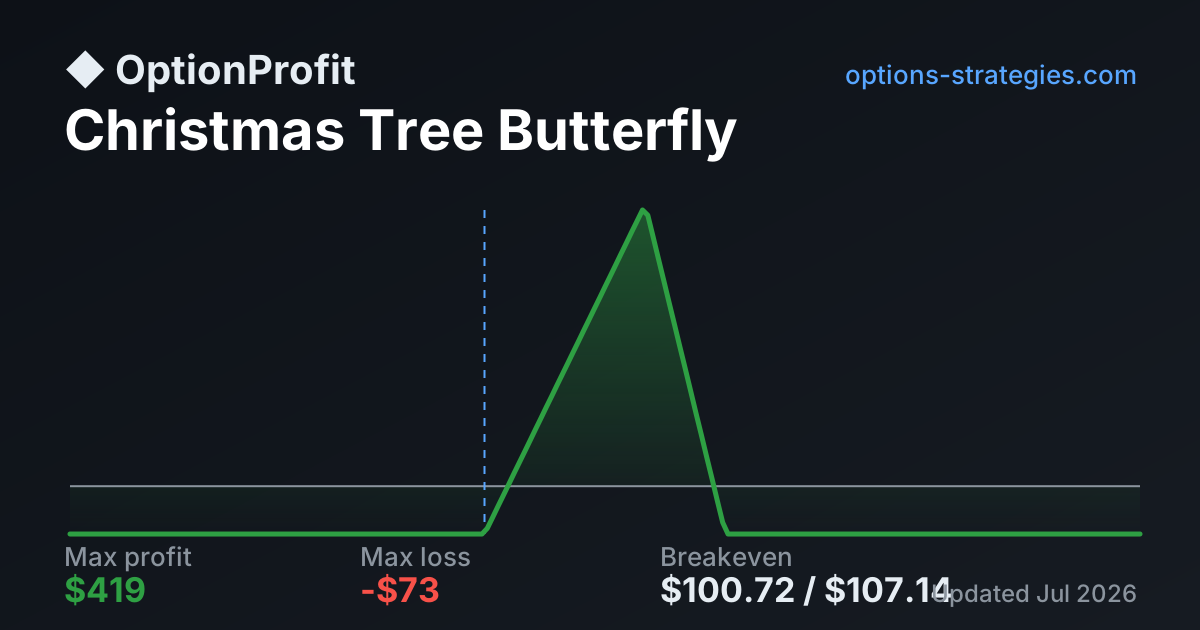
A Christmas tree butterfly (with calls) buys one lower call, sells three calls a couple of strikes higher, and buys two calls one strike above that. It is a skewed, cheaper relative of the standard butterfly, with a bullish-leaning profit zone and strictly defined risk.
Interactive calculator
Edit the price, strikes and premiums to see the payoff update live.
Want probability of profit and live Greeks on real prices? Open the Christmas Tree Butterfly calculator →
⧉ Embed this free calculator on your site →
Key characteristics
- Buy 1 call, sell 3 calls higher up, buy 2 calls one strike above: net contracts balance to zero.
- Defined risk — the maximum loss is the small net debit paid.
- Profit peaks around the short (middle) strikes, leaning bullish from the current price.
- Cheaper than a symmetrical butterfly, with a tilted, narrower payoff.
When to use a Christmas tree butterfly
Use it when you expect the stock to drift up toward a specific area and stall there. The 1-3-2 call structure concentrates the payoff around the short strikes, so it pays best if the stock lands near that level by expiration.
It is a low-cost, defined-risk way to express a "moderately higher and pinned" view — more targeted than a vertical spread and cheaper than a balanced butterfly, at the cost of a narrower, skewed profit window.
Risks and management
Because the contract counts net to zero (1 − 3 + 2), the risk is defined: away from the profit zone the structure simply expires worthless and you lose the small debit. There is no naked exposure at the wings.
The enemies are a stock that never reaches the zone or one that blows past it — either way the payoff fades. As with all butterflies, the peak value is only fully realised near expiration, so timing and strike placement matter.
On the Greeks, the Christmas Tree Butterfly is vega-negative — a fall in implied volatility (such as an earnings IV crush) works in your favour, and theta-positive, so time decay adds to the position each day it is held.
Managing the trade and common mistakes
Once you are in a Christmas tree butterfly, the profit target most experienced traders use is 40–50% of the maximum theoretical profit, taken well before expiration. The reason to exit early is that the final payoff is extremely sensitive to where the stock pins relative to the three short calls — a small overshoot through the short strikes converts a winner into a loser fast, because you are short three calls and only partially hedged by two longs above. Rolling the structure is generally not worth the friction: maintaining the 1-3-2 ratio at a new set of strikes requires significant slippage, and the payoff tent simply moves rather than improves. If the stock breaks away decisively from the short-strike region early in the trade, cut the loss while the long wings still hold some time value.
The most common beginner mistake specific to this structure is underestimating the three short calls. Because the position is entered for a small debit, traders often think of it as a low-risk lottery ticket and forget they are net short three calls in the body. If implied volatility rises after entry, all three short legs lose value for you, and the position can deteriorate even if the stock barely moves. A second mistake is entering after a strong directional move has already carried the stock close to the short strikes, leaving almost no room for the theta-decay story to play out. Enter when the target strike zone is a comfortable distance above the current price, giving the position time and space to work.
The 1-3-2 ratio creates a specific expiration nuance: if the stock closes between the three short calls and the two long calls, you face assignment on all three short calls while your two long calls may expire with little remaining value to offset the stock position. This triple assignment scenario — ending up long 300 shares with only two calls as partial cover — is the worst-case outcome at expiration and is why experienced traders never ride this structure into the final hours. Liquidity is also a genuine concern: the combination of six contracts across three strikes often produces wide markets in less actively traded names. Use a limit order for the entire spread at a reasonable mid-price, and avoid legging in or out of the structure one leg at a time.
Calculate it live
Use the free OptionProfit Christmas Tree Butterfly calculator to load a live option chain, build the trade, and instantly see the payoff chart, breakevens, probability of profit, Greeks and a Monte Carlo simulation of outcomes.
- A skewed 1-3-2 call butterfly: defined risk, bullish-leaning profit zone.
- Maximum loss is just the small net debit; no naked wing risk.
- Pays best if the stock drifts to the short strikes and pins there.
- Cheaper but narrower and more directional than a balanced butterfly.
SPY, QQQ, IWM, AAPL, NVDA, AMD, NFLX, MU, SHOP, COIN, JPM, BAC, BA, F
Frequently asked questions
Why is it called a Christmas tree?
The staggered 1-3-2 strike layout, drawn as a position diagram, resembles the tapering shape of a Christmas tree. It is simply an unbalanced butterfly.
Is the risk really limited?
Yes. The long and short contracts net to zero (1 − 3 + 2), so beyond the strikes the payoff flattens and your loss is capped at the net debit paid.
Can it be built with puts?
Yes — the same 1-3-2 structure with puts creates a bearish-leaning Christmas tree. The call version shown here leans bullish from the current price.
Long CallLong PutCovered CallCash Secured PutNaked PutBull Call SpreadBear Put SpreadBull Put Credit SpreadBear Call Credit SpreadIron CondorLong Call ButterflyLong StraddleLong StrangleCollarCall Calendar SpreadNaked CallCall Diagonal SpreadPut Calendar SpreadJade LizardBroken Wing ButterflyCall Ratio SpreadPut Ratio SpreadCall Ratio BackspreadPut Ratio BackspreadSynthetic Long StockStrapStripTwin PeaksKiteProtective PutShort StraddleShort StrangleSynthetic Short StockReverse Iron CondorReverse Iron ButterflyLong Call CondorDouble DiagonalZEBRA (Zero Extrinsic Back Ratio)Box SpreadRisk ReversalCovered StrangleLong GutsDiagonal Put SpreadConversionReversalCovered PutBig LizardReverse Jade LizardStock RepairRatio Call WriteJelly RollDouble CalendarBull Call LadderBear Call LadderBull Put LadderBear Put LadderSeagull SpreadRatio Put WriteLong Put ButterflyLong Put CondorPut Broken Wing ButterflyPut Christmas Tree Butterfly
Educational use only. Quotes are delayed ~15 minutes and nothing here is financial advice. Options trading involves substantial risk of loss. Privacy Policy · Terms & Conditions.