Bull Call Ladder Calculator
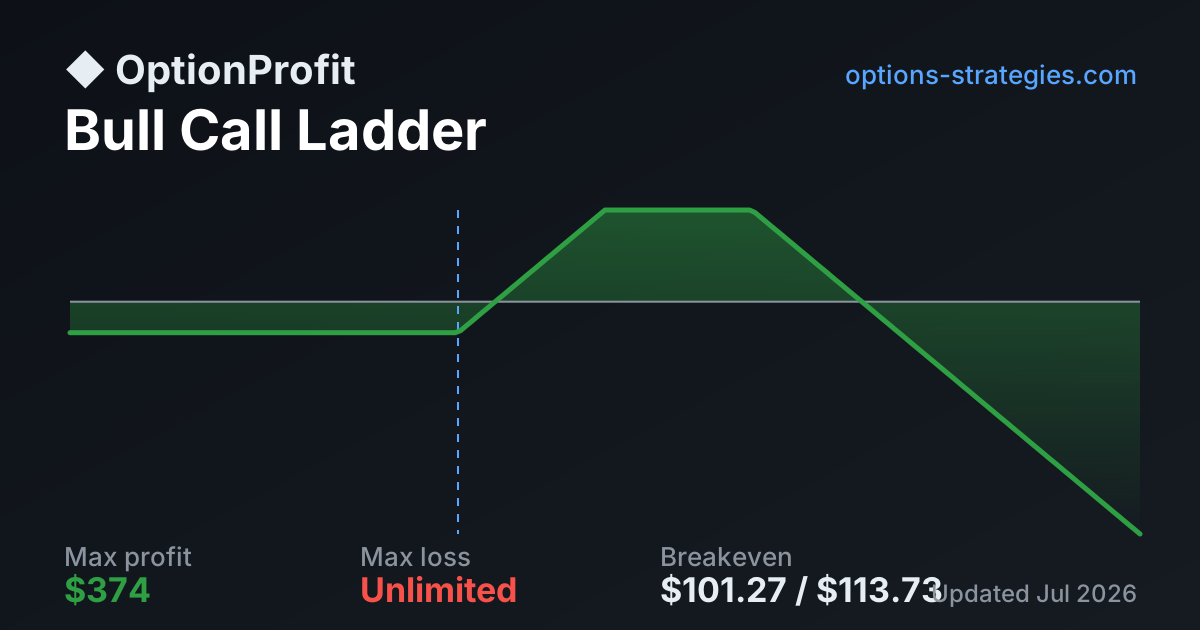
A bull call ladder is a bull call spread with an extra short call added above it: long one lower call, short one middle call, short one higher call. The second short cheapens the trade — sometimes to a credit — but is naked, so a strong rally past the top strike brings uncapped losses. It suits a moderate rise that stalls inside a target zone.
Interactive calculator
Edit the price, strikes and premiums to see the payoff update live.
Want probability of profit and live Greeks on real prices? Open the Bull Call Ladder calculator →
⧉ Embed this free calculator on your site →
Key characteristics
- Legs: long 1 lower call, short 1 middle call, short 1 higher call (same expiration).
- Max profit sits between the two short strikes; below the long strike you lose only the net debit.
- Above the top strike the upper short call is naked — losses are unlimited.
- Cheaper than a plain bull call spread, but you trade that saving for open-ended upside risk.
When to use a bull call ladder
Open a bull call ladder when you expect a stock to rise moderately and settle in a range, not to run away to the upside. The extra short call funds the position and widens the profit zone, which is why traders reach for it when a plain bull call spread feels too expensive for the expected move.
Because the top call is uncovered, this is not a set-and-forget trade. It works best on lower-volatility names where a violent breakout is unlikely, and where you will actively manage the position if the stock approaches the highest strike.
Risks and management
The danger is a sharp rally: above the highest strike you are effectively short a naked call, and losses grow with the stock. The lower breakeven is the long strike plus the net debit; the upper breakeven is where the naked short call eats back the peak profit.
Manage it by closing or rolling the upper short call if the stock threatens the top strike, and by sizing the position for the naked-leg risk rather than the small debit you paid. Many traders cap the trade well before expiration once most of the profit is captured.
On the Greeks, the Bull Call Ladder is vega-negative — a fall in implied volatility (such as an earnings IV crush) works in your favour, and theta-positive, so time decay adds to the position each day it is held.
Managing the trade and common mistakes
The bull call ladder pays best when the stock drifts up toward the middle strike and stalls, so a realistic target is a partial profit taken well before expiration rather than the theoretical peak. The long call anchors the position, but the two short calls above it mean that a strong rally re-opens large, effectively uncapped loss above the top strike. As expiration nears, theta helps the short legs while gamma makes the upper short call dangerously sensitive to a fast move. If the stock pushes toward the top strike, roll that threatened short call up and out for a credit, or simply cut the trade — protecting against the open-ended side matters more than squeezing the last bit.
The most common mistake is treating the ladder like an ordinary bull call spread and forgetting that the extra short call leaves the upside naked, so a runaway rally produces losses far beyond the debit. A second error is holding all three legs into expiration and getting pinned near a strike, where a small close either way flips your assignment outcome. Watch the short calls around ex-dividend dates: deep in-the-money short calls invite early assignment, leaving you unexpectedly short stock. Near expiry, bid-ask spreads widen and liquidity thins, so legging into or out of a three-strike position invites slippage — use combined limit orders and close manually rather than trusting auto-exercise.
Calculate it live
Use the free OptionProfit Bull Call Ladder calculator to load a live option chain, build the trade, and instantly see the payoff chart, breakevens, probability of profit, Greeks and a Monte Carlo simulation of outcomes.
- A bull call spread plus one extra (naked) short call above it.
- Best for a moderate rise that stops inside the short-strike zone.
- Uncapped loss above the top strike — the defining risk.
- Actively manage the naked call; do not treat it as defined-risk.
META, GOOGL, AVGO, CRM, PLTR, PYPL, WFC, GS, MA, F, GM, WMT, SBUX, XOM
Frequently asked questions
Is a bull call ladder a defined-risk trade?
No. The upper short call is naked, so a strong rally above the top strike produces unlimited losses. Only the downside (the net debit) is defined.
Why open one instead of a bull call spread?
The extra short call reduces the cost — sometimes to a credit — and widens the profit zone. You accept open-ended upside risk in return.
What is the best outcome?
The stock finishing between the two short strikes at expiration, where the spread is fully in the money but the highest call is not yet a problem.
Credit vs Debit SpreadsHow to Pick a Strike PricePosition Sizing and Risk Management for Options
Long CallLong PutCovered CallCash Secured PutNaked PutBull Call SpreadBear Put SpreadBull Put Credit SpreadBear Call Credit SpreadIron CondorLong Call ButterflyLong StraddleLong StrangleCollarCall Calendar SpreadNaked CallCall Diagonal SpreadPut Calendar SpreadJade LizardBroken Wing ButterflyCall Ratio SpreadPut Ratio SpreadCall Ratio BackspreadPut Ratio BackspreadSynthetic Long StockStrapStripTwin PeaksKiteProtective PutShort StraddleShort StrangleSynthetic Short StockReverse Iron CondorReverse Iron ButterflyLong Call CondorDouble DiagonalZEBRA (Zero Extrinsic Back Ratio)Box SpreadRisk ReversalCovered StrangleLong GutsChristmas Tree ButterflyDiagonal Put SpreadConversionReversalCovered PutBig LizardReverse Jade LizardStock RepairRatio Call WriteJelly RollDouble CalendarBear Call LadderBull Put LadderBear Put LadderSeagull SpreadRatio Put WriteLong Put ButterflyLong Put CondorPut Broken Wing ButterflyPut Christmas Tree Butterfly
Educational use only. Quotes are delayed ~15 minutes and nothing here is financial advice. Options trading involves substantial risk of loss. Privacy Policy · Terms & Conditions.