Long Put Calculator
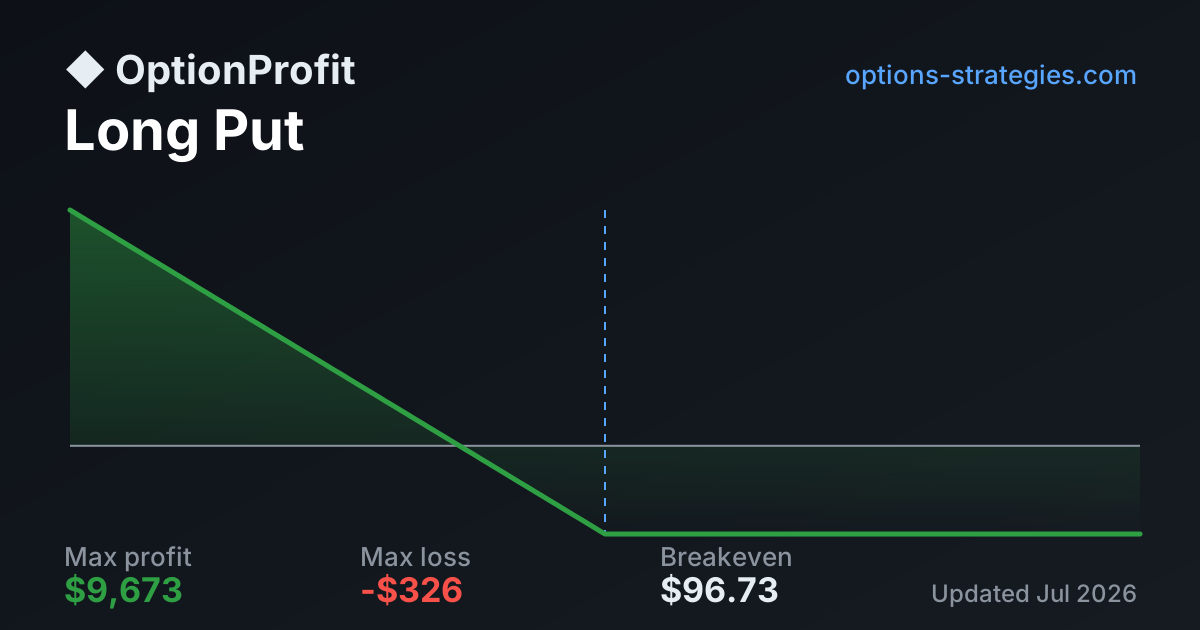
A long put profits when the stock falls. You buy a put for the right to sell at the strike; losses are capped at the premium while profits grow as the stock drops toward zero.
Interactive calculator
Edit the price, strikes and premiums to see the payoff update live.
Want probability of profit and live Greeks on real prices? Open the Long Put calculator →
⧉ Embed this free calculator on your site →
Key characteristics
- Max loss = premium paid. Max profit = strike − premium (stock to zero).
- Breakeven = strike price − premium paid.
- Used to speculate on a decline or to hedge a long stock position.
- A defined-risk alternative to short selling.
When to use a long put
Buy a put when you expect a stock to fall, or to hedge shares you already own against a decline. Unlike short selling, your risk is capped at the premium and there is no margin call if the stock rises.
A protective put on stock you hold acts like insurance: it sets a floor under your position for the cost of the premium, letting you stay invested through uncertainty.
Risks and management
As with any long option, time decay and falling implied volatility work against you. Puts also tend to carry higher IV than calls because of steady demand for downside protection, so you often pay a premium for them.
Choose the expiration to match your thesis, and consider spreads (a bear put spread) if you want to lower the cost in exchange for a capped payoff.
On the Greeks, the Long Put is vega-positive — rising implied volatility helps it, while an IV crush works against you, and theta-negative, so time decay erodes it and the move needs to come reasonably soon.
Managing the trade and common mistakes
Once you hold a long put, the position needs active monitoring — not daily panic, but a clear plan. Experienced traders typically take profits when the put has gained 50–80% of its maximum theoretical value, because the remaining upside shrinks fast while theta keeps eroding the premium. If the underlying keeps falling and your put is deep in the money, consider closing rather than riding it to expiration: wide bid-ask spreads on deep-ITM puts and thin liquidity can cost you more than the extra delta is worth. Rolling down and out — buying back your current put and selling one at a lower strike with a later expiration — extends the trade while recovering some premium, but only makes sense if your bearish thesis is still intact.
The mistakes beginners make most often with the long put are all variations of the same error: underestimating how much implied volatility and time decay work against you even when you are directionally right. Buying a put the day before earnings, when IV is already elevated, means you pay a large premium that can collapse after the announcement even if the stock drops. Choosing an expiration that is too short — under 30 days — leaves almost no room for the trade to develop; theta accelerates sharply in the final weeks. And sizing too large turns a normal 30–50% loss on a single put into a portfolio-damaging event.
Unlike short options, long puts carry no assignment risk — you are the buyer, so you decide if and when to exercise. That said, you should virtually never exercise early; selling the put in the market almost always captures more value than exercising, because you recover any remaining time value. At expiration, if the put is in the money by even a small amount your broker will typically auto-exercise it, which means you would end up short shares unless you close the position before the close on expiration day. Always close or roll an ITM long put before expiration if you do not intend to hold a short stock position.
Calculate it live
Use the free OptionProfit Long Put calculator to load a live option chain, build the trade, and instantly see the payoff chart, breakevens, probability of profit, Greeks and a Monte Carlo simulation of outcomes.
- Profits as the stock falls; loss capped at the premium paid.
- Breakeven = strike − premium.
- A defined-risk alternative to short selling, and a hedge for shares.
- Puts often carry higher IV due to demand for protection.
MSFT, TSLA, INTC, UBER, SHOP, DIS, HD, LCID, MSTR, ARM, CVS, DAL, CELH, ZM
Frequently asked questions
Is buying a put the same as shorting the stock?
Both profit from a decline, but a long put has capped risk (the premium) and an expiry date, while shorting has open-ended risk and no expiration.
How do I use a put to protect my shares?
Buy one put per 100 shares at a strike that sets your acceptable floor; if the stock drops, the put’s gain offsets the share loss below that level.
Why did my put lose value when the stock fell slightly?
A small move can be outweighed by time decay or a drop in implied volatility, both of which lower a long put’s price.
Long CallCovered CallCash Secured PutNaked PutBull Call SpreadBear Put SpreadBull Put Credit SpreadBear Call Credit SpreadIron CondorLong Call ButterflyLong StraddleLong StrangleCollarCall Calendar SpreadNaked CallCall Diagonal SpreadPut Calendar SpreadJade LizardBroken Wing ButterflyCall Ratio SpreadPut Ratio SpreadCall Ratio BackspreadPut Ratio BackspreadSynthetic Long StockStrapStripTwin PeaksKiteProtective PutShort StraddleShort StrangleSynthetic Short StockReverse Iron CondorReverse Iron ButterflyLong Call CondorDouble DiagonalZEBRA (Zero Extrinsic Back Ratio)Box SpreadRisk ReversalCovered StrangleLong GutsChristmas Tree ButterflyDiagonal Put SpreadConversionReversalCovered PutBig LizardReverse Jade LizardStock RepairRatio Call WriteJelly RollDouble CalendarBull Call LadderBear Call LadderBull Put LadderBear Put LadderSeagull SpreadRatio Put WriteLong Put ButterflyLong Put CondorPut Broken Wing ButterflyPut Christmas Tree Butterfly
Educational use only. Quotes are delayed ~15 minutes and nothing here is financial advice. Options trading involves substantial risk of loss. Privacy Policy · Terms & Conditions.