Reverse Iron Condor Calculator
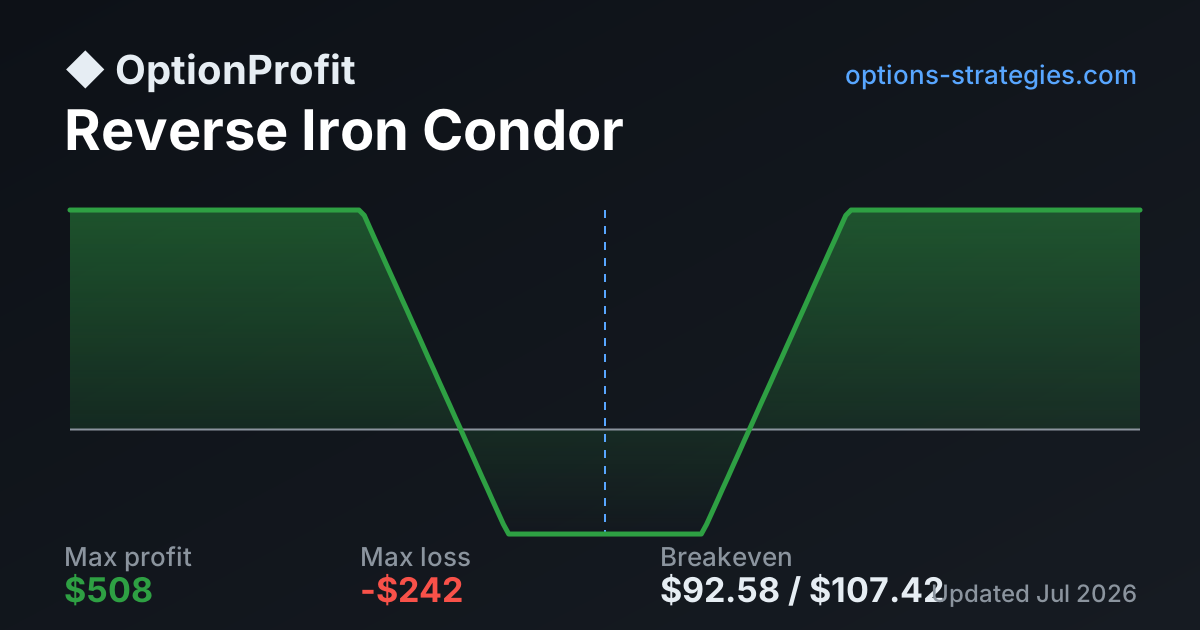
A reverse iron condor is the iron condor flipped: you buy the inner call and put spreads and sell the outer wings, paying a net debit. It profits from a big move in either direction, with both the maximum profit and the maximum loss strictly defined — a defined-risk long-volatility trade.
Interactive calculator
Edit the price, strikes and premiums to see the payoff update live.
Want probability of profit and live Greeks on real prices? Open the Reverse Iron Condor calculator →
⧉ Embed this free calculator on your site →
Key characteristics
- Buy an inner call spread + inner put spread, sell the outer wings (net debit).
- Profits on a large move up or down; loses if the stock stays in the middle.
- Both max profit and max loss are capped — defined risk on every side.
- A long-volatility bet, often placed before an expected catalyst.
When to use a reverse iron condor
Open a reverse iron condor when you expect a sharp move but are unsure of the direction — earnings, a regulatory decision, a binary event — and you want defined risk rather than the open-ended cost of buying a strangle. It wins if the stock breaks out past either inner strike by enough to cover the debit.
Compared with a long strangle it is cheaper (the sold wings finance part of the cost) but its profit is capped, so you trade unlimited upside for a lower entry price and a known maximum loss.
The risk and the catch
The enemy is a stock that does nothing. If price sits between the two inner strikes at expiration, all the long options expire worthless and you lose the full debit — the maximum loss. Time decay works against you, so the move needs to happen before expiration.
Because it is long volatility, avoid opening it when implied volatility is already inflated (for example right before earnings), since the post-event IV crush can erase the value even if the stock moves.
On the Greeks, the Reverse Iron Condor is vega-positive — rising implied volatility helps it, while an IV crush works against you, and theta-negative, so time decay erodes it and the move needs to come reasonably soon.
Managing the trade and common mistakes
Because the reverse iron condor is a net-debit strategy, time decay works against you from the moment you enter. Experienced traders typically set a profit target around 50–75 % of the maximum possible gain — capturing a large move early rather than riding to full profit, which requires pinning near a short strike at expiration. If the underlying makes the expected big move quickly, taking profits without hesitation is correct; the position loses value every day it lingers. When the trade moves against you and implied volatility collapses back toward entry levels, cutting the loss at 50 % of the debit paid is a common discipline, since theta will continue to erode the remaining value with no realistic path to recovery.
The most common beginner mistake is buying the reverse iron condor too far in advance of the anticipated catalyst, letting theta destroy the position before the move occurs. The strategy needs the move to happen soon and sharply — a slow grind rarely saves it. A related error is selecting strikes too wide, paying an excessive debit for a maximum-profit zone that is too narrow to hit. Sizing the wings so that the net debit represents no more than a third of the spread width is a useful discipline. On the expiration side, the long inner options (the short call and short put) can be assigned if they expire in-the-money, which converts a defined-risk position into an uncovered stock exposure. Always close or roll the structure before expiration if any leg is in-the-money — never let a reverse iron condor expire unmanaged.
Liquidity deserves attention on both legs simultaneously. The four-legged structure can carry wide bid-ask spreads, particularly on the outer long options that are deep out-of-the-money. Legging into the trade one option at a time exposes you to adverse fills; use a combo or spread order to enter and exit all four legs as a single unit whenever possible. In low-liquidity underlyings, the slippage on entry and exit can eat a significant portion of the theoretical edge, making the trade uneconomical even when your directional read is correct.
Calculate it live
Use the free OptionProfit Reverse Iron Condor calculator to load a live option chain, build the trade, and instantly see the payoff chart, breakevens, probability of profit, Greeks and a Monte Carlo simulation of outcomes.
- The iron condor reversed: buy the inner spreads, sell the wings (net debit).
- Profits on a big move either way; the dead zone is a flat stock.
- Both max profit and max loss are defined — no open-ended risk.
- Long volatility: avoid entering when IV is already high (earnings crush).
Frequently asked questions
How is a reverse iron condor different from an iron condor?
It is the exact opposite. A normal iron condor sells the inner spreads for a credit and profits from a quiet stock; the reverse buys them for a debit and profits from a big move in either direction.
When do I lose the maximum?
When the stock finishes between the two inner strikes at expiration, so every long option expires worthless. The most you can lose is the net debit you paid.
Reverse iron condor vs long strangle?
The strangle has unlimited profit but costs more; the reverse iron condor caps the profit but is cheaper to open and has a known maximum loss. You are trading upside for a lower, defined-risk entry.
Long CallLong PutCovered CallCash Secured PutNaked PutBull Call SpreadBear Put SpreadBull Put Credit SpreadBear Call Credit SpreadIron CondorLong Call ButterflyLong StraddleLong StrangleCollarCall Calendar SpreadNaked CallCall Diagonal SpreadPut Calendar SpreadJade LizardBroken Wing ButterflyCall Ratio SpreadPut Ratio SpreadCall Ratio BackspreadPut Ratio BackspreadSynthetic Long StockStrapStripTwin PeaksKiteProtective PutShort StraddleShort StrangleSynthetic Short StockReverse Iron ButterflyLong Call CondorDouble DiagonalZEBRA (Zero Extrinsic Back Ratio)Box SpreadRisk ReversalCovered StrangleLong GutsChristmas Tree ButterflyDiagonal Put SpreadConversionReversalCovered PutBig LizardReverse Jade LizardStock RepairRatio Call WriteJelly RollDouble CalendarBull Call LadderBear Call LadderBull Put LadderBear Put LadderSeagull SpreadRatio Put WriteLong Put ButterflyLong Put CondorPut Broken Wing ButterflyPut Christmas Tree Butterfly
Educational use only. Quotes are delayed ~15 minutes and nothing here is financial advice. Options trading involves substantial risk of loss. Privacy Policy · Terms & Conditions.