Short Strangle Calculator
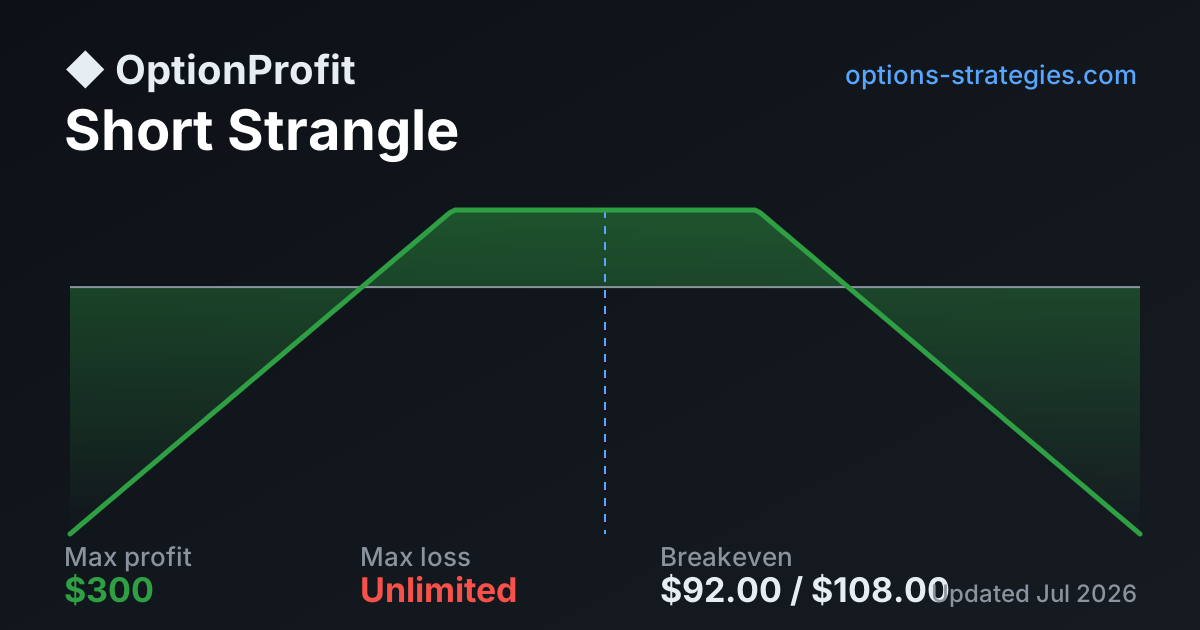
A short strangle sells an out-of-the-money call and an out-of-the-money put. It is the wider, lower-premium cousin of the short straddle: you collect less, but the stock has a bigger range to stay in before you lose. The risk is still effectively unlimited on a large move.
Interactive calculator
Edit the price, strikes and premiums to see the payoff update live.
Want probability of profit and live Greeks on real prices? Open the Short Strangle calculator →
⧉ Embed this free calculator on your site →
Key characteristics
- Sell an OTM call + OTM put: a wide profit zone between the two strikes.
- Max profit = the premium collected, kept if the stock stays between the strikes.
- Lower premium than a short straddle, but a larger margin for the stock to move.
- Short-volatility income; risk is unlimited beyond the breakevens.
When to use a short strangle
Sell a strangle when you expect the stock to stay range-bound and want a comfortable buffer on both sides. Because the strikes are out of the money, the stock can drift around without threatening the position — you win as long as it stays between the short put and short call by expiration.
It is a favourite premium-selling income trade because the wide breakevens give a high probability of profit. The price of that comfort is a smaller credit than a short straddle.
Managing the risk
The wider strikes reduce — but do not remove — the danger: a sharp move past either breakeven still produces unlimited (call side) or very large (put side) losses. The premium is a thin cushion against a true outlier move or gap.
Defined-risk traders run an iron condor instead — the same shape but with long wings that cap the loss. You collect less, but you can never be hurt by a runaway move.
On the Greeks, the Short Strangle is vega-negative — a fall in implied volatility (such as an earnings IV crush) works in your favour, and theta-positive, so time decay adds to the position each day it is held.
Managing the trade and common mistakes
Most experienced traders target closing a short strangle at 50% of the original credit collected, and many exit even earlier — around 21 days to expiration — to avoid the sharp gamma acceleration that occurs in the final weeks. When one side is tested, the preferred adjustment is not to panic-close the entire position but to roll the threatened leg further out-of-the-money, ideally in the same expiration to preserve the credit structure. If a credit roll is no longer possible and the tested leg has gone deep in-the-money, rolling the whole strangle out in time — buying back the current expiration and selling the same strikes in a later month — is the next line of defence. A hard loss limit of two to three times the original credit received gives traders a defined exit before a runaway move destroys the account.
The most common mistake beginners make with a short strangle is treating it as a passive income machine that runs itself. The strategy has undefined risk on both sides: an explosive move in either direction can produce losses that dwarf the collected credit. Beginners often widen the strikes to collect more premium without realising they are also widening the range in which a damaging move can occur. A related error is ignoring implied volatility rank when entering — selling a strangle when IV is historically low means collecting a thin credit while still carrying full directional risk. The strategy works best when implied volatility is elevated and then mean-reverts after entry, so monitoring IV relative to its own history is essential.
Assignment on a short strangle can arrive unexpectedly because either the short call or the short put can be exercised early. Short calls on equities are vulnerable to early assignment just before an ex-dividend date, when the long holder exercises to capture the dividend rather than sell the option. Short puts can be assigned early when the put has deep in-the-money intrinsic value and negligible extrinsic value. At expiration, any short leg that finishes even slightly in-the-money will be assigned by the OCC, which can leave a large and unintended stock position overnight — close or roll both legs before the final session if you do not want to take on the underlying shares or short a stock.
Calculate it live
Use the free OptionProfit Short Strangle calculator to load a live option chain, build the trade, and instantly see the payoff chart, breakevens, probability of profit, Greeks and a Monte Carlo simulation of outcomes.
- Sell an OTM call + OTM put for a wide range-bound profit zone.
- Lower premium than a short straddle, but more room for the stock to wander.
- Max profit = the premium; high probability, but unlimited tail risk remains.
- The iron condor is the defined-risk version (long wings cap the loss).
SPY, QQQ, IWM, AAPL, NVDA, AMD, NFLX, MU, SHOP, COIN, JPM, BAC, BA, F
Frequently asked questions
Short strangle vs short straddle — which is safer?
The strangle is safer in the sense that its breakevens are wider, so the stock can move more before you lose. But you collect less premium, and both carry unlimited tail risk on a large move.
What is the probability of profit on a short strangle?
It is usually high because the profit zone is wide, but that is balanced by a small reward and a rare-but-large potential loss. The math rewards consistency and punishes the occasional outlier.
How do I cap the risk?
Turn it into an iron condor by buying a further-out call and put as wings. That defines the maximum loss in exchange for a smaller credit.
Long CallLong PutCovered CallCash Secured PutNaked PutBull Call SpreadBear Put SpreadBull Put Credit SpreadBear Call Credit SpreadIron CondorLong Call ButterflyLong StraddleLong StrangleCollarCall Calendar SpreadNaked CallCall Diagonal SpreadPut Calendar SpreadJade LizardBroken Wing ButterflyCall Ratio SpreadPut Ratio SpreadCall Ratio BackspreadPut Ratio BackspreadSynthetic Long StockStrapStripTwin PeaksKiteProtective PutShort StraddleSynthetic Short StockReverse Iron CondorReverse Iron ButterflyLong Call CondorDouble DiagonalZEBRA (Zero Extrinsic Back Ratio)Box SpreadRisk ReversalCovered StrangleLong GutsChristmas Tree ButterflyDiagonal Put SpreadConversionReversalCovered PutBig LizardReverse Jade LizardStock RepairRatio Call WriteJelly RollDouble CalendarBull Call LadderBear Call LadderBull Put LadderBear Put LadderSeagull SpreadRatio Put WriteLong Put ButterflyLong Put CondorPut Broken Wing ButterflyPut Christmas Tree Butterfly
Educational use only. Quotes are delayed ~15 minutes and nothing here is financial advice. Options trading involves substantial risk of loss. Privacy Policy · Terms & Conditions.